Hej, här kommer en liten spaning över gamla och kommande nya riggar för satellit. Den är absolut inte heltäckande och jag har säkert missat en del viktiga händelser.
Om man kollar historiskt i tiden vad gäller tranceivers för att kunna köra satellit på VHF och UHF med full duplex, dvs. sända på ett band samtidigt som man tar emot på ett annat, så har det uteslutande varit stationära riggar som gäller. Dvs. ganska stora och tunga saker som inte lämpar sig så bra att packa ner i ryggsäcken och köra portabelt. Utbudet har såklart varit mindre än rena HF-riggar men det har alltid funnit några alternativ att köpa.
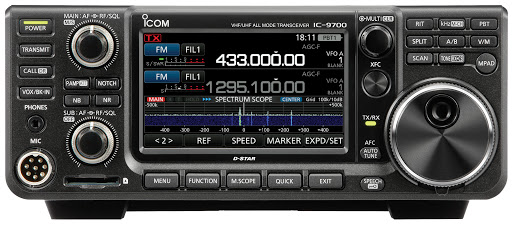
Förra året kom Icom med en ren VHF/UHF-rig mycket lämpad för satellit, Icom IC-9700. Det är en SDR med många funktioner och priset blev därefter. Den bygger av sin meny-struktur på HF-riggen IC-7300 och en del har köpt båda två för att komplettera varandra. Den är även så pass liten att den går att ta med sig portabelt, men med externt batteri såklart.
IC-9700
När det gäller portabla riggar (full-mode) är det framförallt Yaesu men även Icom som har haft ett par varianter. Ofta har det varit HF/VHF/UHF kombinerade riggar utan internt batteri, men små och lätta och fullt användbara att köra portabelt om man tar med sig ett externt batteri. Ingen av dessa har dock haft full duplex (jag har inte räknat med FM-stationer som ibland har full duplex).
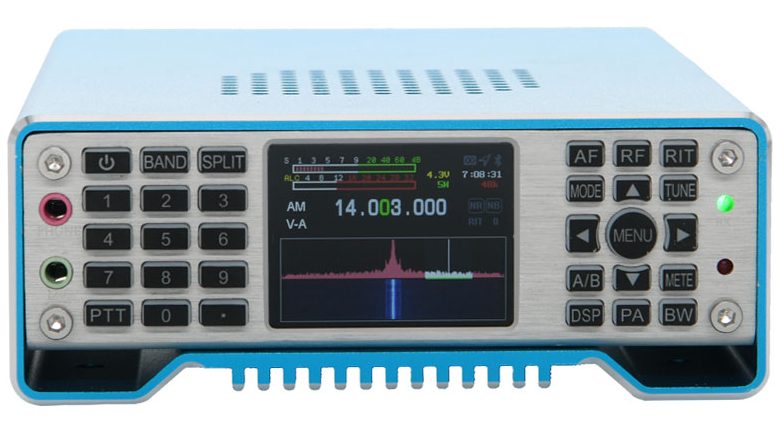
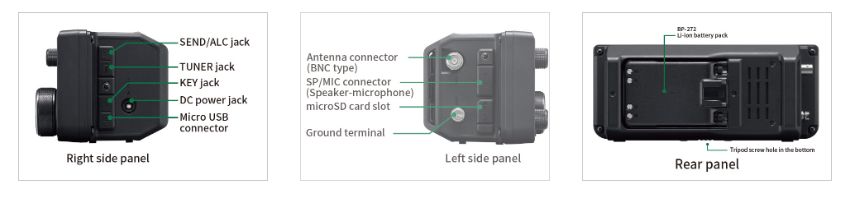
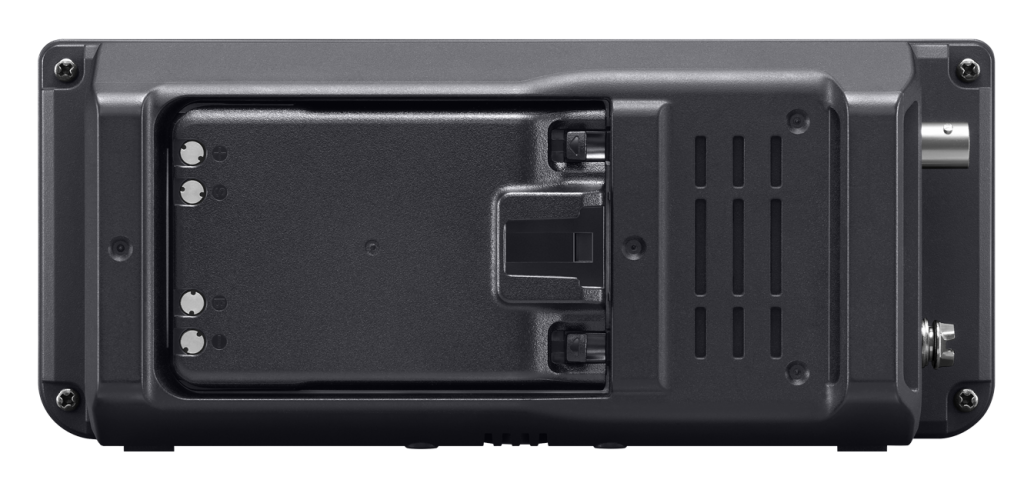
I år har en kinesisk tillverkare, Ailunce, presenterat en portabel SDR-tranceiver HS2 med HF/VHF/UHF till ett förväntat pris runt 500 US$ (tull och moms tillkommer). Denna har inte heller något batteri men i övrigt ser den ut att få intressant innehåll.
HS2
Det ska vara enkelt att ansluta till dator direkt med USB. Uteffekten anges till max 30W på HF. I övrigt finns det ingen information om VHF/UHF-delarna eller vilka möjligheter det finns för enkel satellittrafik. Det lär knappast bli full duplex. Förväntad release i juli 2020. Mer info här: https://www.ailunce.com/blog/hs2-sdr-hf-vhf-uhf-sdr-sdr-transceiver
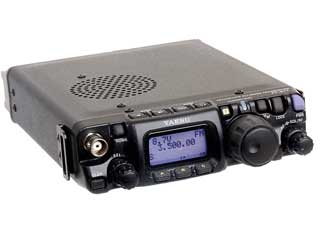
Rent portabelt, med inbyggt batteri, är det utan konkurens FT-817(ND) som gäller. Inte heller denna har full duplex men väl inbyggt batteri. Det är fortforarande, efter 20 år, den rig som används mest för portabla satellit-QSO. Många har löst duplex-problemet med att helt enkelt köpa en FT-817ND till!
FT-817ND
Under många år har det ryktas om en efterträdare. När FT-818ND kom 2018 var det många som blev besvikna. Det visade sig vara en 817ND men med några nya komponenter. Men det är i grunden exakt samma radio.
Jag har själv en FT-817ND och jag förstår att den för 20 år sedan var unik. Den verkar tåla vad som helst och jag kör den som en HF-rig på digitala mode. Men att hantera denna radio tycker jag nästan är helt omöjligt. Jag har provat att använda den portabelt och lyssna på satellittransponder men blir bara frusterad när jag försöker använda VFOn och se något på displayen. För mig är det helt enkelt inte roligt. Jag är mycket imponerad över de som har lärt sig att använda FT-817ND för att följa en satellitsignal med doppler!
De senaste åren har några kinesiska tillverkare kommit ut med billiga och små SDR-tranceivers på HF, en del med inbyggt batteri, som blivit populära. Kanske är det därför Icom till slut vaknade?
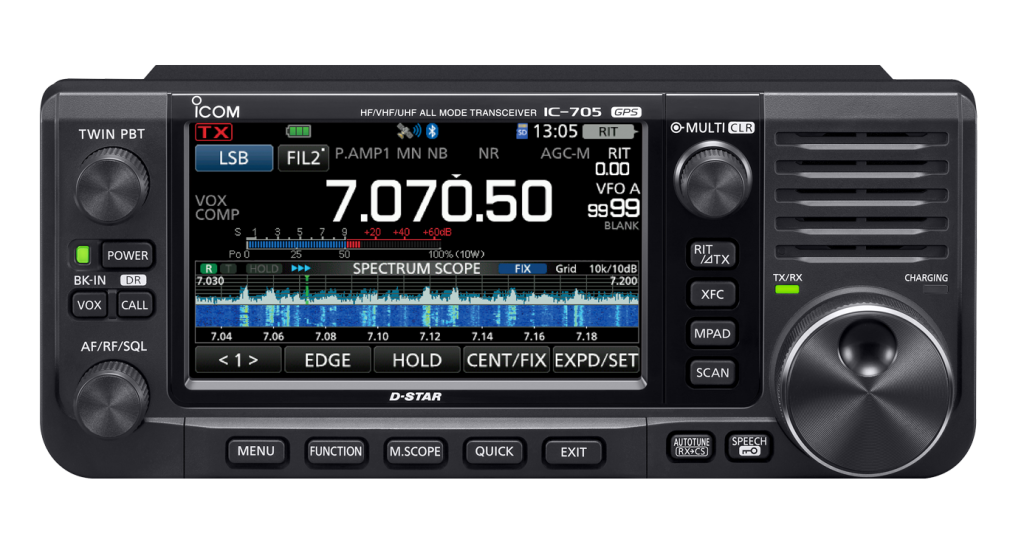
Hösten 2019 presenterades den portabla IC-705 och gensvaret från radioamatörer blev enormt. Detta var uppenbart något som många hade väntat på. IC-705 använder samma display som IC-7300/9700 och har samma menysystem. Det är en SDR-arkitektur som täcker HF/6m/VHF/UHF. Tyvärr så ser vi ingen full duplex på VHF/UHF. Troligtvis hade det blivit för dyrt att implementera och kanske då även blivit en direkt konkurrent till deras egna IC-9700. Det är oklart just nu hur stödet är för satellittrafik tex. om det går att tracka två VFO:er reverserat för att kunna följa sin nerlänk på en transponder. Men, den har inbyggt batteri som enkelt kan bytas och det är en riktig portabel full mode rig.
IC-705 front
Kanske, efter 20 år, kan vi se en rig som kommer bli en ersättare till FT-817ND. Förväntad försäljningsstart är just nu beräknad till juni 2020. Jag har sett ett förväntat pris på ca. 15 000 kr i Sverige.
On November 2, 2019, the HuskySat-1 cubesat launched on the Cygnus NG- 12 mission from Wallops Island, Virginia, USA. The satellite was con- structed by the Husky Satellite Lab at the University of Washington, and utilizes an AMSAT-constructed radio system for primary communica- tions. Deployed from the Cygnus vehicle on January 31, 2020 after de- parting the ISS, HuskySat-1 began a 3-month educational mission. Upon completion of that mission, the satellite began operation of a V/u linear transponder in amateur service.
At the request of the Husky Satellite Lab and AMSAT teams, AMSAT here- by designates HuskySat-1 as HuskySat-OSCAR 107 (HO-107). We congratu- late the Husky Satellite Lab, thank them for their contribution to the amateur satellite community, and wish them continued success on this and future projects. 73 Drew Glasbrenner, KO4MA AMSAT VP Operations / OSCAR Number Administrator
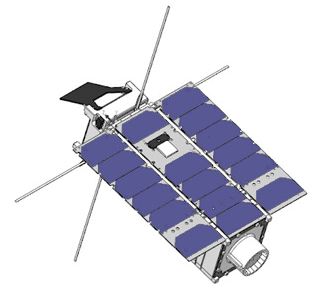
Info from ANS-131 about a new interesting satellite with HF: Two new Chinese amateur radio satellites are now expected to launch on September 15, 2020. The first of these satellites, CAS-7A, is a 27 kg microsat (750 mm x 650 mm x 260 mm) with three-axis stabilization and several transponders. The transponders include a 15m to 10m linear transponder (H/t), a 15m to 70cm linear transponder (H/u), and a 2m to 70cm linear transponder(V/u). The satellite also includes a 2m to 70cm (V/u) FM transponder. Several beacons and data downlinks are also feat- ured, CW beacons on 10m and 70cm, 4.8k or 9.6k GMSK telemetry on 70cm, and a 1 Mbps GMSK image data downlink on 3cm for the on board camera. IARU coordinated frequencies for the uplinks and downlinks are listed below.
This launch is also expected to carry CAS-7C, a 2U CubeSat with a V/u linear transponder and a CW beacon. Frequencies for CAS-7C have not been coordinated by the IARU at the time of this writing. CAS-7C will also deploy a 1 mm diameter 1080 meter long carbon fiber rope.
CAS-7A and CAS-7C will launch from Jiuquan Satellite Launch Center into a 500 km sun-synchronous orbit with an inclination of 98 degrees.
Frequencies:
CAS-7A H/t Linear Transponder Uplink – 21.245MHz through 21.275 MHz Downlink – 29.435MHz through 29.465 MHz CW Beacon 29.425 MHz
CAS-7A H/u Linear Transponder Uplink – 21.3125 MHz through 21.3275 MHz Downlink – 435.3575 MHz through 435.3725 MHz CW Beacon 435.430MHz
CAS-7A V/u Linear Transponder Uplink – 145.865 MHz through 145.895 MHz Downlink – 435.385 MHz through 435.415 MHz CW Beacon 435.430MHz
CAS-7A V/u FM Transponder Uplink 145.950 MHz Downlink 435.455 MHz
From ANS 131b: After a week of testing, the transponder on HuskySat-1 is enabled and open for use and testing. It’s fairly sensitive, and 5-10 watts is plenty most of the time. There are some fades due to satellite orien- tation, and some passes are definitely better than others. The opera- tions and engineering teams are also watching a few anomalies. Please keep an eye on the beacon during transponder ops, for those with spec- trum scopes. Strong signals may impact the beacon strength.
HuskySat-1 is the Husky Satellite Lab at University of Washington’s first cubesat, and the first mission with AMSAT’s linear transponder module (LTM-1), a V/u transponder and integrated telemetry beacon and command receiver. UW recently completed their Part 5 operations and have graciously let AMSAT’s Part 97 transponder operations commence. This transponder module is available for use in educational cubesat missions willing to enable the transponder for worldwide use. Contact myself or VP Engineering Jerry Buxton for additional details.
Reports and observations are welcome to the amsat-bb mailing list.
Congratulations to Husky Satellite Lab, and to the entire AMSAT Engineering team for keeping amateur radio in space. Thanks to Dr. Mark Hammond, N8MH for commissioning and operations support.
73, Drew KO4MA
AMSAT VP Operations
HuskySat-1 V/u inverting transponder, 145.910 to 145.940 uplink, 435.810 to 435.840 downlink, telemetry beacon 1200 baud BPSK at 435.800