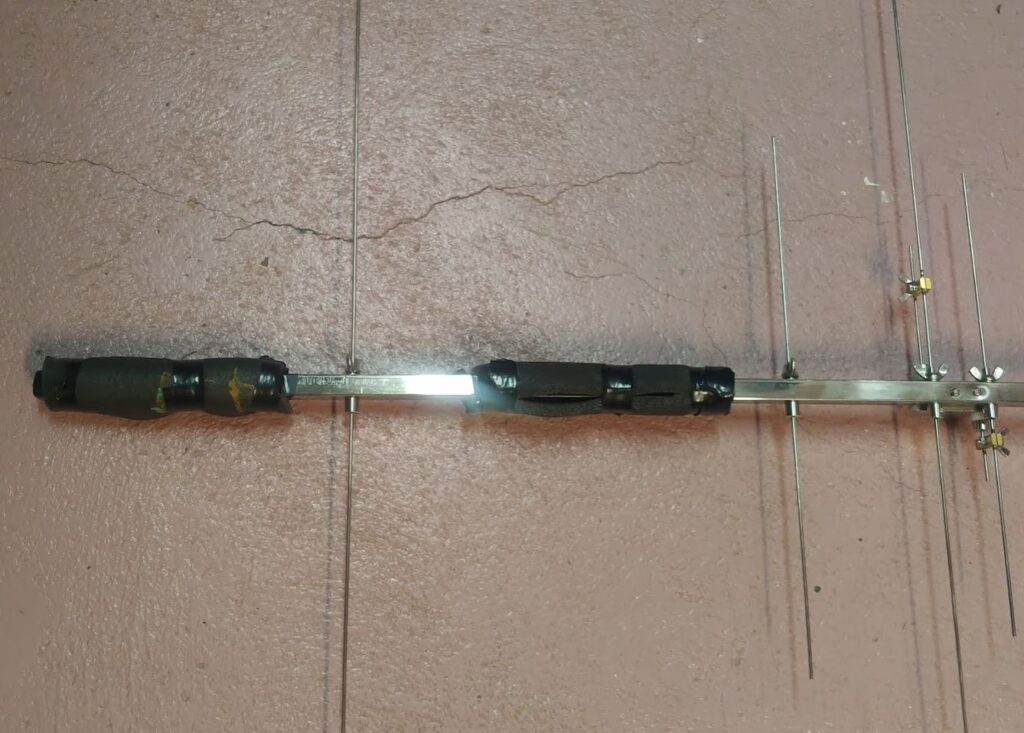
The FOX-727 Dual band yagi is a budget yagi for VHF and UHF. Unlike the popular Arrow yagi it is not made for portable use and holding with one hand. The square bom make it hard to hold longer than one minute… (believe me, I have tried).
To make it more portable I cut some foam (just like the one you can use to sit on if you go camping…) and added some tape. I did it at two areas (see the picture) so you can choose where you would like to hold the antenna. The feedpoint and gamma match is located in the center of the antenna so it is not very good balanced to be able to hold it at the back. I prefer to hold it a little bit closer to the center.
The cost is almost zero and now it is possible to hold the antenna and pointing to a satellite!
December 22, 2020 — An ARISS Slow Scan TV (SSTV) event is scheduled from the International Space Station (ISS). This will be a special SSTV event to celebrate the 20th anniversary of ARISS on board the International Space Station. The event is scheduled to begin on December 24 at 16:40 UTC and continue through December 31 ending at 18:15 UTC. Dates are subject to change due to ISS operational adjustments.
Images will be downlinked at 145.8 MHz +/- 3 KHz for Doppler shift and the expected SSTV mode of operation is PD 120. Radio enthusiasts participating in the event can post images they receive at the ARISS SSTV Gallery at https://www.spaceflightsoftware.com/ARISS_SSTV/ .
After your image is posted at the gallery, you can acquire a special award by linking to https://ariss.pzk.org.pl/sstv/ and follow directions for submitting a digital copy of your received image.
Att köra QSO via satellit kräver lite kunskap, övning och tålamod. Speciellt övning. Vi kommer här ge lite generella tips och råd för olika tillfällen när man ska köra ett QSO. Det finns många artiklar och hemsidor på internet som är mycket bra skrivna, och vi kommer länka till dessa där du kan läsa mera.
Video från DXEngineering “Operating Amateur Radio Satellites from Your Home Station”
FM-satellit med full duplex – stationärt“hemma”
Automatisk tracking av rotor och antenn löser alla problem med att veta var satelliten befinner sig. Annars får du styra rotorn manuellt genom att kolla på ett trackingprogram var den befinner sig.
Om du inte hör satelliten – ingen TX på upplänken från din sida! Använd inte för mycket effekt.
Passagerna från norr gör att man ibland är själv på satelliten i början, utmärkt läge att kontrollera om man hör sig själv på nerlänken.
Justera för doppler, om du inte har datorprogram som gör detta, justera då manuellt på den högsta frekvensen och låt den lägsta frekvensen vara kvar. Tex. för FOX-satelliterna där det ofta går bra att ligga på samma 145 MHz-frekvens där nerlänken ligger. Använd frekvenslistan från KE0PBR (se länk ovan).
Via FM-satellit, ropa inte “CQ” eller “CQ Satellite” utan enbart call, signalrapport och locator Vid CQ: “SM0TGU JO89”. Vid svar på en CQ: “{call} from SM0TGU. You are 55 at JO89”
FM-satellit med semi-duplex (en radio) – som exempel köra portabelt
Portabel utrustning – bilden från PA1IVO
Ta redo på hur satelliten rör sig i förväg, speciellt viktigt vid portabelt. Använd någon kompass-app på din mobiltelefon.
Rikta din antenn där du tror satelliten ska vara, du hör när du pekar rätt.
Om du inte hör satelliten – ingen TX på upplänken från din sida!
Försök hitta en lucka där du kan svara eller ropa CQ. Eftersom du inte har full duplex kommer du inte ha möjlighet att höra om du kommer in på satelliten. Men du hör om någon svarar dig.
Justera för doppler manuellt på den högsta frekvensen och låt den lägsta vara kvar. Tex. för FOX-satelliterna där det ofta går bra att ligga på samma 145 MHz-frekvens där nerlänken ligger. Använd frekvenslistan från KE0PBR (se länk ovan), skriv ut excel-arket och ha med. Eller använd denna fiffiga sida PortablePlanner.
Via FM-satellit, ropa inte “CQ” eller “CQ Satellite” utan enbart call, signalrapport och locator Vid CQ: “SM0TGU JO89”. Vid svar på en CQ: “{call} from SM0TGU at JO89”
SSB-satellit, linjär transponder med full duplex – stationärt“hemma”
Precis som för FM-satelliter – automatisk tracking av rotor och antenn löser alla problem med att veta var satelliten befinner sig. Annars får du styra rotorn manuellt genom att kolla på ett trackingprogram var den befinner sig.
De flesta satelliter använder sig av ‘Inverting Transponders’. Detta innebär att du sänder med LSB på upplänken och tar emot på USB på nerlänken.
Innan du ropar CQ, försök hitta en ledig frekvens på nerlänken och ställ in din TX-frekvens på motsvarande “plats” på uppfrekvensen. Om du har en modern rigg eller datorprogram går det att få “tracking VFOs” dvs. VFO A följer med VFO B på transpondern (eller vice versa).
Justera för doppler, om du inte har datorprogram som gör detta, justera då manuellt på den högsta frekvensen och låt den lägsta frekvensen vara kvar. Som hjälpmedel använd frekvenslistan från KE0PBR (se länk ovan).
Om du inte hör satelliten – ingen TX på upplänken från din sida! Ha inte för hög uteffekt, jämför din signal med övriga.
Det har under åren funnits ett antal satelliter med digitala möjligheter, tex ISS, men med Greencube IO-117 och LEDSAT har nya möjligheter öppnats. Jag hänvisar till denna mycket välskrivna guide för att komma igång satelliter liknande Greencube IO-117 (tyvärr har slutat fungera).
SSB-satellit, linjär transponder – portabelt
Detta är betydligt svårare än att köra en FM-satellit – du måste dels hålla koll på var satelliten är och rikta antennen, dels hålla koll på var du ska sända och lyssna på transpondern. Om du har samma utrustning med dig som du har hemma, dvs. dator för dopplerkontroll och en full duplex rig, går det lite lättare. Ska du köra semi-duplex utan dator behöver du mycket träning. Jag (Lars SM0TGU) har själv inte provat detta och kan inte ge några råd. Denna fiffiga sida för att hitta sin frekvens är bra – PortablePlanner. Jag hänvisar därför till nedanstående artikel (eller sök på internet eller Youtube):
Här använder du givetvis ditt favoritprogram för loggning men vi kan rekommendera Cloudlog som är skrivet av Peter Goodhall som är en erfaren satellitoperatör. Cloudlog har flera funktioner specialanpassade för satellitloggning.
Avslutningsvis en video som visar att det verkligen är möjligt att på kort tid köra flera QSOn portabelt via en SSB-transponder:
We have finally release a new web page design for AMSAT-SM. It is based on WordPress standard theme “Twenty Twenty”. Many pages has been updated, modified and/or deleted to make it more simple to find what you are looking for. I hope also to make a english version very soon. The changes, in short, are the following:
New WordPress theme Twenty Twenty “Cleaner” colours, more mobile and responsive. The latest news posts are published on the first (entry) page.
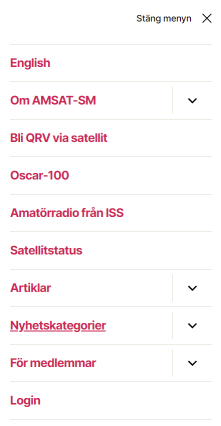
New navigation menu
Full desktop menu only displays the most popular pages.
English information visible
Extended menu available
Extended menu has less items than before
This menu is always valid in mobile view
New structure for articles
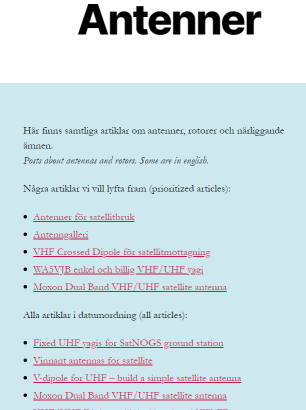
We have a new structure for articles. For each type av articles we now have an archive page where the most important (prioritized) articles are listed at top, and all others in date order.
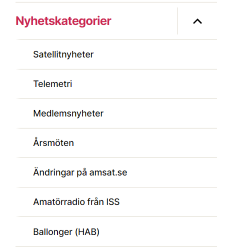
News categories
All news categories can be found in the extended menu:
Login for members and social media links
Login for members and social media links is last in the extended menu:
New footer widget
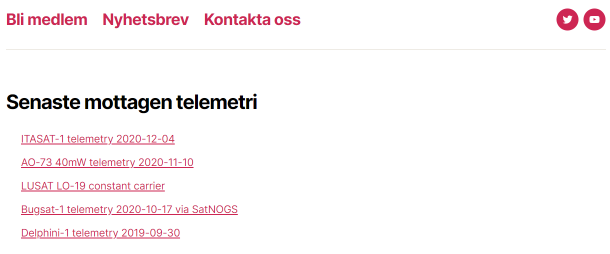
The new footer widget has the links for Membership, e-mail Newsletter and Contact. It also displays the latest telemetry from ham radio satellites info published on the web page.
I samband med utlottningen av en LNB under december 2020 fanns en fråga med om det finns detaljer som kan förbättras på AMSAT-SM hemsida. Här kommer en sammanställning – många har nämnt samma saker vilket ger ett bra underlag för förbättring!
Kan vara svårt att hitta på hemsidan Svar: Jag håller med! Menysystemet är flera år gammalt och är svårt att hitta. Många artiklar syns inte längre. Jag kommer att göra en ny design (tema) för hela hemsidan och i samband med detta förenkla menyn. Vidare kommer en komplett artikelsammanställning att göras, så att alla artiklar enkelt går att nå. En del sidor kommer jag även att förenkla och slå ihop, mindre text och färre delsidor helt enkelt.
Fler tekniska artiklar, antenntester, hemmabyggen, byggbeskrivningar etc. Svar: Jag skriver om det jag testar och bygger, men för att få mer artiklar behöver jag hjälp av andra. Så är det bara!
Mera nybörjarartiklar och info om SSTV från ISS Svar: Vi har en hel del nybörjarartiklar men de syns inte bra idag. Jag ska lyfta fram dessa i samband med den nya designen för hemsidan. Vad gäller ISS har vi en hel sida om det redan idag.
Artikel om hur man kör ett QSO via satellit Svar: Finns många artiklar på engelska men ingen på vår hemsida. Jag ska försöka få till en sådan artikel!
Bättre info om vilka satelliter som går att köra via just nu Svar: det finns redan idag under “Satellitstatus”
Mer info i rapporterna om mottagen telemetri, hur man avkodar Svar: Bra idé! Jag har börjat skriva mera info nu.
Mer internationell bevakning Svar: Det är svårt att hinna med att bevaka vad som händer, eftersom det sker så otroligt mycket hela tiden. Jag har tyvärr bara tid att skriva om vissa utvalda satelliter.
Hemma-hos reportage Svar: Mycket bra idé! Vi får återkomma efter Corona-pandemin.
Tack för alla kommentarer – det hjälper oss att hålla hemsidan relevant!
For my SatNOGS ground station I have tried several omnidirectional antennas for UHF without success – Dipole, V-Dipole, Eggbeater and Turnstile. I know that several SatNOGS station are using omni antennas for UHF with very good result – but at my QTH it seems not possible. I have high hills surrounding and a high level of local interference on 435 MHz.
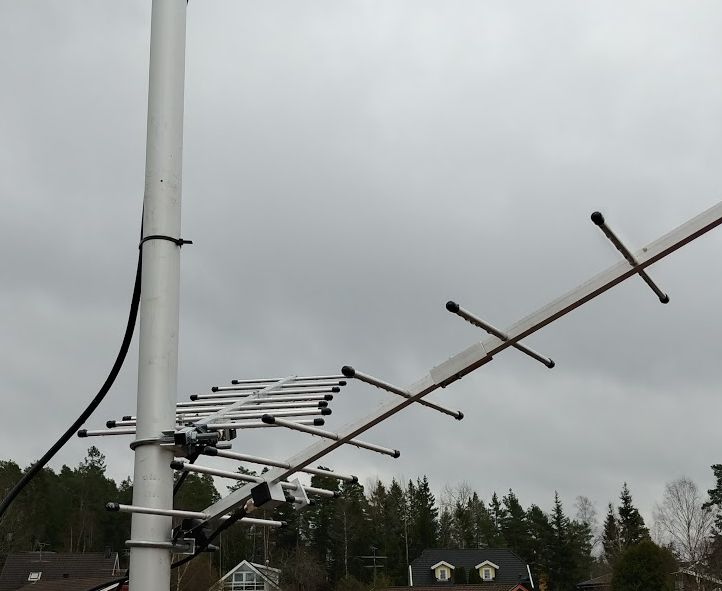
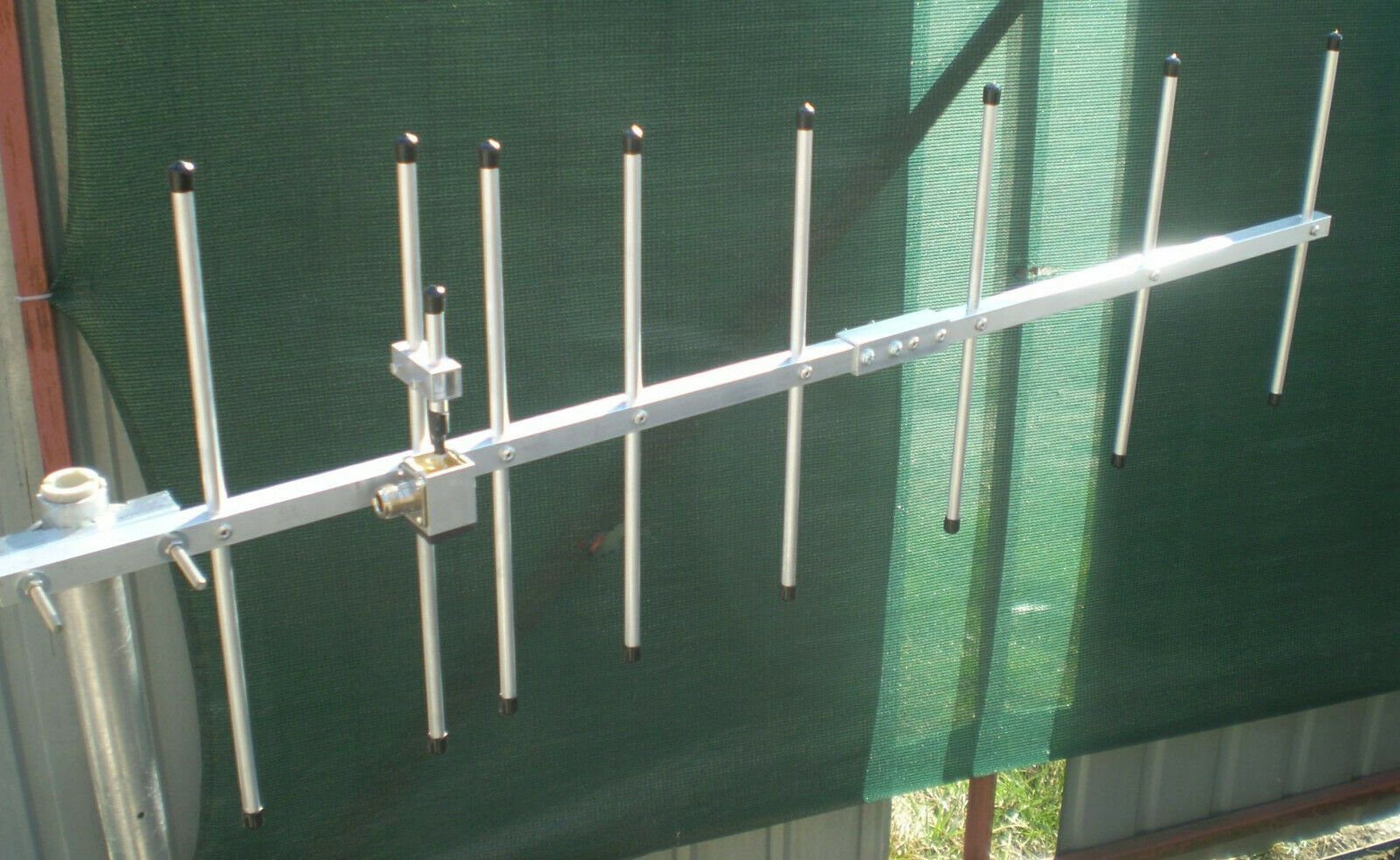
So, my solution is fixed yagis. I’m using a lower budget yagi from Vinnant antennas – Y8E446 8 element yagi but tuned for 435 MHz.
This antenna is excellent for it´s price – very good SWR and good quality. At first I used only one antenna and now I could decode satellites when it was passing in front of the antenna loob.
To be able to decode more passes I added one more yagi and stacked the antennas with a short 75 ohm power divider coax cable. I used the instructions from this webpage.
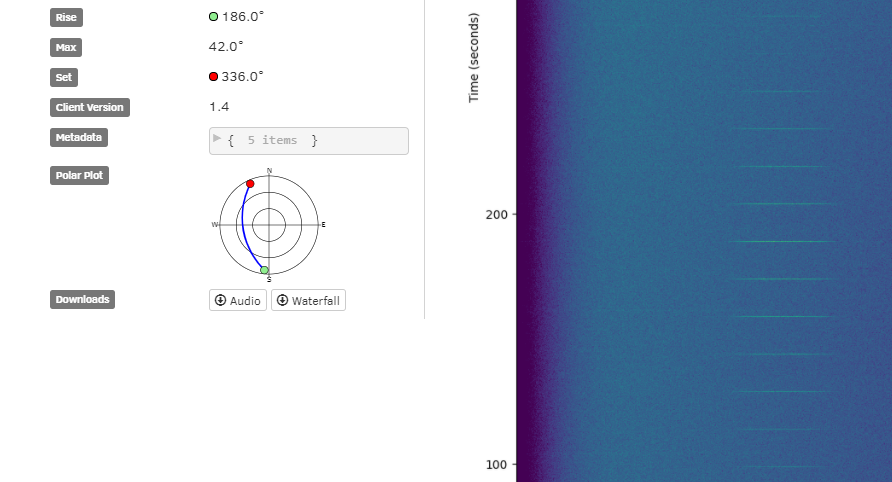
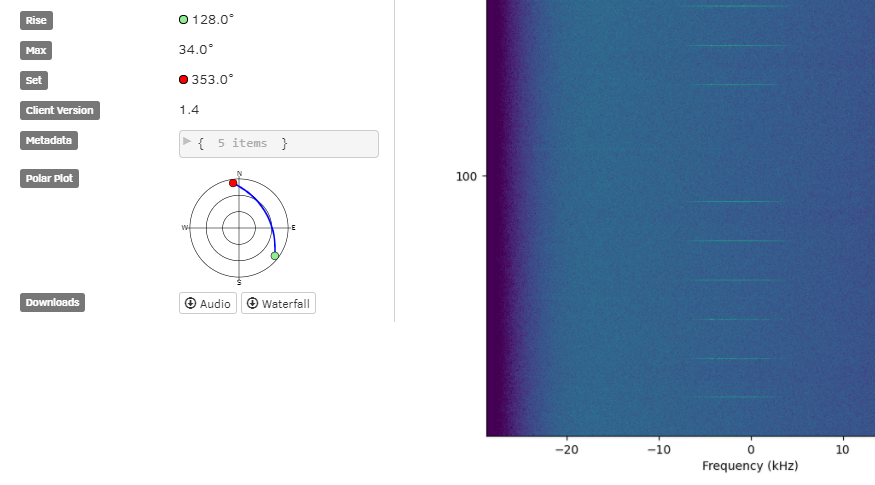
After testing directions at several positions I’m now using an elevation of about 30 degree and azimut of aprox 120 and 240 degree. Of course the signal level is lower than just using one yagi but I can now decode satellites in bort west and east pass.
This is a decoded west pass:
And this is a decoded east pass:
Summary: For my station this is a solution that makes it possible to receive at least the strongest UHF satellites. To receive better I should probably need a antenna rotor.