Det finns en bra sida med information om SSTV sändningar med mera på
http://ariss-sstv.blogspot.se/
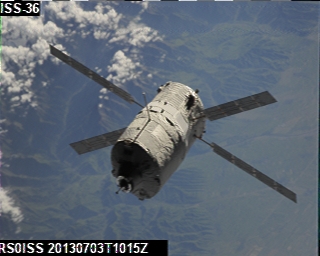
Tack för tips till SM6NZV
 AMSAT-SM - Official Website of AMSAT-SM Sweden
Här finns inlägg angående amatörradio från rymdstationen ISS.
About Ham radio from ISS.
Det finns en bra sida med information om SSTV sändningar med mera på
http://ariss-sstv.blogspot.se/
Tack för tips till SM6NZV
Ham Video transmitter onboard Columbus
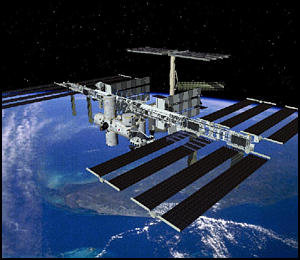
How a DATV transmitter on S-band is being added to the ARISS equipment
onboard the International Space Station has been related in an
announcement recently circulated and available at www.ariss-eu.org/HamVideo.pdf
The ARISS Ham Video transmitter is presently onboard Columbus. The
transmitter was delivered by Japanese cargo spacecraft HTV-4, which
launched August 4 and docked 5 days later.
ESA astronaut Luca Parmitano IR0ISS reported that the bags are stored
in Columbus. There are two bags: one for the transmitter, the other for
the power, camera and antenna cables.
Installation will be done by US astronaut Michael Hopkins KF5LJG who
has been trained for the commissioning of the Ham Video equipment.The
commissioning is planned later in the year, possibly end October when
there are favourable passes over Italy. Indeed, the tests transmissions
for the commissioning of the onboard equipment will be received by the
ground station of the ?Centro di Geodesia Spaziale? of the Italian
Space Agency, located in Matera, Southern Italy.
We will report in due time on the commissioning procedure which will
involve a series of tests to be performed during 3 or 4 ISS passes.
Possibly, the Ham Video transmitter will transmit continuously between
the commissioning steps offering amateur ground stations the
opportunity to test and tune their receiving equipment. The
transmissions will be performed in automatic mode, without requiring
crew time. The camera, which runs on a battery, will not be used and
the ground stations will receive a black image.
Meanwhile, commissioning is being prepared steadily. The kick-off
meeting took place November 2012 at ESTEC, the European Space Research
and Technology Centre, located in Noordwijk the Netherlands. Detailed
procedures are examined and finalized during weekly ESA/ARISS
teleconferences. A preliminary EST (Experiment Sequence Test) is
planned 28-29 August. The test will involve the ARISS ground station
IK1SLD, located in Casale Monferrato in Northern Italy.
IK1SLD, which is an ARISS telebridge station often used for
educational ARISS school contacts on VHF, has been upgraded for S-band
reception. Ham Video manufacturer Kayser Italia has delivered a 1.2
meter dish, a down converter and precision tracking motors, which are
part of the ESA funded equipment. For the EST, the station will receive
a DATV signal from a local low power S-band test transmitter. The
decoded signal will be webstreamed to the BATC server. The British
Amateur Television Club offers ARISS free access to their server. ESA
examiners will connect to the BATC server and evaluate the reception.
Test transmissions at IK1SLD will cover the different frequencies and
symbol rates available on the Ham Video transmitter.
Web streaming will take advantage of the special software developed by
Jean Pierre Courjaud, F6DZP. References are available in the HamVideo.
pdf.
When the Ham Video transmitter will become operational, it will be
used for ARISS educational school contacts. Video will be for downlink
only. Uplink will be VHF FM audio. The Ericsson transceiver onboard
Columbus will be used for reception onboard. This cross band and double
mode operation is called Ham TV. Ham Video is the name of the DATV
transmitter.
73,
Gaston Bertels ? ON4WF
ARISS-Europe chairman
This Bulletin is available from the frontpage of www.ariss-eu.org
Den 3:e augusti (2013) skickades ny DVB-S utrustning upp till ISS med möjlighet att sända “amatörradio-TV” på 2.4 GHz. På vårt nyhetsbrev har det skrivits en del om detta, det var så intressant så jag lägger in mailen här (senaste längst ner). Längst ner finns även nyhetsnotisen från ANS.
—
(Håkan SM7WSJ)
Hej!
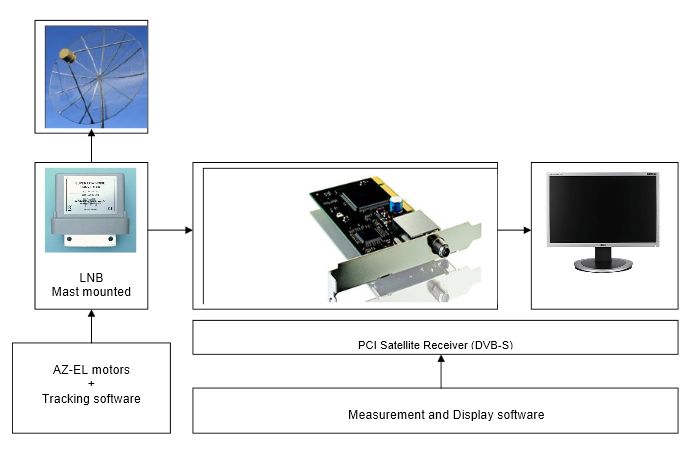
Jag har tittat lite närmare på dom svårigheter man kommer att möta om man ska ta emot TV sändningarna från ISS. Här talar vi om en utmaning som bör ligga väldigt högt i svårighetsgrad inom amatörradiohobbyn. Läs beskrivningen här (pdf)
73 Håkan SM7WSJ
PS: Jag vet bara vilka problem jag och SM2CEW hade med doppler på 144 MHz när vi körde CW mot solpanelerna på ISS. http://www.sm2cew.com/iss.html
—
(Christer SM0NCL)
Hej
Antar att referensmarkstationerna kommer att stream ut video via nätet? Annars ser det ut att bli en diger inköpslista för att ta emot ett par minuters video åt gången…..
några snabba kommentarer…
AO-40 hade väl över 20KHz doppler på 2.4Ghz fyrarna, nu är dopplerkorrigering redan implementerat om man har rigstyrningsprogram och sat-track. Frekvensnoggranheten verkar inte är lika kritisk som för AO-40 – om man tittar på DVB-S spec. – men manuell dopplerkorrigering bör nog ske med frekvensoffsettabell snarare än att lyssna på DVB-S “bärvågen”.
Az/El rotation, parabol och matare verkar helt ok med det som redan finns på ham-marknaden och körs idag på mikrovågsbanden även med högre frekvenser och större paraboler.
Convertern är ny, AO-40 convertern kan man nog glömma som den är, möjligen om man har kvar en Drake 2880 (eller liknande SAT konverter) går den nog att modifiera igen + en preamp.
10W EIRP (visserligen med bred bandbredd) från ISS är QRP ijfm. det som körs på mikrvågsbanden idag, AO-40 hade mer EIRP så där räckte det med vanliga <1m DVB-S paraboler. 1.2m är rätt stort för en solid, en ny nätparabol tillkommer på inköpslistan mao. ?
/Christer
—
(Håkan SM7WSJ)
Hej!
Jag har sparat lite länkar för att sätta mig in lite mer i SDR och dopplerkorrigering fram i höst/vinter. Det är väldigt tidsslukande…. Så här långt har jag lyssnat på vanlig kortvåg samt lite satelliter och olika fyrar på VHF samt graves radarn på 143.050 via meteorreflektion med min Funcube dongle. Här är en länk om bland annat doppler http://www.satsignal.eu/software/DDETracker.html
Jag har även sparat ett tillvägagångsätt (som en liten minnesanteckning för att se om min SDR lyder kommando från spårningsprogrammet):
Download and install Orbitron, get hold of the TLE for SWISSCUBE (has a slow CW beacon of similar power for testing) load the TLE, setup Orbitron with the right downlink frequency, install and run MYDDE. Then jump across to HDSDR, select Orbitron as the DDE client, and away you go.
Angående ISS DATV:
Jag tror att man kan lösa det hela med en free to air TV satellitmottagare samt en downconverter (Kuhne?) som tar ned signalen från S band till L band där TV mottagaren ligger i frekvens.
Angående doppler: kollade i mitt spårningsprogram med en passage) men doppler blir förstås olika beronde på passage. Om ISS sänder på 2450.00000 så är doppler 2450.048845 vid AOS. Vid passage när rymdstationen är så högt som möjligt över vår horisont ska doppler vara 0. När ISS försvinner i horisonten vid den passage jag körde så är doppler 2449.948900. Enligt vad jag lärt mig så sent som i våras så ska QPSK-modulering med 2Msymbols/s ge ett “fyrkantigt” spektrum med en -6 dB bandbredd av runt 2 MHz ( Så då kanske inte dopplern ska vara ett helt oöverstigtligt problem i alla fall?.)
Jag tror att man ska kunna fånga lite video live när ISS är så högt som möjligt och doppler lägre men det kommer att bli svårt att peka rätt med så pass stor parabol på högre frekvenser, vilket dom flesta satellitamatörer inte gör idag (men däremot mikrovågsfolket som är tvungna att veta exakt var dom pekar)
Om jag förstått rätt så ska det finnas runt fem stationer i EU som ska streama ut video på nätet och varje station kommer inte att klara mer än en viss del av passagen. Ska bli kul att se vilka stationer det blir. Det blir en rätt stor arbetsinsats för att plocka några minuter TV från rymdstationen men vi håller ju inte på med den här hobbyn för att det är lätt eller…. HI!.
73 Håkan SM7WSJ
—
(Christer SM0NCL)
OK!
Det mest verkar vara känt och redovisat men just dopplerkorrigeringen lär bli nåt som testas först när det blir verklighet, ingen(?) verkar ha simulerat detta annat än teoretiskt (60khz!!!). Fading lär bli mycket mindre av ijfm de smalbandiga signalerna vi är vana vid – eftersom det är en bred signal (1.35MHz BW?)
väldigt seriöst projekt, kul läsning om man är intresserad. http://www.amsat.it/presentazioni/Amsat%20Italia%20HamTV%20Dayton%20Hamvention%202012
/73 Christer
—
(Håkan SM7WSJ)
Hej!
Angående den downconverter som finns med i presentationen. http://www.spectra-bv.nl/downconverter.html Jag kollade med tillverkaren och den hamnar runt 280 euro. Hade man kunnat ta emot dom satelliter som är på S band så hade investeringen varit lättare http://www.svengrahn.pp.se/trackind/UpOnSband/UpOnSband.htm
Det hade blivit en fin kombination med min funcube dongle som klarar någonstans upp till 1,9 GHz
Med vänlig hälsning Håkan SM7WSJ
—
Klicka på “mera” för att läsa nyhetsnotisen från ANS.
Här kommer lite info om kontakter med ISS:
+ A Successful contact was made between Scout Canada Jamboree,
Sylvan Lake, Alberta, Canada and Astronaut Luca Parmitano, KF5KDP
using callsign NA1SS. The contact began 16:31 UTC 2013-07-08 and
lasted about nine and a half minutes. Contact was telebridged via
VK5ZAI.
CJ’13 was a gathering of up to 6500 youth, leaders and volunteers in
Sylvan Lake, Alberta from July 6-13. This wass the largest gathering
of scouts in Canada. CJ’13 brought people from across the country
and around the world together for the ultimate scouting experience.
Scouts shared friendship and adventure while experiencing personal
development that only a jamboree experience can bring. Scouts hiked
near glaciers, dug for bones, learned about the challenges of space
exploration, raided a castle, and dove for buried treasure. The week
was one scouts will never forget!
+ A Successful contact was made between Ospedale Pediatrico Bambino
Gesu’, Rome, State of Vatican City and Astronaut Luca Parmitano,
KF5KDP using callsign IRØISS. The contact began 12:36 UTC 2013-07-10
and lasted about nine and a half minutes. Contact was dirct via HV2VO.
Created in 1869 through a generous initiative of the Salviati
family, and donated to the Holy See in 1924, the Bambino Gesù
Children’s Hospital is now a comprehensive children’s polyclinic. In
1985, it has been formally recognized by the Italian Ministry of
Health as “Istituto di Ricovero e Cura a Carattere Scientifico” IRCCS
(Research Hospital), and it is now one of the three Paediatric IRCCS
in Italy, and the only one for Central and Southern Regions. The
Hospital is a reference point in Italy and abroad and it is connected
to the most important paediatric centres in Europe and the United
States. Healthcare and research.
Upcoming ARISS Contacts
+ Boy Scouts of America, 2013 National Jamboree, K2BSA, Mount Hope,
WV, direct via K2BSA
Contact is a go for: Sat 2013-07-20 15:34:46 UTC
+ Colegio Urugua, El Pinar, Uruguay, via LU8YY
Contact is a go for: Sat 2013-07-20 19:05:21 UTC
Källa: ANS-195
Det rapporteras att det har körts SSTV från ISS. Följande ger mycket
bra information hur man tar emot SSTV från ISS:

The Slow Scan TV (SSTV) experiment on the International Space
Station (ISS) was active on July 2-3, on 145.800 MHz FM

The MAI-75 experiment worked very well producing some stunning images.

All you need to do to receive the SSTV pictures from the space
station is to  connected the audio output of a scanner or amateur
rig via a simple interface to the soundcard on a Windows PC or an
Apple iOS device, and tune in to 145.800 MHz FM. You can even receive
pictures by holding an iPhone next to the radio's loudspeaker.

On Windows PC's the free application MMSSTV can be used to decode
the signal, on Apple iOS devices you can use the SSTV app. The ISS
Fan Club website will show you when the space station is in range.

MMSSTV
http://hamsoft.ca/pages/mmsstv.php

iOS SSTV App
https://itunes.apple.com/gb/app/sstv/id387910013

For more on Slow Scan Television SSTV, see this article SSTV - The
Basics
http://www.essexham.co.uk/sstv-the-basics

How to be successful with the ISS Slow Scan Television (SSTV)
imaging system
http://www.marexmg.org/fileshtml/howtoisssstv.html

Information on the MAI-75 SSTV experiment
http://www.energia.ru/eng/iss/researches/education-26.html

IZ8BLY Vox Recoder, enables you to record the signals from the ISS
on 145.800 MHz while you're away at work
http://antoninoporcino.xoom.it/VoxRecorder/

For the latest status of amateur radio activity on the ISS and real
time tracking see
http://www.issfanclub.com/

[ANS thanks Trevor M5AKA and Southgate ARN for the above information]

Photos with the courtesy of NASA/JPL
Den 17 december 2006 lyckades Thunmanskolan genomföra en amatörradiokontakt med Christer Fuglesang ombord på ISS via en s.k. telebridge. Sätraskolan, i södra Stockholm, blev den enda skolan i Skandinavien som fick en amatörradiokontakt med Christer när han åter igen besökte Internationella Rymdstationen i september 2009. AMSAT-SM dåvarande ordförande Eskil SM5SRR hade som projektledare en avgörande roll i genomförande av kontakten.
Artiklar om Thunmankontakten:
Här läser du projektledare Eskils SM5SRR berättelse om den unika kontakten med Thunmanskolan
Videofilm från kontakten:
Artiklar om Sätrakontakten:
Artikel om kontakten med Sätraskolan
Artikel från ESA om Sätrakontakten
Läs pressmeddelandet från Stockholms Stad om Sätrakontakten (PDF)

Photos with the courtesy of NASA/JPL