Categories
Ham Satellite news

AMSAT-EA’s HADES-ICM now SO-125

Re-post from ANS-152

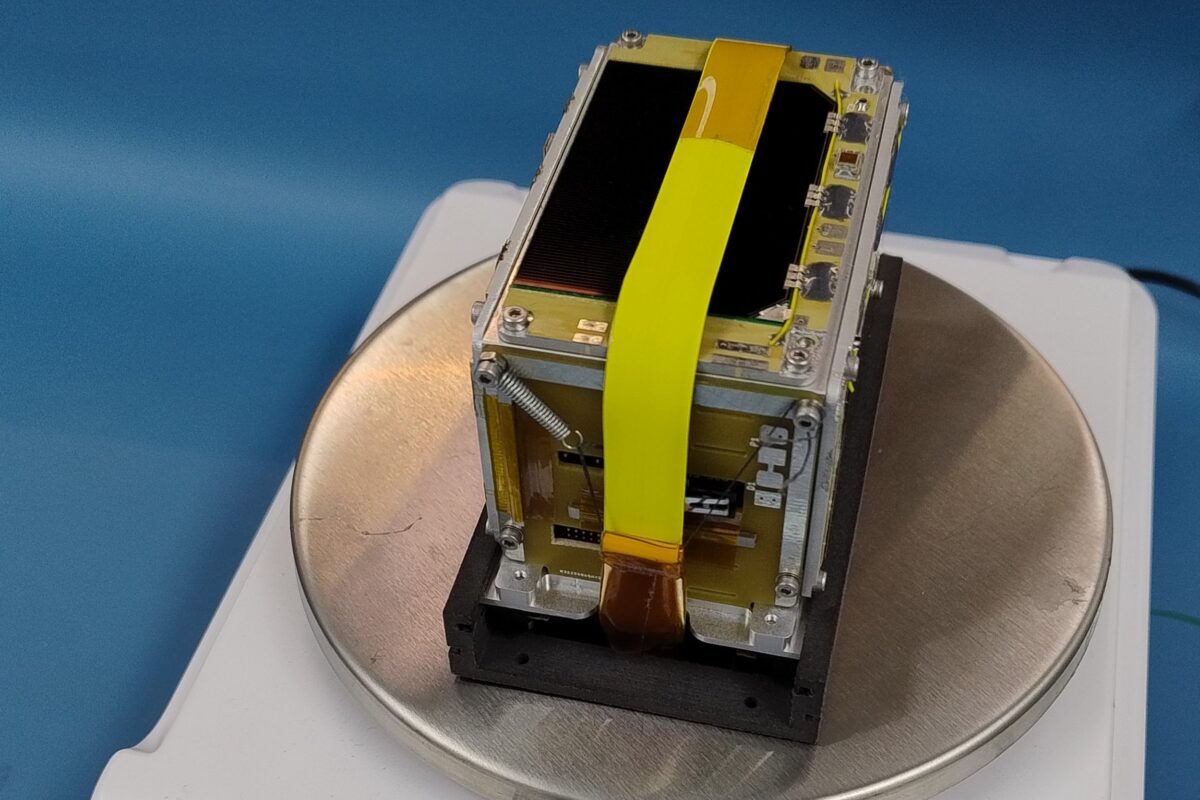
AMSAT-EA’s HADES-ICM satellite, a 1.5U PocketQube carrying an SDR-based FM and digital repeater payload for amateur radio use, was launched on March 14, 2025, aboard a Falcon 9 rocket during SpaceX’s Transporter-13 mission from Vandenberg Space Force Base in California.

Following deployment from the ION-SCV-017 Orbital Transfer Vehicle (OTV) on March 31, the satellite has been undergoing commissioning. The FM repeater is expected to be activated in June—initially on weekends, with plans to eventually transition to full-time (24/7) operation, as is currently the case with AMSAT-EA’s earlier HADES-R mission.

HADES-ICM also hosts an experimental payload from the University of Manchester’s Smart IR/Graphene Engineering Innovation Centre (GEIC), designed to test a very low-power active radiator under space conditions. Data from this experiment will be publicly transmitted via telemetry packets.

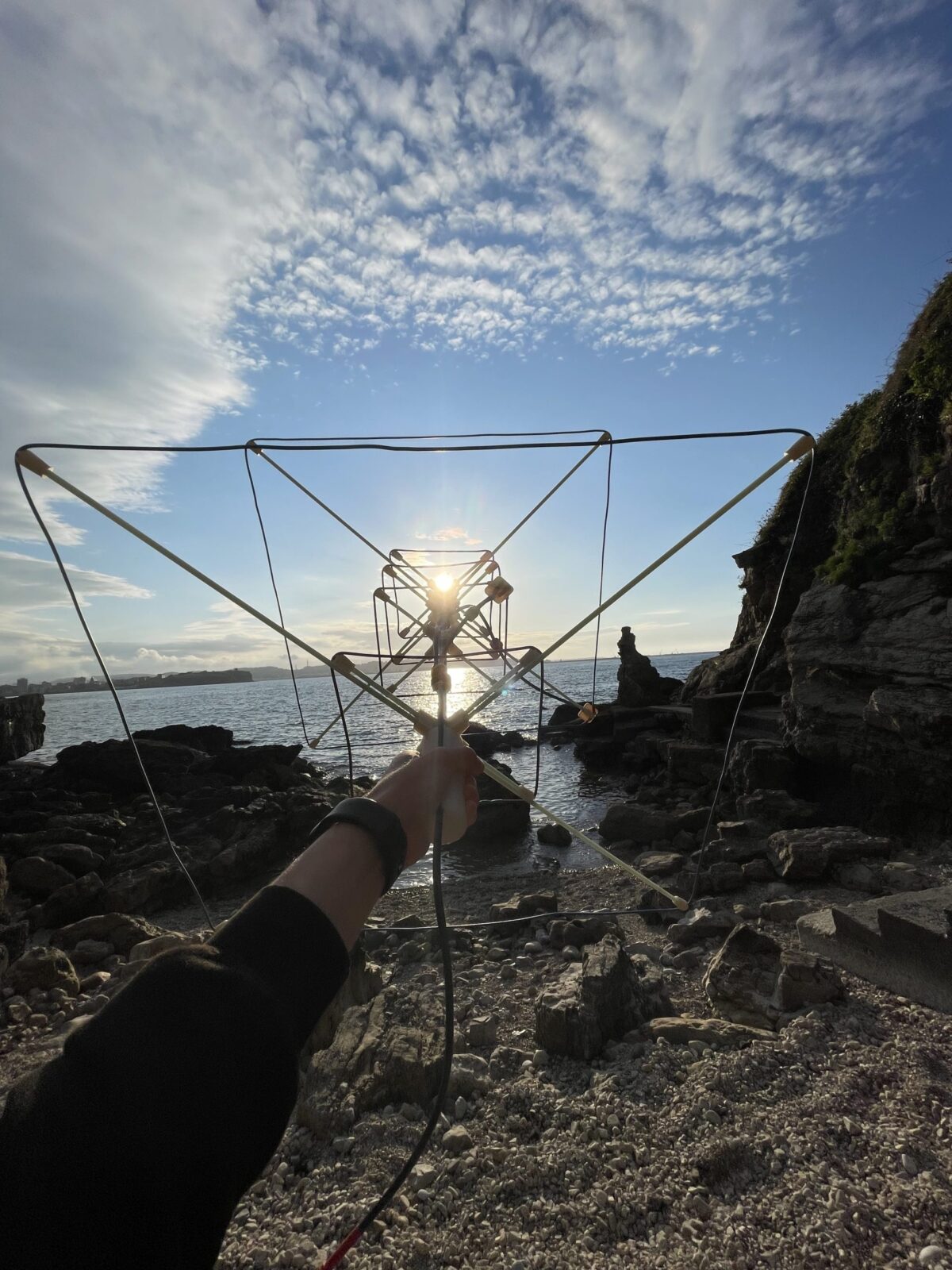
The satellite carries an FM and digital repeater payload, built on an improved SDR-based platform capable of transmitting up to 0.25W when battery conditions allow. This makes it accessible to stations using handheld antennas like the Arrow antenna. The coordinated uplink frequency is 145.875 MHz, and the downlink is 436.666 MHz. The repeater operates with an open squelch and does not require a subtone. The satellite has been cataloged with NORAD ID 63492.

At the request of AMSAT-EA, AMSAT hereby designates HADES-ICM as SO-125 (Spain-OSCAR 125). We congratulate AMSAT-EA, thank them for their continued contributions to the amateur satellite community, and wish them success with this and future missions!

[ANS thanks Drew Glasbrenner, KO4MA, AMSAT VP Operations / OSCAR Number Administrator for the above information]

Categories
Operations

Guide to use IC-9700 – Omnirig – PstRotator – Soundmodem – UISS

This is a short setup guide for using IC-9700 with PstRotator, Omnirig, Soundmodem and UISS. With this setup you can use AX.25 satellites like ISS and HADES-R.

I got many questions how to use all these software together with IC-9700 and I hope this guide can help. But… please read the PstRotator user guide for setting up Omnirig and IC-9700 and the UISS user guide. As you may notice I only explain the parts for setting up the connections so all the software can work together.

This setup guide is using USB connection between IC-9700 and PC. If you use LAN you need to change all settings for IC-9700 (DATA MOD, COM-ports, Virtual Audio channel).

The Omni-Rig version that is working OK for me is v1.18. I know there are other versions but I recommend v1.18 and the IC-9700PST config file that are delivered with PstRotator.

The Soundmodem settings explained here can of course be used for any other versions of the Soundmodem, not only for UISS.

Note again: this guide will not cover configuration of the UISS and PstRotator software, only the connections between these.

IC-9700 Setup

Set the DATA MOD to use USB:

Be sure to use DATA MOD as mode, for example FM-D, USB-D:

See what the number of the IC-9700 COM ports are, this is my setup, COM4 is the correct number for my connected IC-9700. But you can have a different number. One COM port is used by PstRotator for doppler adjustment, the other one is used for PTT keying (see below).

PstRotator – Omni-Rig Setup

The Omni-Rig setup I’m using is like this. Note the COM 4 port:

PstRotator – Satellite Setup

There are several ways to edit satellite information in PstRotator. You can select “Satellites”, enter frequency info and the add to Favorites. Or you can edit Favorites text file manually. Please see the PstRotator manual for more information.

As an example, here are the config I’m using in Favorites text file (Satellites{x}.txt) for HADES-R (SO-124) satellite that is using FM-D (data mode):

[SONATE-2; AX.25]
DownLink=145825000
UpLink=145825000
RxMode=FMD
TxMode=FMD
Linkage=Not linked

When all is configured correct you should now have doppler correction of the IC-9700, the frequency and DATA mode set automatic:

UISS and Soundmodem installation

Download and install UISS. During installation, install the Soundmodem software TNC. Note again: this guide will not cover configuration and functions of the UISS software.

Download the file ptt-dll.zip from Soundmodem webpage. Unzip and copy the files (CAT and PTT dll files) to your UISS installation folder. The PTT dll file is needed for the keying of IC-9700.

Soundmodem Setup

Start UISS and Soundmodem (can be auto started by UISS).
The setup for “Auto Run” in UISS should be like this (replace the folder path to your installation location of UISS/Soundmodem):

Now go to Settings in Soundmodem.

  • Sound card: should be the USB audio soundcard (In and OUT) for your IC-9700, could be named as something else. It is possible to edit the soundcard names in Windows so I renamed mine to “IC-9700”.
  • Server setup: this is the connection ports for UISS.
  • PTT Port: This is the other COM-port for your IC-9700 (remember that we used COM 4 in Omnirig). Soundmodem is using the PTT-dll file that you downloaded before to be able to key the IC-9700.

Test UISS PTT keying – End-2-End test

Now it is time to test PTT keying, what we call End-2-End test 🙂 In my example UISS is configured for HADES-R (SO-124) so the “Via” callsign is DP0SNX.
Press F7 (or click “Message”) and the IC-9700 should key and transmit the text in “TX APRS Message” box and at the same time as PstRotator is adjusting the IC-9700 frequency for doppler:

End of setup guide – good luck!

Categories
Ham Satellite news Operations

How to use UISS for SONATE-2

This is how I used UISS to work a QSO via SONATE-2 satellite. Note: it is not a complete setup guide how UISS and Soundmodem. You can use Google if you need a guide, see this post for IC-9700 or look at this post for IC-705.

  1. Be sure to use DP0SNX as your “via” callsign, to be able to get digipeater via SONATE-2.
  2. Press F7 och click Message to send your text in the “TX APRS Message” area. When you call CQ, change “For” to CQ. In the Message area you can enter your locator.
  3. When someone answer you you can see the callsign the “MHeard” area. Just click on the callsign, and “For” in the “TX APRS Message” area will change to this callsign.
  4. Now you can answer back (reply and confirm) to complete the QSO.

SONATE-2 is using simplex 145.825 MHz FM. More info at this page.

Categories
Changes on amsat.se

Web page updates May 2025

Categories
Ham Satellite news

Satellite report May 2025

This is some observations of the most popular satellites made by me during the first week of May 2025. In swedish below.

AO-7

Updated 2025-03-13: Mode-B working again. Do not use high power on uplink! Signal on the downlink is weaker then other sats but fully usable.

RS-44

Working great, many stations QRV. A good satellite to start listening if you never have tried ham sats before.

SO-124

FM-repeater works fine. Has also telemetry on the same downlink.

AO-73

Good and clean signal/audio, good receiver at the satellite, no need for high power at the uplink. Fast and deep fading make QSOs a challenge. Not the best satellite to start with. Can also be much QRM on the downlink passband.

QO-100

Rock stable, nothing more to say! Use it!

SO-50

Satellites works OK but lots of traffic and hard no get in to it during weekend. I think it sometimes can be very noisy and hard to heard. QRM on the uplink or FM collisions on the uplink maybe? A good satellite for start listening but far from the best beginner sat.

JO-97

Very good linear satellite with 145 MHz downlink. Good and clean signal/audio, good receiver at the satellite, no need for high power at the uplink. Very good beginner sat for SSB/CW, few people using it. Can be some QRM at the downlink passband.

ISS

Not worked by myself in a long time but the FM repeater is frequently reported to work fine.

AO-91
Fox-1-Engineering-Prototype
Not heard when I tested.

SONATE-2

AX.25 packet on 145.825 MHz FM. Made a QSO during a high elevation pass. Only one station QRV when I tested.

PO-101

Not heard when I tested.


Sammanfattning på svenska:

AO-7

Uppdaterat 2025-05-13: Satelliten fungerar igen i Mode-B. Kom ihåg att använda så lite effekt som möjligt på upplänken, annars finns risken att den stängs av. Jag använde max 10 watt idag till 13 element yagi. Upplevs som svagare på nerlänken än andra satelliter men den är fullt körbar. Jag har kört ett QSO idag, bara en annan station QRV 🙂

RS-44

Fungerar mycket bra, bra aktivitet, många stationer QRV. Bra satellit att börja lyssna på för SSB och CW om du aldrig testat förut.

SO-124

FM-repeatern fungerar bra. Sänder också telemetri på samma nerlänk.

AO-73

Fint och ren signal/ljudkvalité. Satelliten har bra mottagare så det behövs inte mycket effekt på upplänken. Djup och ganska snabb fading på signalen gör den dock svårkörd, det gäller att ha timing och försöka bokstavera vid rätt tidpunkt. Kanske inte den bästa satelliten att börja med. Kan också vara en del QRM på nerlänken.

QO-100

Väldigt stabil, inte mycket att säga. Om du har utrustning, använd den!

SO-50

Satelliten fungerar bra men som den enda riktiga FM-satelliten som fungerar dagligen har den många stationer på sig. Det gör det svårt att komma in på den, speciellt på helger. Jag tycker även att den är ganska brusig och har dålig ljudkvalité, det är svårt att höra vad som sägs ibland och ibland blir signalstyrkan ganska svag (roterar den?). QRM kan bero på många som kör samtidigt på upplänken (“FM-gnissel” på signalen). En bra satellit att börja lyssna på men jag tycker absolut inte det är en lätt satellit att börja använda för QSOn.

JO-97

Fint och ren signal/ljudkvalité, en mycket bra satellit på 145 MHz nerlänk. Satelliten har bra mottagare så det behövs inte mycket effekt på upplänken. En mycket bra satellit att börja träna för SSB/CW och transponder. Inte så många som är QRV på den dock så kan vara svårt att få till ett QSO. Kan också vara en del QRM på nerlänken.

ISS

Jag har inte kört den själv på länge men FM-repeatern rapporteras fungera bra.

AO-91
Fox-1-Engineering-Prototype
Fungerar bara när den är solbelyst, men när jag testade fungerade den inte dvs var helt tyst. Satelliten är i dåligt skick och det börjar bli dags att ta bort den som en av de satelliter som rekommenderas som nybörjarsatellit.

SONATE-2

Har kört ett AX.25 packet QSO på 145.825 MHz FM. Verkar vara väldigt få personer igång här. Kul om man vill testa sin AX.25-setup.

PO-101

Ej hörd när jag testat. Bara igång enligt schema.

Categories
Hamradio from ISS

ARISS SSTV Expedition 73 – Series 27

Time for a new #ariss SSTV transmission between May 5 – May 12. 145.800 MHz FM PD-120.