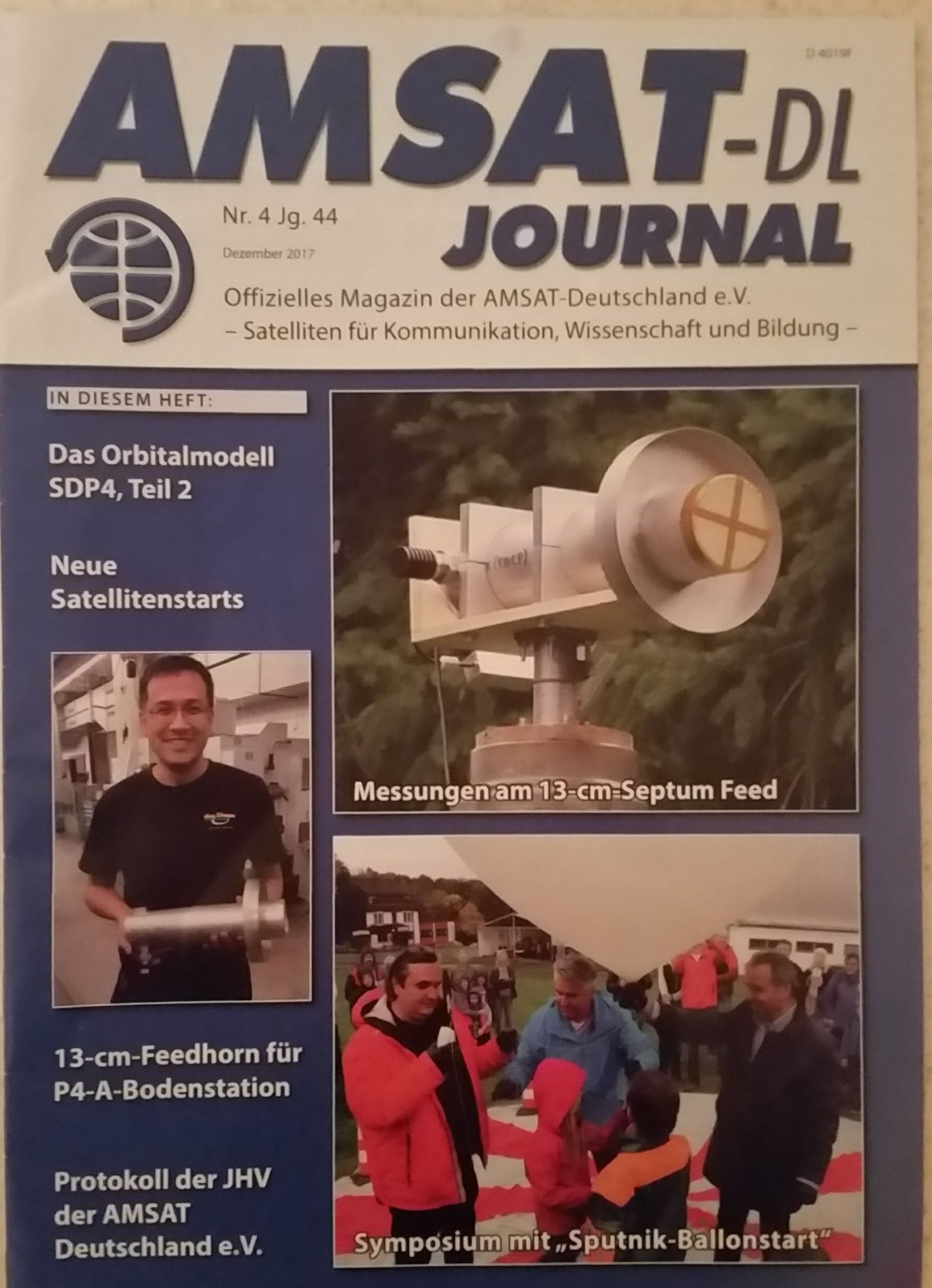
Received AMSAT-DL Journal nr 4-44. Thank you AMSAT-DL! Great article about P4A Orbit.
 AMSAT-SM - Official Website of AMSAT-SM Sweden
Här finner du nyheter om amatörradiosatelliter från hela världen.
Varios ham radio satellites news.
Received AMSAT-DL Journal nr 4-44. Thank you AMSAT-DL! Great article about P4A Orbit.
AMSAT-SM has some cooperation with the student satellite MIST from KTH. Please read an update from MIST by Sven Grahn (link to PDF):
https://mistsatellite.files.wordpress.com/2017/10/mist_campus100.pdf
For more information about MIST see homepage:
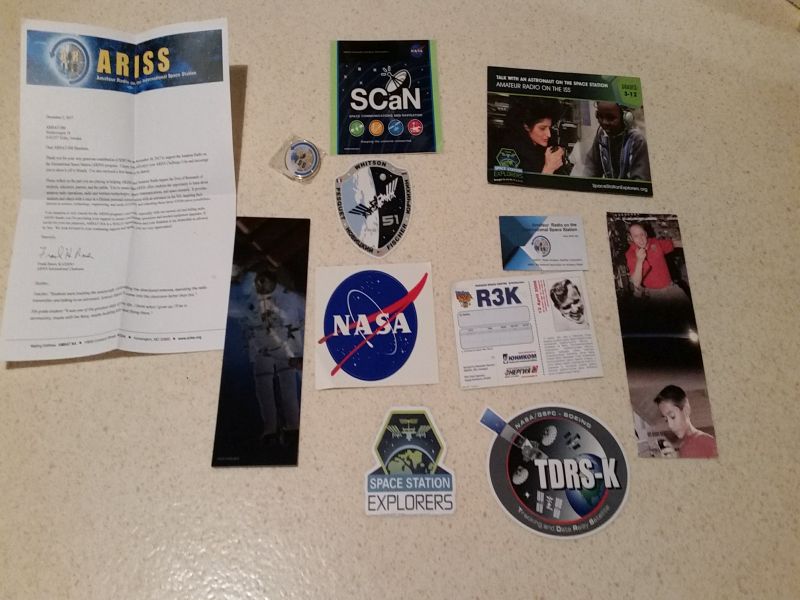
AMSAT-SM is proud to announce a donation to ARISS (via AMSAT-NA) of aprox. 285 US$. We hope that this small donation will help ARISS further work with amateur radio from ISS.
Information about AMSAT-SM:
AMSAT-SM is the Swedish section of AMSAT with aprox 220 members (2017). One of our objectives is to inform Swedish hams about the fun with amateur satellites! Not many SM hams are active via satellite at the moment. With the help from our swedish webpage and HF-net we hope that more swedish hams should be using amateur satellites. The AMSAT-SM annual meeting is held every spring. Some weeks on Sundays we have a HF-net on 80 meters with lots of news about satellites and space.
Below you can see the letter and stickers received from ARISS after our donation. Thank you very much for this gift and letter!

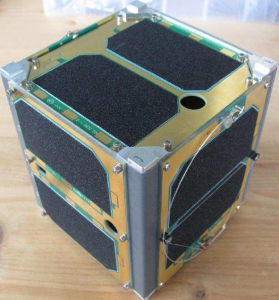
Den 18 november 2017 kl 09:47 UTC kom då äntligen nästa satellit i FOX-serien upp och den heter numera AO-91. Just nu går det att ta emot telemetri på 145.960 MHz, sedan blir den en flygande repeater med upplänk på 435.250 MHz FM (67 Hz CTCSS).
Officiella nyhetsbrevet från ANS:
RadFxSat (Fox-1B) Launched, Designated AMSAT-OSCAR 91 (AO-91)
The Delta II rocket carrying RadFxSat (Fox-1B) launched at 09:47:36
UTC on November 18, 2017 from Vandenberg Air Force Base, California.
Following a picture-perfect launch, RadFxSat was deployed at 11:09
UTC. Then the wait began. At 12:12 UTC, the AMSAT Engineering team,
watching ZR6AIC’s WebSDR waterfall, saw the characteristic “Fox Tail”
of the Fox-1 series FM transmitter, confirming that the satellite was
alive and transmitting over South Africa. Shortly after 12:34 UTC, the
first telemetry was received and uploaded to AMSAT servers by Maurizio
Balducci, IV3RYQ, in Cervignano del Friuli, Italy. Initial telemetry
confirmed that the satellite was healthy.
After confirmation of signal reception, OSCAR Number Administrator
Bill Tynan, W3XO, sent an email to the AMSAT Board of Directors
designating the satellite AMSAT-OSCAR 91 (AO-91). Bill’s email stated:
“RadFxSat (Fox-1B) was launched successfully at 09:47 UTC today
November 18, 2017 from Vandenberg Air Force Base in California and has
been received by several amateur stations.
RadFxSat (Fox-1B), a 1U CubeSat, is a joint mission of AMSAT and the
Institute for Space and Defense Electronics at Vanderbilt University.
The Vanderbilt package is intended to measure the effects of radiation
on electronic components, including demonstration of an on-orbit
platform for space qualification of components as well as to validate
and improve computer models for predicting radiation tolerance
of semiconductors.
AMSAT constructed the remainder of the satellite including the
spaceframe, on-board computer and power system. The amateur radio
package is similar to that currently on orbit on AO-85 with an uplink
on 435.250 MHz (67.0 Hz CTCSS) and a downlink on 145.960 MHz.
Experiment telemetry will be downlinked via the DUV subaudible
telemetry stream, which can be decoded using the FoxTelem software.
RadFxSat (Fox-1B) was sent aloft as a secondary payload on the United
Launch Alliance (ULA) Delta II rocket that will transport the Joint
Polar Satellite System (JPSS)-1 mission. RadFxSat (Fox-1B) is one of
four CubeSats making up this NASA Educational Launch of Nanosatellites
(ELaNa) XIV mission, riding as secondary payloads aboard the JPSS-1
mission.
Since RadFxSat (Fox-1B) has met all of the qualifications necessary to
receive an OSCAR number, I, by the authority vested in me by the AMSAT
President, do hereby confer on this satellite the designation
AMSAT-OSCAR 91 or AO-91. I join amateur radio operators in the U.S.
and around the world in wishing AO-91 a long and successful life in
both its amateur and scientific missions.
I, along with the rest of the amateur community, congratulate all of
the volunteers who worked so diligently to construct, test and prepare
for launch the newest amateur radio satellite.
William A. (Bill) Tynan, W3XO
AMSAT-NA OSCAR Number Administrator”
AMSAT Engineering reminds stations that the satellite will not be
available for general use until the on-orbit checkouts are complete.
Please continue to submit telemetry to assist the Engineering team in
completing the commissioning process.
Lot of news about RadFxSat/Fox-1B in latest ANS:
SB SAT @ AMSAT $ANS-316.01
ANS-316 AMSAT News Service Weekly Bulletins
AMSAT News Service Bulletin 316.01
From AMSAT HQ KENSINGTON, MD.
DATE November 12, 2017
To All RADIO AMATEURS
BID: $ANS-316.01
AMSAT RadFxSat/Fox-1B Launch Delay – New Plan NET November 14
United Launch Alliance (ULA) announced on November 6 that the launch
of the Delta II rocket carrying RadFxSat has been delayed due to a
faulty battery on the booster. The launch is now scheduled for Tuesday,
November 14th at 09:47 UTC. NASA TV coverage begins at 09:15 UTC.
Web streaming will be available on www.nasa.gov/ntv – launches are
also often streamed at http://www.ulalaunch.com and spaceflightnow.com
Continue reading for what you can expect after the launch and how you
can help …
INTRODUCTION
RadFxSat is a partnership with Vanderbilt University ISDE and hosts
four payloads for the study of radiation effects on commercial off the
shelf components. RadFxSat features the Fox-1 style FM U/v repeater
with an uplink on 435.250 MHz (67.0 Hz CTCSS) and a downlink on
145.960 MHz. Satellite and experiment telemetry will be downlinked via
the “DUV” subaudible telemetry stream and can be decoded with the
FoxTelem software:
https://www.amsat.org/foxtelem-software-for-windows-mac-linux/ .
LAUNCH AND EARLY ORBIT PHASE (LEOP)
At this time, pre-launch Keplerian elements are not expected to be
available. However, based on the Local Time of the Ascending Node
(LTAN) of the primary payload, 13:30, stations should expect to have
their initial ascending passes starting around noon local time.
The estimated time of “First Veronica,” the initial beacon after
deployment, is 12:07 UTC. Due to the tight constraints on the primary
payload deployment, the secondary payloads may be delayed slightly, so
this should be considered the soonest the transmitter will be enabled.
Orbital elements will be published as soon as they are available on
the AMSAT website. Stations in Europe, South America, and North America
should point your beams south and have FoxTelem running while awaiting
the initial post-launch Keplerian elements.
Participation in telemetry collection by as many stations in as many
parts of the world as possible is essential as AMSAT Engineering looks
for successful startup and indications of the general health and
function of the satellite as it begins to acclimate to space.
If you are capturing telemetry with FoxTelem please be sure that
“Upload to Server” is checked in your settings, and that your “Ground
Station Params” are filled in as well. You can help AMSAT and everyone
waiting to get on the air with RadFxSat tremendously by capturing
RadFxSat telemetry.
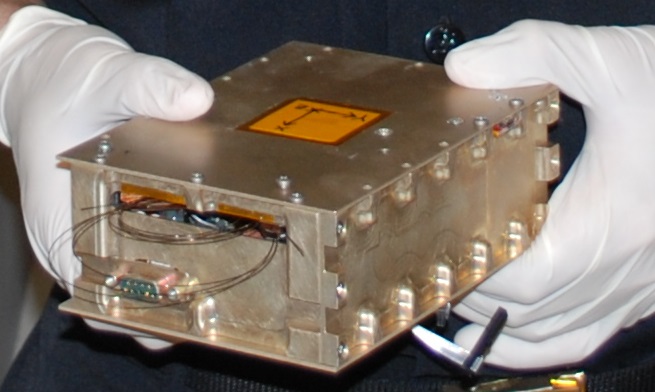
Satelliten QIKCOM-1 har släppts ut från ISS men tyvärr har inget hörts från den. Se även http://aprs.org/qikcom-1.html
QIKCOM-1 was deployed from the ISS Friday at 0915 UTC attached to
the SIMPL spacecraft. It is an APRS digipeater just like the ISS.
Whereas it also supports the same ARISS alias as the ISS digipeater,
please use the ALIAS of APRSAT on your uplinks instead of ARISS so
that you only hit QIKCOM-1 for these first few passes with your test
uplinks (once a minute).. Or you can be specific via QIKCOM-1
callsign. At 4 Watts, it will be 10 dB stronger than PSAT(84) and
about the same power level as ISS and should be easy to receive on
the 145.825 downlink.
We ask all potential IGates to check your ground stations and make
sure they are ready to IGate packets during those initial orbits from
all over the globe. If you do not have an IGate, just capture
packets and email them to qikcom1 at gmail.com until we see that
everything is making it to the APRS-IS.
The downlink should be available on the original
http://pcsat.findu.com and also on
http://59.167.159.165/satreporter/index2.html
Being released from ISS, QIKCOM-1 will of course have the same
Elements and tracking info as ISS until they begin to separate. This
means passes over the USA every 90 minutes beginning at 0630 EDT in
the Southeast and ending after 1440 PDT in Southern California.
Web page: http://aprs.org/qikcom-1.html
As usual, QIKCOM-1 is not intended for UNATTENDED BEACONS. It is
designed for Live Operations and experiments only.
For the initial passes, do not attempt 2-way contacts. Just set
your STATUS text to indicate your TX power and antenna type and
transmit at 1m intervals ATTENDED as described on the web page
during these first few orbits. So we can get sttistices on uplink
quality.
[ANS thanks Bob, WB4APR for the above information]