Categories
Hamradio from ISS

Ett steg närmare ny amatörradio på ISS

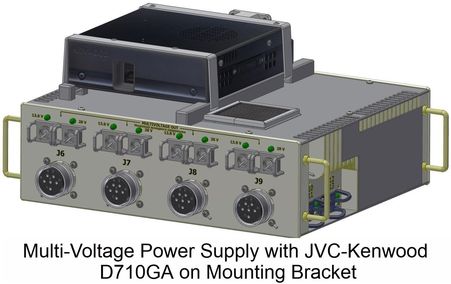
Just nu jobbas det för fullt med ny amatörradio-utrustning på ISS. Den kommer bla. bestå av en Kenwood D710GA och ett helt nytt system för kraftförsörjning. Det är intressant att läsa om hur mycket arbete och pengar som går åt för detta projekt. Det finns beskrivet på ARISS hemsida och en del av texten finns nedan.

Ska AMSAT-SM donera pengar till detta projekt? Tyck till i vår omröstning som du hittar här.


Från ARISS hemsida:

On behalf of the ARISS International team, I am proud to announce that on Friday September 29th the ARISS team submitted the InterOperable Radio System (IORS) Safety Data Package to NASA for review! Our next step in this process is the Safety Review, which is planned for November 2.

Submitting this was a phenomenal accomplishment!! Particularly since the entire Safety Data Package was developed exclusively by our ARISS volunteers—something we have never done before. Prior to this submittal, all safety packages—from Owen Garriott’s in the early 1980s to today–were developed with contractors from NASA, ESA or Energia. And might I say at substantial expense. I am pleased that the ARISS team did it ourselves!

Why is this important? Two reasons:

1) This is a very major IORS milestone. We cannot get to orbit without successfully completing the safety review process and getting our hardware certified for flight.
2) Developing the safety package exclusively with volunteers is an innovative and gutsy approach to keep costs down and get the hardware flown sooner. Otherwise we probably would have to slip launch 1-2 years while we acquired additional funding to get this done.

NASA Human Spaceflight Safety Certification is a four-step process—Phase 0, Phase 1, Phase 2 and Phase 3. The material we submitted covers the first three of the four phases. As part of Phases 0, 1 and 2, we need to make sure NASA understands our design. And we need to show NASA that we understand all the potential hazards that our hardware systems could introduce to ISS and how we have mitigated (or prevented) these hazards. One example is to demonstrate to NASA that our IORS was designed with electrical wiring and circuit breakers that possess adequate features and sufficient margin to prevent an electrical shock or fire on-board the ISS. Critically important stuff! The final phase (Phase 3) will be complete when we have completed all testing and NASA inspection of our flight hardware and NASA deems it flight worthy. At that point the IORS will be flight certificated and we can fly! Currently we are looking to March-May 2018 for flight readiness.

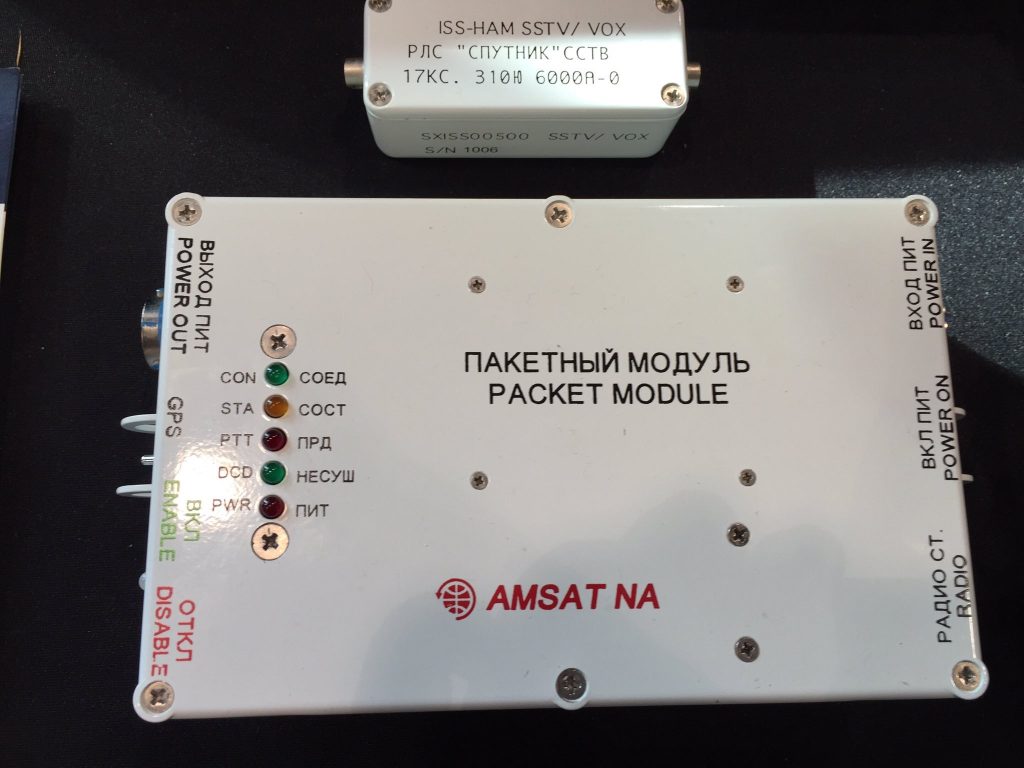
For those not following ARISS hardware development very closely, we are developing the IORS to replace most of the on-board radio hardware. It is called “interoperable” because it is being designed to be operated anywhere on ISS. But specifically, it will be used in the two areas with ISS Ham legacy antennas: the Columbus Module and the Russian Service Module. Interoperability allows us to leverage existing ISS power cables, it can be moved between modules in the event of on-orbit failures, and it supports common training and operations. The IORS is the most complex in-cabin hardware system we have ever designed, built, tested and flown as a volunteer team. We will remove the 3 watt Ericsson handheld radio system, initially certified for flight in 1999, and the Packet module–both of which have recently had issues—and install a brand-new, specially modified 25 watt JVC Kenwood D710GA radio to enable a multitude of new or improved capabilities on ISS, including voice repeater and better APRS operations. A key development is the Multi-Voltage Power Supply (MVPS), which interfaces with multiple electric outlet connection types on ISS and provides a multitude of power output capabilities for our current and future ARISS operations and amateur radio experimentation. It will also allow our Ham Video system to have a dedicated power outlet, eliminating the outlet sharing we have now, which shuts down Ham Video at times.

This effort would not be possible without the dedication and persistence of our IORS development team of volunteers. They have been working tirelessly behind the scenes to provide an outstanding amateur radio experience for all. Our IORS development team includes: Lou McFadin, W5DID, our Chief Engineer; Kerry Banke, N6IZW, the MVPS lead designer; Bob Davis, KF4KSS, the MVPS Mechanical enclosure designer; Ed Krome, K9EK, supporting IORS thermal control and cabin noise dissipation; Dave Taylor, W8AAS, our JVC Kenwood D-710 development liaison; Bob Bruninga, WB4APR, our APRS and D-710 operations expert; Shin Aota, JL1IBD, and Phil Parton, N4DRO for all their phenomenal support from JVC Kenwood; Kenneth Ransom, N5VHO, our operations lead; and our safety package team—Ken Ernandes, N2WWD, and Gordon Scannell, KD8COJ. Kudos to all on a fantastic effort!

Designing, building and testing the IORS is a huge undertaking and *very* expensive. We need to build ten (10!) units to support flight hardware, flight spares, testing, and training across the international team. Hardware parts, development tools, fabrication, testing, and expenses to certify the IORS are expected to cost approximately $150,000. And the hard part (i.e. most expensive part) is just now starting. So please consider making a donation to ARISS to take our hardware system from dream to reality. You can donate to ARISS directly through the AMSAT web site at: http://www.ariss.org/donate.html. ALL donations go directly to ARISS.

Thank you for all your support to inspire, engage and educate our youth to consider wireless communications and amateur radio, and to pursue STEAM careers through our exciting human space exploration and amateur radio endeavor!

Ad Astra! To the Stars!

Sincerely,
Frank H. Bauer, KA3HDO
ARISS International Chair and ISS Ham Radio Principal Investigator
Categories
Hamradio from ISS

ISS Packet QRT

Tyvärr har vi inte hört någon trafik från ISS på ett tag. Det verkar som att det kommer att ta en tid innan den kommer tillbaka. Det är som vi vet en stor utmaning att få amatörradio ombord på ISS att fungera.
Med vänlig hälsning Håkan SM7WSJ


Packet Module Status On Board ISS

ARISS has received several reports stating that the packet system on
ISS is down. Here is what we know and our current forward plan.

The packet system in the Columbus module started to act up late last
week, sending only a beacon. The ARISS team requested a power recycle
by the crew, and with that power recycle, the packet system appears to
have stop functioning completely. Note that this unit has been on-
orbit for 17 years. It was launched on the STS-106 Space Shuttle
Atlantis mission in September 2000 and was built, tested and certified
for flight about 20 years ago.

The ARISS team has had some extensive discussions on the way forward.
We would first like to do some additional troubleshooting with the
existing packet module. It will take some time (weeks) to develop
troubleshooting procedures, get the procedures approved by NASA and
then conduct the tests with the crew. This includes an additional
power cycle. The turnaround time is much longer than usual because a
new crew will soon be arriving on ISS. The current crew is focused on
the new crew arrival and there will be about a one- to two-week
transition after the new crew arrives. On the positive side, one
aspect of our troubleshooting?a second power cycle?will occur
automatically because ARISS is shut down during crew docking and
turned on afterwards. However, there will be more to our
troubleshooting than just the power cycle.

We have some additional plans with alternative solutions, but those
are currently being discussed and prioritized within the ARISS team.
All solutions will require international ARISS team coordination,
additional procedures and crew interaction. People who have
carefully followed ISS operations know that crew time continues to
evolve with the more extensive research that is occurring on-board.
Suffice it to say, it will take longer than what it has taken in the
past to work through this issue.

The above information is to make sure that ARISS properly sets
expectations on how long it will take to resolve this. At this point,
expect a few months with no ARISS packet.

As you all can see, deploying the Interoperable Radio system that is
currently under development by ARISS has become even more critically
important. The ARISS team is laser focused on getting that system
developed and deployed. We are conducting a final design review with
NASA on this system next week. But we cannot get to the finish line
without your help. If you can, please consider a donation to the
ARISS radio fund by clicking on the ARISS donate button on the ARISS
web page (www.ariss.org) or the AMSAT web page (www.amsat.org). All
donations, large and small are appreciated.

On behalf of ARISS, we thank you for your sustained interest and
support of our program.

Sincerely,

Frank H. Bauer, KA3HDO
ARISS International Chair

Categories
Hamradio from ISS

ISS SSTV RX juli 2017

Kurt Winebäck tog emot denna fina SSTV-bild från ISS under juli 2017.

Categories
Hamradio from ISS

SSTV från ISS den 15 juli 2017

Den 15 juli 2017 väntas det SSTV från ISS på 145.800 MHz. Läs mer nedan.
Och gå gärna in på vår specialsida om ISS.


ARISS SSTV Commemorative Activity

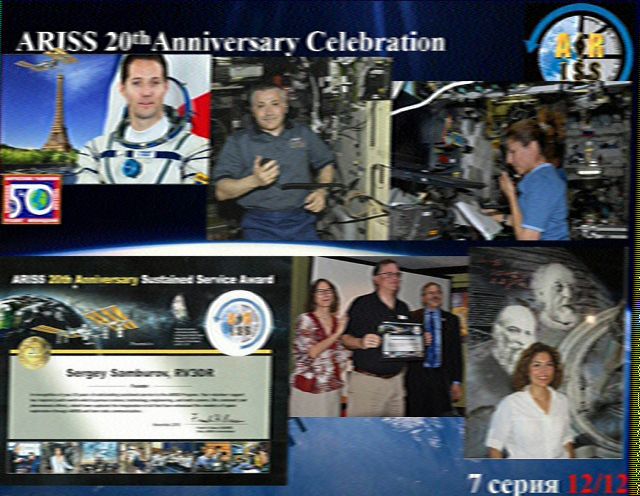
Special Slow Scan Television (SSTV) transmissions are expected to be made from the International Space Station on 145.800 MHz FM around the weekend of July 15. In commemoration of their 20th anniversary, the ARISS team is planning to transmit a set of 12 SSTV images that capture the accomplishments of ARISS over that time.

The ARISS SSTV Blog says:

While still to be scheduled, we anticipate the SSTV operation to occur around the weekend of July 15. We are planning for at least a 2 day operation, but are working for a potential longer operation. Note that all of this tentative and may change based on crew scheduling and ISS operations. Starting with our first meeting in November 1996, our joint operations on Mir, becoming the first operational payload on ISS in November 2000 to our 1103rd school contact (so far), ARISS’ accomplishments have been tremendous. We have touched the lives of many and inspired and educated countless students to pursue science, technology, engineering and math careers.

Please stay tuned as more details on our SSTV event will be communicated in the coming weeks. Please spread the word. And think about how you can get students in your area involved in capturing these images. We would love to hear your stories on how that goes.

Categories
Hamradio from ISS Telemetry

ISS tillbaka på 145.825 MHz

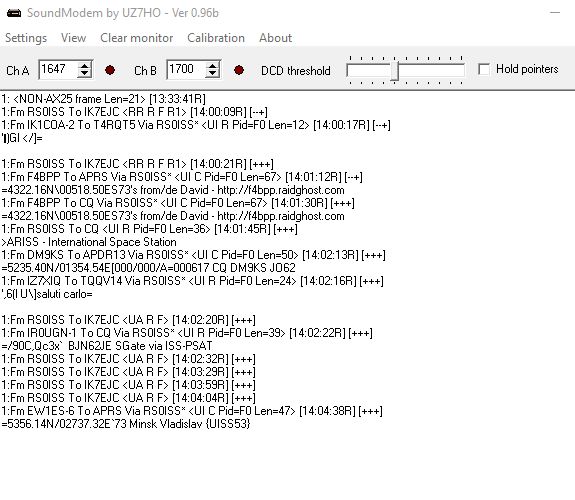
ISS tillbaka på 145.825 MHz med packet:

Categories
Hamradio from ISS

Uppdatering runt DATV / HamVideo från ISS

Minitioune Software by Jean-Pierre Courjaud F6DZP

Det finns nu lite mer information om DATV / HamVideo från ISS. Kolla på länken nedan, där finns mycket roligt att läsa.


On board Columbus, the HamVideo transmitter is fully operational and provides permanent DATV signals, allowing ground stations to fine tune their receiving equipment. When possible, ARISS school contacts are enhanced by crew operated HamTV.

The demand for a dedicated HamTV receiver is growing. Jean-Pierre Courjaud F6DZP developed an up-to-date receiver and wrote special software for HamTV. He dubbed the receiver TuTiouner and the software Tutioune (phonetic French transcript for “You tune”).

Components for the TuTioune receiver are for sale at the BATC shop (British Amateur Television Club).The software is available for free on Jean-Pierre’s website.

Full details, including schematics, are provided on the HamTV home page:
http://www.amsat-on.be/hamtv-summary/

Now and then, the HamVideo transmitter must be powered down, for several reasons. The status of the transmitter is published on the same webpage.

73,

Gaston Bertels – on4wf
ARISS-Europe