Categories
Hamradio from ISS

Planerad ARISS kontakt Sandö Räddningsgymnasium och Minervaskolan

AMSAT-SM ARISS-koordinator Eskil SM5SRR och bloggen hamnews.se rapporterar att Sandö Räddningsgymnasium tillsammans med Minervaskolan i Ånge har blivit uttagen som en av åtta skolor i Europa som får möjlighet att få köra amatörradio till rymdstationen ARISS.

Vi håller koll på exakta datum och ger er mer information senare.

Categories
Hamradio from ISS

SSTV från ISS

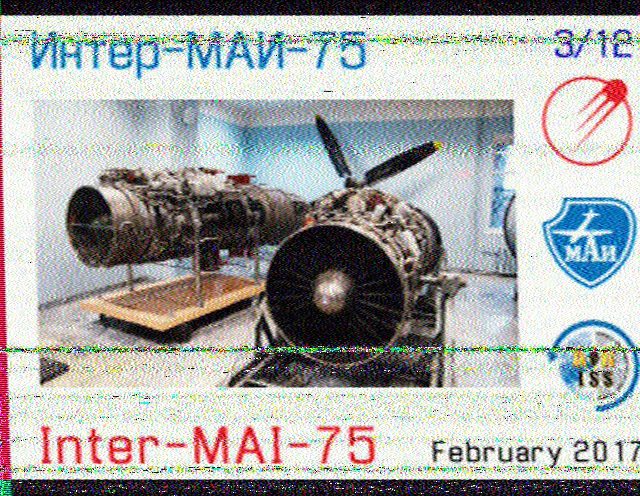
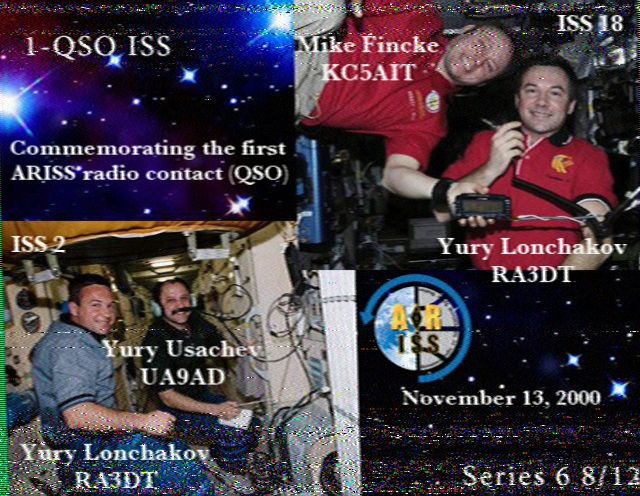
Kurt Winebäck lyckades ta emot SSTV från ISS när de var aktiva för några dagar sedan (februari 2017):

Categories
Hamradio from ISS

ISS VHF radioproblem

VHF-stationen på ISS har tydligen gett upp efter 16 års användning(!).  Mera info från ANS:


VHF Handheld Radio Failed, ARISS Contacts Moved to Kenwood Radio on Board
the International Space Station (ISS)

The VHF handheld radio model that has been used by the ARISS program to
connect students worldwide with astronauts on board the International Space
Station (ISS) for over 16 years has given an error message and is unusable at
this time. While the ARISS technical team evaluates the best path to restore
operation from the Columbus module, ARISS contacts will be supported using the
Kenwood radio in the Russian Service Module. During this period, the packet
digipeater will be unavailable.

Switching to the 70 cm radio capability on board the Columbus module for some
operations is being coordinated. Expect further updates as we work to resolve
this problem.

Amateur Radio on the International Space Station (ARISS) is a cooperative
venture of international amateur radio societies and the space agencies that
support the International Space Station (ISS). In the United States, sponsors
are the Radio Amateur Satellite Corporation (AMSAT), the American Radio Relay
League (ARRL), the Center for the Advancement of Science in Space (CASIS) and
National Aeronautics and Space Administration (NASA).  The primary goal of
ARISS is to promote exploration of science, technology, engineering, and
mathematics (STEM) topics by organizing scheduled contacts via amateur radio
between crew members aboard the ISS and students in classrooms or informal
education venues.  With the help of experienced amateur radio volunteers, ISS
crews speak directly with large audiences in a variety of public forums.
Before and during these radio contacts, students, teachers, parents, and
communities learn about space, space technologies, and amateur radio.

For more information, see
www.ariss.org
www.amsat.org
www.arrl.org.

Categories
Hamradio from ISS

SSTV från ISS 15-16 aug 2016

Från ARRL får vi denna info:

Slow-scan television (SSTV) transmissions will be made from the International Space Station (ISS) on August 15 and 16. The MAI-75 Experiment will transmit SSTV images on 145.80 MHz over the course of a few orbits as the space station passes over Moscow. Operators in Europe and South America will have the best chances to receive images. Operators along the US East Coast may have one chance on August 16. — Thanks to Kenneth Ransom, N5VHO, ISS Ham Project Coordinator

Categories
Hamradio from ISS

ISS SSTV received in Sweden

ISS SSTV received in Sweden by Kurt Winebäck.

sstv_iss_april_2016

Categories
Ham Satellite news Hamradio from ISS

STMSat-1 SSTV-satellit

Ny satellit från ISS. Dock stämmer ej datum enligt text:
School SSTV CubeSat to deploy from ISS

A Slow Scan TV (SSTV) CubeSat developed by students at Saint Thomas
More Cathedral School (STM) in Arlington, VA, is set to be deployed
from the International Space Station on March 7 between 8-11am EST.

STM is thought to be the first Elementary school to build their own
satellite, even Pre-Kindergarten, Kindergarten, and First Grade
students were involved in the project.

The satellite, a 1U CubeSat called STMSat-1, will transmit a SSTV
signal on 437.800 MHz.

Middle School Students took the initiative to begin exploring how to
receive data from the CubeSat and formed a Ham Radio Club. There,
they learned the basics of operating a ham radio station and explored
Slow Scan Television as an option for receiving images once the
satellite is deployed.

Be advised that the deployment could be delayed or postponed
depending on demands on the crew’s time.