
Kurt Winebäck tog emot denna fina SSTV-bild från ISS under juli 2017.
 AMSAT-SM - Official Website of AMSAT-SM Sweden
Webmaster and member of the AMSAT-SM steering group.
Kurt Winebäck tog emot denna fina SSTV-bild från ISS under juli 2017.
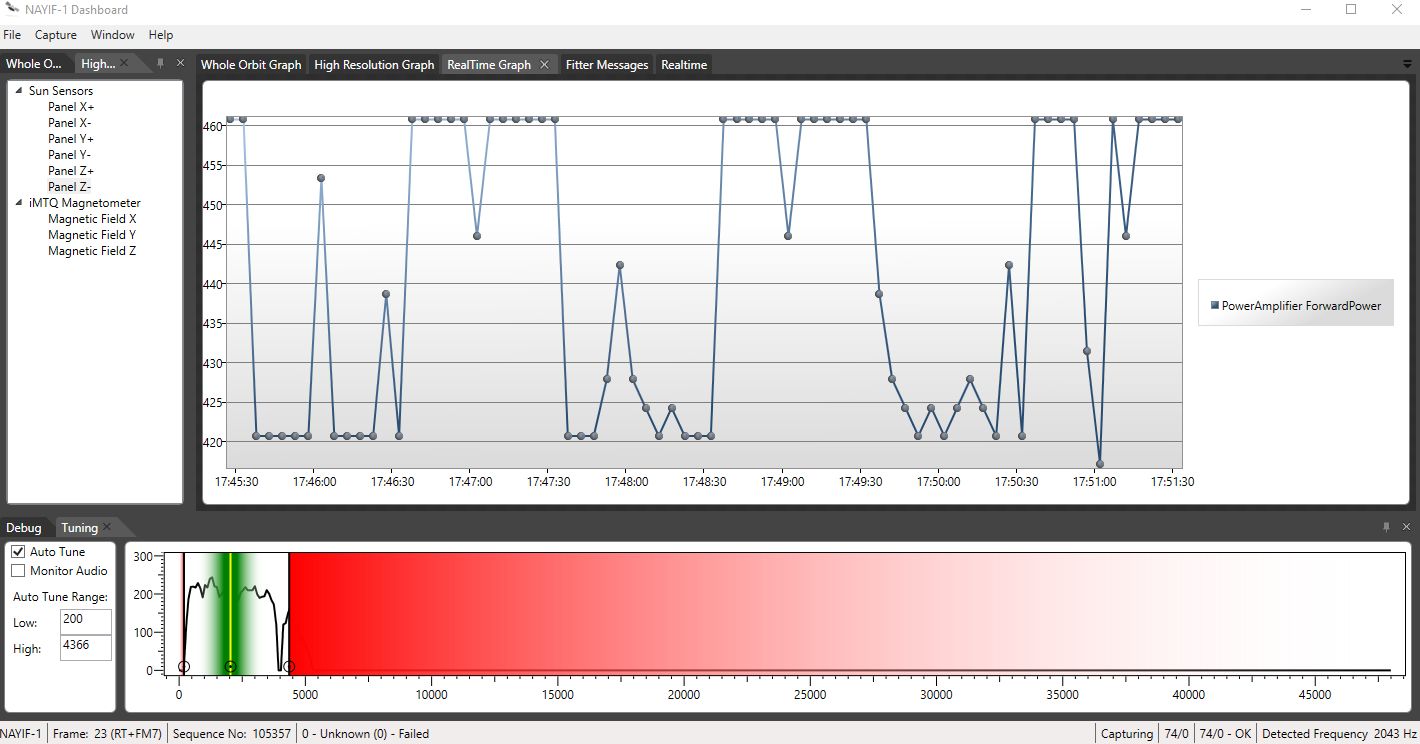
74 frames RX in 6 minutes with #airspy and fixed Crossed Dipole!
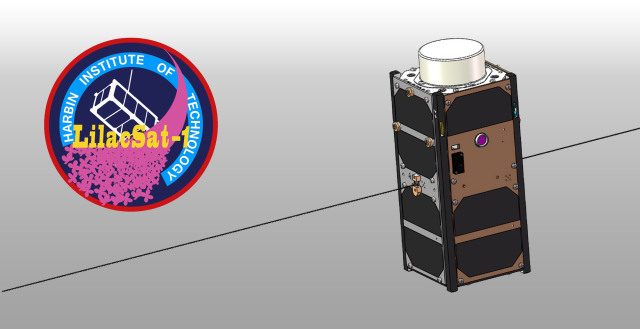
LilacSat-1 har nu fått namnet LilacSat-OSCAR 90 för att satelliten har lyckats med amatörradiokommunikation både på upp- och nerlänk. Snart är vi uppe i 100 Oscar-nummer!
OSCAR Number Administrator Bill Tynan, W3XO, has announced that,
pursuant to a request submitted to the AMSAT Board of Directors, the
LilacSat-1 satellite has been assigned the designation LilacSat-OSCAR
90, or LO-90.
LilacSat-OSCAR 90 was designed and constructed by the Harbin Institute
of Technology in Harbin, China as part of the QB50 project to study
the lower thermosphere. It was carried aboard an Orbital-ATK Cygnus
cargo ship, which was launched to the International Space Station on
April 18, 2017, and deployed from the ISS on May 25, 2017.
LO-90 carries a voice transponder with a 145 MHz FM uplink and a 435
MHz digital voice downlink using the Codec2 open source voice codec as
well as a camera open for activation by amateur radio operators
worldwide.
More information about the satellite can be found
http://lilacsat.hit.edu.cn/?page_id=594. A guide for receiving the
downlink prepared by Adam Whitney, K0FFY, can be found at
http://adamwhitney.net/working-lilacsat-1/.
Since the launch of the first amateur radio satellite, OSCAR 1 in
1961, it has been traditional for amateur radio satellites to carry
the name OSCAR, for “Orbiting Satellite Carrying Amateur Radio”.
AMSAT, which administers the numbering of OSCAR satellites at the
request of the Project OSCAR organization, encourages all
builders/owners of amateur radio satellites that meet the requirements
listed at http://www.amsat.org/?page_id=2478 to apply for an OSCAR
designation.
[ANS thanks Paul, N8HM, for the above information]
 Den 15 juli 2017 väntas det SSTV från ISS på 145.800 MHz. Läs mer nedan.
Och gå gärna in på vår specialsida om ISS.
ARISS SSTV Commemorative Activity
Special Slow Scan Television (SSTV) transmissions are expected to be made from the International Space Station on 145.800 MHz FM around the weekend of July 15. In commemoration of their 20th anniversary, the ARISS team is planning to transmit a set of 12 SSTV images that capture the accomplishments of ARISS over that time.
The ARISS SSTV Blog says:
While still to be scheduled, we anticipate the SSTV operation to occur around the weekend of July 15. We are planning for at least a 2 day operation, but are working for a potential longer operation. Note that all of this tentative and may change based on crew scheduling and ISS operations. Starting with our first meeting in November 1996, our joint operations on Mir, becoming the first operational payload on ISS in November 2000 to our 1103rd school contact (so far), ARISS’ accomplishments have been tremendous. We have touched the lives of many and inspired and educated countless students to pursue science, technology, engineering and math careers.
Please stay tuned as more details on our SSTV event will be communicated in the coming weeks. Please spread the word. And think about how you can get students in your area involved in capturing these images. We would love to hear your stories on how that goes.
RX with SDR Console V3, #airspy, antenna is fixed crossed dipole.

Här kommer senaste status över aktiva FUNcube-satelliter:
AO-73 FUNcube-1
The transponder is normally operational only when the satellite is in eclipse, ie the solar panels are NOT being illuminated. During weekends (from PM Fridays UTC to PM Sundays UTC) the transponder is operational 24/7.
When the transponder is switched off, the telemetry beacon is on full power, when the transponder is on the beacon it is on low power. During holidays, e.g. Christmas, New Year, Easter, etc, the transponder maybe activated for extended periods. Watch AMSAT-BB for announcements which are usually made on Friday evenings (UTC)
The nominal transponder frequencies are:
Uplink: 435.150 – 435.130 MHz LSB (Inverting)
Downlink: 145.950 – 145.970 MHz USB
Telemetry Tx: 145.935 MHz BPSK
(The passband may be up to 15 kHz higher depending on on-board temps. Lower temperatures give higher freqs!)
FUNcube-2 (aka FUNcube on UKube)
The FUNcube-2 sub-system continues to operate autonomously and, almost continuously, in amateur mode. The transponder is operational and the telemetry downlink is functioning with about 70mW output. The FUNcube-1 Dashboard does not correctly display the telemetry but it does correctly decode the data and uploads it to the FUNcube Data Warehouse from where it can be examined. Most of the real time data channels are operational and these include battery voltages, temperatures and ADCS data coming via the main On Board Computer (OBC).
The transponder is interrupted for a few seconds every 2 minutes when the other transmitter sends its CW beacon and, occasionally, for a few seconds when the main OBC reboots (approx seven times each orbit).
The nominal transponder frequencies are:
Uplink: 435.080 – 435.060 MHz LSB (Inverting)
Downlink: 145.930 – 145.950 MHz USB
Telemetry Tx: 145.915 MHz BPSK
(The passband may be up to 10kHz higher depending on on-board temps. Low
temperatures give higher freqs!)
EO79 FUNcube-3
Due to power budget constraints the transponder cannot be operational 24/7 and an orbit specific schedule has been developed. The transponder will commence operation 27 minutes after the spacecraft enters sunlight and will stay on for a period of 25 minutes. This schedule may be modified in future months as a result of experience.
The nominal transponder frequencies are:
Uplink: 435.0723-435.0473 MHz LSB (Inverting)
Downlink: 145.946-145.971 MHz USB
Further detailed info on EO79 transponder frequencies is at:
https://amsat-uk.org/2016/11/10/eo79-funcube-3-transponder-commences-regular-operation/
EO88/Nayif-1/FUNcube-5
EO88 is presently operating in autonomous mode. The transponder is operational when the satellite is in eclipse, i.e. the solar panels are NOT being illuminated.
When the transponder is switched off, the telemetry beacon is on full power, when the transponder is on the beacon it is on low power.
The transponder frequencies are:
Uplink: 435.045 – 435.015 MHz LSB (inverting)
Downlink: 145.960-145.990 MHz USB
Telemetry Tx: 145.940MHz
All FUNcube transponders are sponsored by AMSAT-UK and AMSAT-NL. We are very grateful for the assistance given by Innovative Solution In Space Bv, The Netherlands.
AMSAT-BB http://www.amsat.org/mailman/listinfo/amsat-bb
FUNcube
Yahoo Group https://amsat-uk.org/funcube/yahoo-group/
Web http://www.funcube.org.uk/
Forum http://forum.funcube.org.uk/