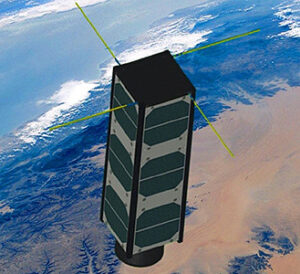
On July 4, 2024 at 04:04 UTC, the MESAT1 satellite was launched on a Firefly Alpha launch vehicle from Vandenberg Space Force Base in California. Developed by the University of Maine, the satellite carries an earth imaging experiment and an AMSAT-provided LTM-1 linear transponder to provide services to amateur radio enthusiasts around the world. The satellite has been commissioned and the transponder is currently active.
At the request of University of Maine, AMSAT hereby designates MESAT1 as MESAT1-OSCAR 122 (MO-122). We congratulate the University of Maine, thank them for their contribution to the amateur satellite community, and wish them continued success on this and future projects.
73, Drew Glasbrenner, KO4MA AMSAT VP Operations / OSCAR Number Administrator
AMSAT-UK is delighted to have been able to accept an opportunity to provide a FUNcube Lite payload, with a mode U/V FM transponder, for the exciting Jovian-1 satellite.
This 6U CubeSat is being designed and built by Space South Central which is the largest regional space cluster in the UK.
This is a partnership between industry and academia, designed to accelerate space business growth, grow the reputation of the south central region of the UK and foster an environment of innovation.
A collaboration between the universities of Surrey, Portsmouth and Southampton, JUPITER – the Joint Universities Programme for In-Orbit Training, Education and Research – will equip participants with invaluable hands-on space industry experience and training for their future careers.
The FUNcube Lite payload from AMSAT-UK will collect and send telemetry from Jovian-1 sub-systems for educational outreach to schools and colleges, using the tried and tested FUNcube data format.
Telemetry will include data from the payload’s own radiation sensor, along with GPS information gathered from the satellite’s CAN bus.
These data can be used to map radiation throughout the orbit, identifying planetary radiation ‘hotspots’ such as the polar regions and the South Atlantic Anomaly. It will also give an accurate measure of how much radiation reaches the sensitive electronics within the satellite.
While Jovian-1 and its ground station at Surrey University will use commercial S and X band for primary communication, FUNcube Lite will use frequencies in the amateur UHF and VHF spectrum.
When not sending telemetry, the payload can be configured as a mode U/V FM voice transponder for amateurs to use for international communications.
More information will be provided at the AMSAT-UK Colloquium taking place during the weekend of October 12/13thhttps://amsat-uk.org/colloquium/
Update 2025-08-22! From version v4 the satellite function has been removed due to bugs and stability problems.
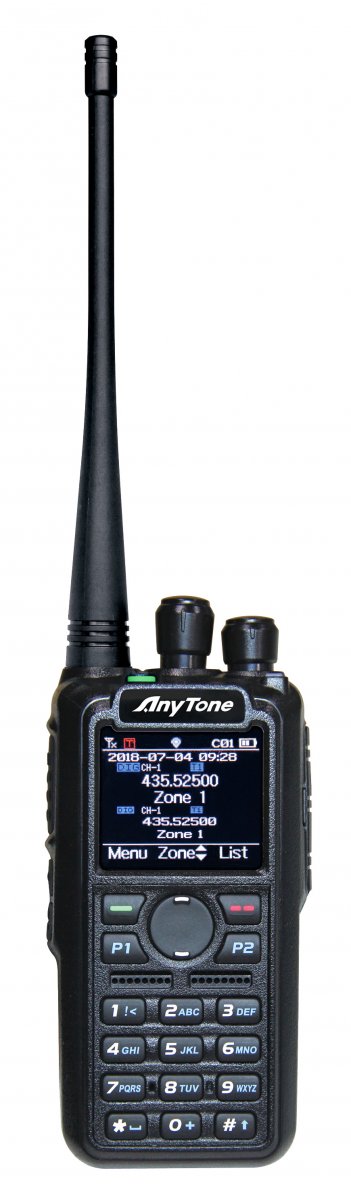
As the first (what I know of) commercial handheld radio the AnyTone AT-D878UVII software release V3.04 has included amateur radio satellite tracking. From the webpage we got the following information:
Predict Satellite Transits: The firmware provides a list of upcoming satellite passes, allowing you to plan ahead for satellite communications.
Frequency and Transit Time Display: Select a satellite from the list to view its communication frequency and exact transit time.
Direct Communication: Once a satellite is selected, press the PTT (Push-to-Talk) button to transmit directly to the satellite. This is a huge leap for satellite communication enthusiasts, making it easy to operate via satellite with minimal setup.
Re-post from AMSAT-UK and info from Piero I0KPT via Facebooks Greencube Group
The GreenCube satellite, developed by S5LAB, has likely ceased functioning due to radiation damage. After a successful mission that exceeded expectations, the satellite is no longer responding to commands, and its onboard radio is believed to have been compromised by the harsh radiation environment in Medium Earth Orbit (MEO).
Approximately ten days ago, GreenCube experienced a reboot, and telemetry data from the event did not indicate any anomalies. However, the S5LAB team now suspects that the satellite’s radio was damaged, leading to the current communication blackout. MEO is notoriously challenging for satellites due to its high radiation levels, and GreenCube was not the only satellite affected. Several other CubeSats launched alongside it only lasted a few days, making GreenCube’s extended mission duration a remarkable achievement.
Despite ongoing efforts to send commands and reactivate the satellite, the team remains pessimistic about restoring GreenCube’s functionality. The satellite’s survival in the hostile MEO environment is seen as a testament to its robust design, but the likelihood of recovery is slim.
At this time, no successor to GreenCube is planned, primarily due to the infrequency of launch opportunities to MEO. Launches to this orbit are rare, which complicates the prospect of future missions.
In response to the satellite’s success and the interest it generated among radio amateurs, S5LAB has promised to host a webinar in collaboration with AMSAT Italia. The event will provide insights into the GreenCube mission, sharing the challenges and triumphs of the satellite’s journey. This is an opportunity for the amateur radio community to learn more about the satellite’s impact and the technical details behind its impressive mission.
While GreenCube’s operational life may have ended, its contributions to satellite technology and amateur radio will be remembered as a significant milestone.
[Information from Piero I0KPT via Facebooks Greencube Group]