We are excited to announce that starting this year, AMSAT-HB will award the “HB9RG Memorial Trophy” in honor of Dr. Hans Rudolf Lauber, who held the callsign HB9RG. Dr. Lauber was a true pioneer in VHF/UHF/SHF technology, and we are proud that AMSAT-HB can continue to carry forward his legacy by using his callsign.
The HB9RG Memorial Trophy will serve as a reminder of Dr. Lauber’s positive contributions to the amateur radio community, and it will be awarded across various disciplines. The first discipline in this competition will coincide with a significant anniversary.
On March 10, 1965, HB9RG and DL6EZA successfully completed the first amateur radio QSO via satellite (OSCAR-III). To celebrate the 60th anniversary of this remarkable achievement, AMSAT-HB is hosting a two-week-long competition.
This event will particularly appeal to those radio amateurs who are passionate about roving and DX. Additionally, on March 10, we will be active on various bands and operating modes under the callsign HB9RG.
We look forward to your participation and hope you will join us in honoring the legacy of HB9RG.
Best regards,
On behalf of AMSAT-HB Michael Lipp, HB9WDF President AMSAT-HB
In 2024, we carried out two talks remotely – at the DL4 meeting in Mora and for the Gardermo group LA2G (Norway). We also had a few more requests that we unfortunately had to turn down as it didn’t fit in terms of dates.
In 2025, we are scheduled to give a talk at SSA’s (Swedish Amateur Radio society) annual meeting.
Membership status At the end of the year, AMSAT-SM had 314 members, compared to 310 members for 2023.
X.com Via X.com we have a continued increase in followers – right now (11 Jan 2025) 2271 followers compared to 1977 followers at the end of 2023. This makes us one of the AMSAT groups with the most followers. X.com continues to be AMSAT-SM’s main information channel together with the website.
Bluesky – new account At the end of 2024, we created an account on the new platform Bluesky, which is seen as an alternative to X.com. Posts from the website are automatically published to Bluesky, but otherwise no further activity takes place there. Our link on Bluesky is: https://bsky.app/profile/amsat.se
The website We continue to write mostly in English as we have a large number of followers outside of Sweden. The cost of the website continues to be sponsored by Lars SM0TGU.
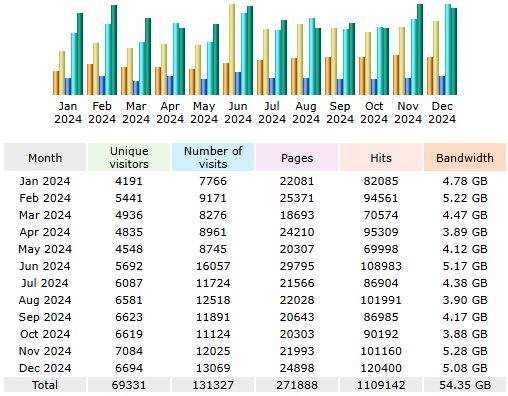
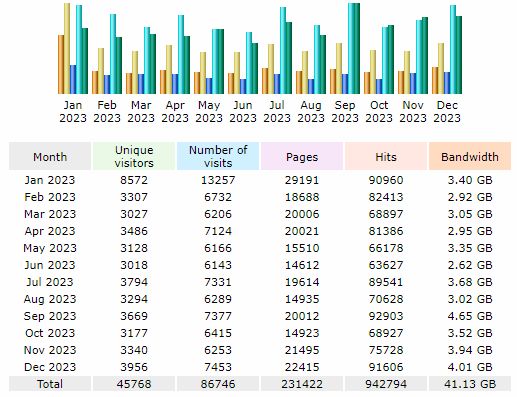
Web statistics We again see a rising number of visitors compared to the year before. Scroll down to see more statistics compared for the last three years.
In Swedish
Dags att summera AMSAT-SM aktivitet för 2024:
Håkan SM7WSJ årsberättelse
Ytterligare ett år till ända. Det är hög aktivitet i antal nya cubesats som dyker upp. En del kommer upp i rymden men ibland misslyckas antingen uppskjutning eller senare aktivering av satelliten. Det är mycket som ska falla på plats innan en signal hörs från rymden. Det är fortfarande dom gamla trotjänarna som ger mest kontakter, AO-7 RS-44 mm.
Den geostationära transpondern QO-100 är alltid igång, och det kan dyka upp rätt mycket intressanta stationer över den.
Trafiken från rymdstationen ISS genererar mycket information både runt skolkontakter samt annan aktivitet. Repeatern som är placerad ombord är väldigt populär.
Amsatnätet på 3740 kHz söndagar klockan 10.00 rullar på som vanligt. Dom stabila deltagarna är SM4EFW samt SM4JLX. Vi har även några inhoppare som dyker upp lite till och från (alla är välkomna).
Lars SM0TGU ser till att hemsidan samt sociala medier fungerar och uppdateras.
mvh Håkan SM7WSJ
Aktiviteter 2024 genomförde vi två föredrag på distans – på DL4-mötet i Mora och för Gardermogruppa LA2G (Norge). Vi hade även några fler förfrågningar som vi tyvärr fick tacka nej till då det inte passade rent datummässigt.
Under 2025 är vi planerade att hålla föredrag på SSAs årsmöte.
Medlemsstatus AMSAT-SM hade vid årets slut 314 medlemmar att jämföra med 310 medlemmar för 2023.
X.com Via X.com har vi en fortsatt en ökning av följare – just nu (11 jan 2025) 2271 följare jämfört med 1977 följare i slutet av 2023. Det gör oss till en av de AMSAT-grupper med flest följare. X.com fortsätter att vara AMSAT-SM huvudsakliga informationskanal tillsammans med hemsidan.
Bluesky – nytt konto I slutet av 2024 skapade vi konto på nya plattformen Bluesky som ses som ett alternativ till X.com. Inlägg från hemsidan automatpubliceras till Bluesky men i övrigt sker ingen ytterligare aktivitet där. Vår länk på Bluesky är https://bsky.app/profile/amsat.se
Hemsidan Vi fortsätter att skriva det mesta på engelska då vi har ett stort antal följare utanför Sverige. Kostnaden för hemsidan fortsätter att sponsras av Lars SM0TGU.
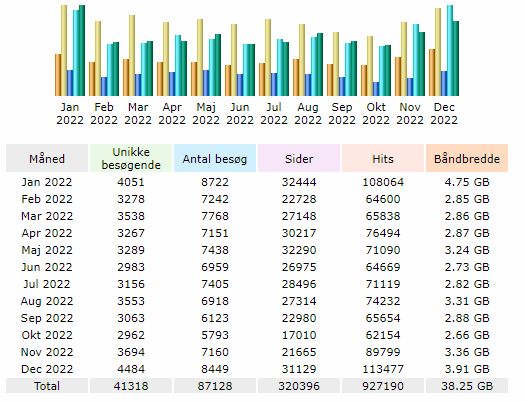
Webbstatistik Vi ser igen ett stigande besöksantal jämfört med året innan. Nedan är de tre senaste åren.
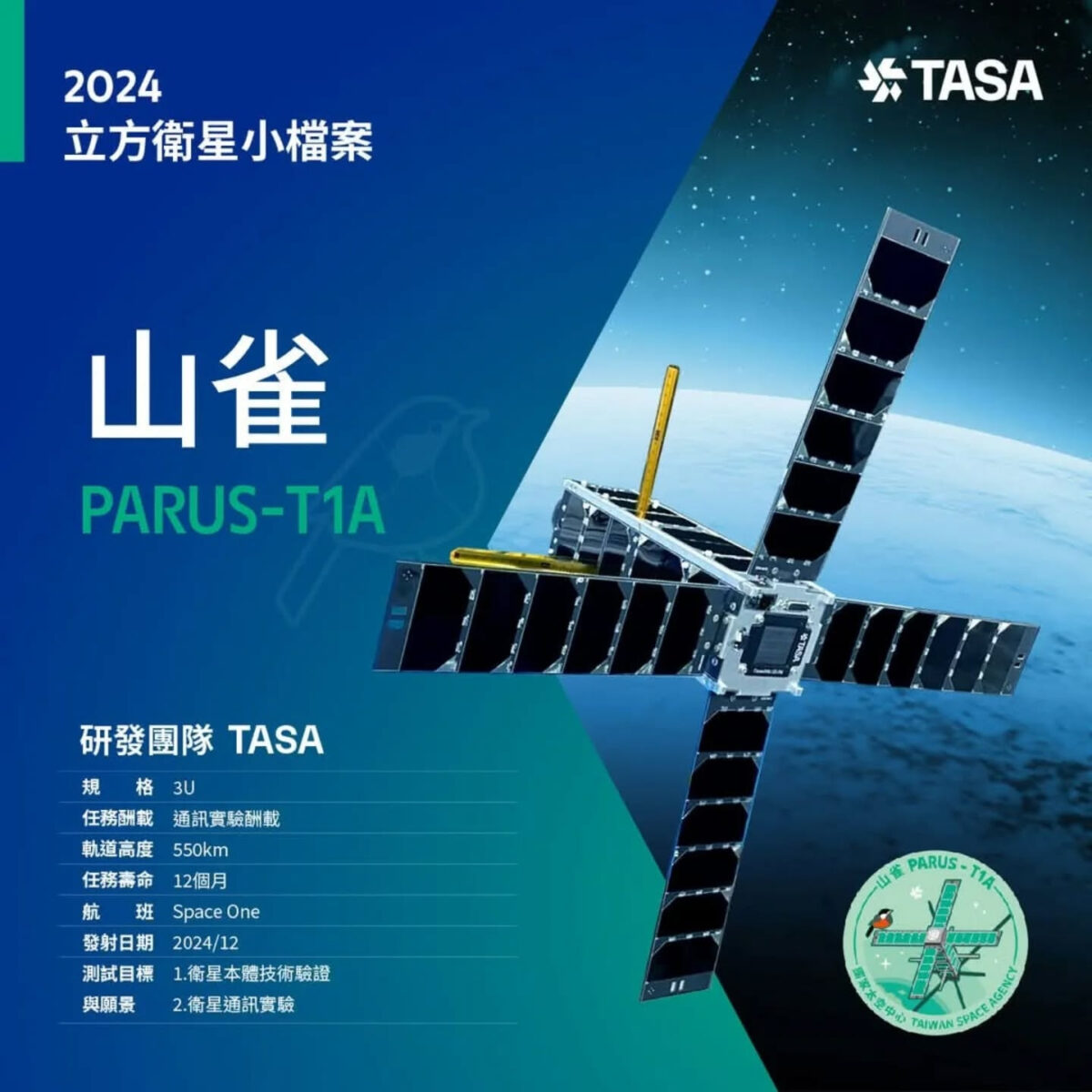
Hi there; this is from Develop Team of PARUS-T1A We are writing to request your support for the upcoming launch of the PARUS-T1A 3U CubeSat. This CubeSat is scheduled to be launched from Japan on a SpaceOne rocket in the next few days.
We kindly request your assistance in developing a dashboard to visualize the raw data received from the PARUS-T1A CubeSat. This dashboard should be able to interpret the data packet frame format and display the information in a clear and concise manner.
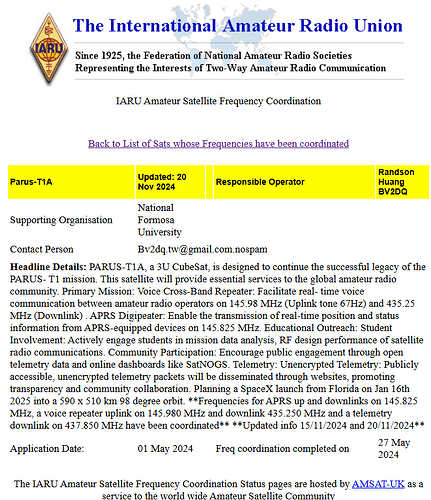
Additionally, we would appreciate it if you could setup it for observation system. We have attached the IARU frequency coordination document for the amateur radio payload, which can be used as a reference.
We believe that your expertise and resources can significantly contribute to the success of this mission.
Again; we appreciate for your help and contribution
11:th December I had the honor to make an AMSAT presentation for the Gardermogruppa (LA2G) north of Oslo, Norway. The presentation was held remote with Teams.
The subjects was:
Short history of AMSAT and amateur radio satellites
Different types of satellites
Satellite orbits
Equipment – radio and antennas
How to track and know the status of current satellites
QSO tips and tricks
Telemetry and the SatNOGS network
Live demo of PstRotator and QO-100 FT8 QSO
Thank you LA2G and Bjørn Otto Dønnum LB7EJ for setting up this meeting!
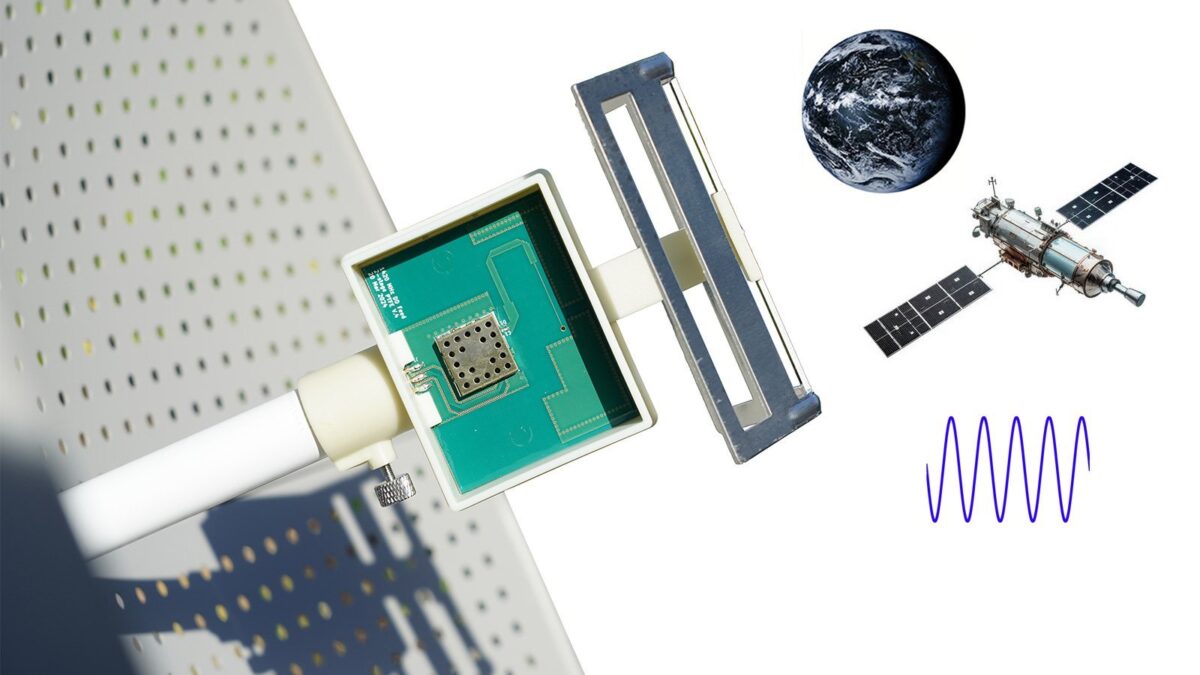
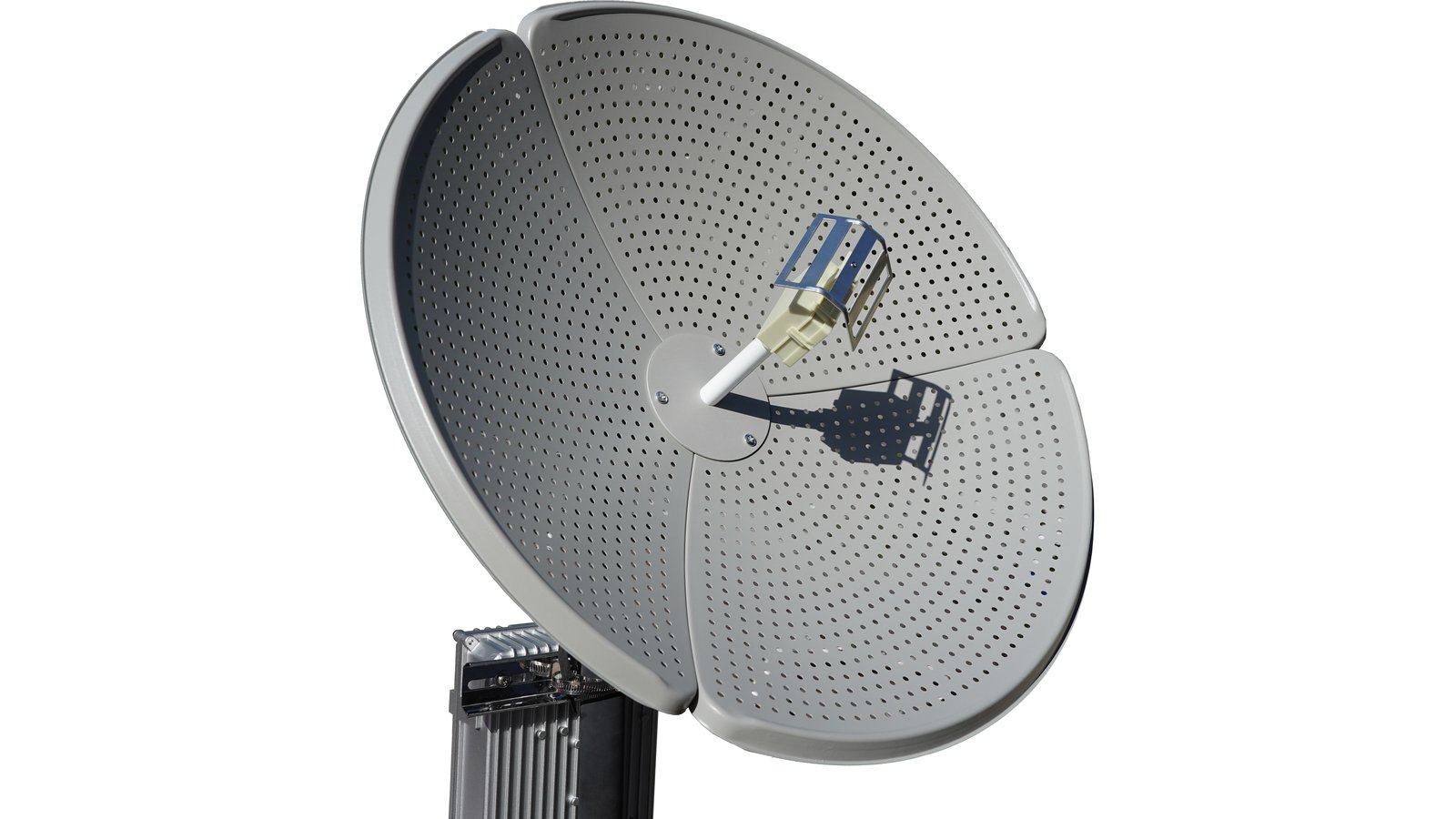
KrakenRF has made an update about a new S-Band feed for the Discovery Dish system. It can receive S-band satellites between 2.2 – 2.3 GHz so it seams not to cover the amateur band at 2.4 GHz.