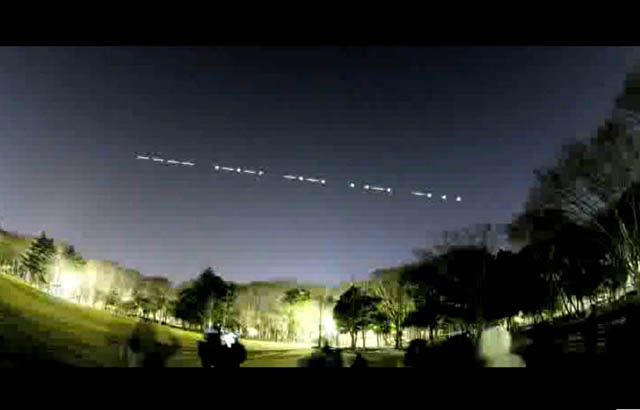
Man har lyckats ta emot bilder från satelliten som sänder på 5,8 GHz.
Vi kommer senare få se hur dom aktiverar dom beryktade Led lamporna som ska sända morsetecken.
http://www.fit.ac.jp/~tanaka/fitsat.shtml
 AMSAT-SM - Official Website of AMSAT-SM Sweden
Här finner du nyheter om amatörradiosatelliter från hela världen.
Varios ham radio satellites news.
Man har lyckats ta emot bilder från satelliten som sänder på 5,8 GHz.
Vi kommer senare få se hur dom aktiverar dom beryktade Led lamporna som ska sända morsetecken.
http://www.fit.ac.jp/~tanaka/fitsat.shtml
Hej!
Dagens nät med deltagare
SM4EFW
SM4JLX
SM5HL
SM6NZV
SM7WSJ
Punkter
*Nya föreskrifter från PTS
http://www.pts.se/upload/Foreskrifter/Radio/ptsfs-2012-3-undantag-tillstand.pdf
13 cm tar stryk med lägre delen struken. Dock verkar satellitsegmentet vara
opåverkat.
*Nya antennprojekt 70cm
Det är väldigt många studentsatelliter på väg kommande åren och
satellitdelen av 70 cm kommer att vara väldigt hårt belastad.
Med mer aktivitet så vill man ha bästa möjliga mottagning för att även kunna
knipa dom riktigt svaga passagerna.
Jag har precis beställt byggdelar från http://shop.nuxcom.de/ för att
plocka ihop något vassare än dom 2X10 EL Cirkulärt jag använder idag.
DK7ZB har ett antal antennbeskrivningar
http://www.qsl.net/d/dk7zb///start1.htm
*Exempel på en fin studentsatellit som är på väg.
UKube-1 Amateur Radio CubeSat Books a Ride on Soyuz-2
AMSAT-UK published this news on their web:
http://www.uk.amsat.org/10497
UKube-1 – the UK Space Agency’s first CubeSat mission – has ‘booked’
its journey into space on a Russian Soyuz-2 rocket. The launch from
the Baikonur Cosmodrone in Kazakhstan is expected to take place in
March 2013.
UKube-1 carries an amateur radio 435/145 MHz linear transponder built
by members of AMSAT-UK.
The UK Space Agency have issued the following press release:
The UKube-1 nanosatellite is a collaboration between the UK Space
Agency, industry and academia. It will allow the UK to fly educa-
tional packages, test new technologies and carry out new space re-
search quickly and efficiently. It is envisaged as the pilot for a
full national CubeSat programme.
Dr David Williams, Chief Executive of the UK Space Agency, said,
“UKube-1 is almost ready to fly; the platform is nearly complete,
4 of the missions 5 payloads are mission-ready and we have now
secured a launch with Roscosmos. We are eagerly awaiting the start
of the innovative experiments that this small but mighty satellite
will perform once in orbit around our planet.”
The winning UKube-1 payloads from the UK Space Agency’s payload com-
petition include the first GPS device aimed at measuring plasmaspheric
space weather; a camera that will take images of the Earth and test
the effect of radiation on space hardware, using a new generation of
imaging sensor; an experiment to demonstrate the feasibility of using
cosmic radiation to improve the security of communications satellites
and to flight test lower cost electronic systems; and a payload made
up of 5 experiments that UK students and the public can interact with.
As well as providing a fantastic opportunity for innovative UK com-
panies and UK academics to collaborate on a national space project,
UKube-1 is also useful for training the next generation of space
engineers and will include a tiny radio transmitter for science edu-
cation, and a materials science experiment from which school students
can receive data. The system, funded by volunteer members and friends
of AMSAT-UK, is called FUNcube and will be integrated with UKube-1
as part of the programme.
*Satellitstatus
AO-7 AO-27 FO-29 SO-50 VO-52 är alla aktiva
73 Håkan SM7WSJ
Hej!
Dagens nät.
Deltagare
SM4EFW
SM4JLX
SM5HL
SM6NZV
SM7WSJ
Incheckad
SM3HG
Punkter
*Nya Cubesats ute från ISS
Bilder http://onorbit.com/node/5003
Five CubeSats Deployed From ISS Now on-Orbit – Signals Received
Five cubesats launched on July 21 and loaded aboard the ISS were
integrated with the J-SSOD small satellite deployer on the the
Japanese Experiment Module, also known as Kibo. They were deployed
with the Kibo robotic arm on October 4, 2012. The orbit for these
CubeSats will be very close to the orbit of the ISS.
NanoRack posted a photo of the deployment at: pic.twitter.com/wZAX5qZL
(Click on the image to view the full-sized photograph)
SpaceRef posted an article and several more photographs on-line at:
http://spaceref.com/news/viewsr.html?pid=42238
+ First Deployment by Astronaut Akihiko Hoshide
o WE-WISH – Telemetry downlink on 437.505 MHz
o RAIKO – non-amateur radio Ku-band beacon
+ Second Deployment by JAXA GS
o TechEdSat – Telemetry downlink on 437.465 MHz.
o NanoRack/F-1 –
> 145.980 MHz: main channel, 1.0W RF output, FM, AFSK 1200bps,
> one telemetry packet every 30 seconds, operates in the dark
> by default (but can be commanded later to operate in sunlight)
> 437.485 MHz: backup channel, 0.2W RF output, FM, PWM CW beacon,
> each beacon transmission lasts about 20 seconds then 60 seconds
> delay, only operates in sunlight
o FITSAT-1
> CW Beacon 437.250 MHz,
> FM Data 437.445 MHz,
> High speed data 5840.00 MHz
FITSAT-1 Heard With Strong Signals
———————————-
Signal reports from PY5LF, OH3UW, DK3WN, VU3TYG, G6LVB (using a FUN-
cube Dongle Pro+ and 7″ wire antenna), GW1FKY, F5YG, JE9PEL, JN1GKZ,
ST2NH, and others via the amsat-bb list.
FITSAT-1 transmits its beacon frequency 437.250 MHz. This is the
same frequency as the PRISM satellite of Tokyo Univ. FITSAT CW will
transmit, “HI DE NIWAKA JAPAN” with its telemetry data. To receive
a FITSAT-1 QSL card please send your signal report and your postal
address to: fitsat1@hotmail.co.jp and also cc to tanaka@fit.ac.jp.
A photo of the QSL card is shown at:
http://www.fit.ac.jp/~tanaka/fitsat.shtml
This web page will also be updated with information about the status
of the LED experiment.
HB9FFH has made a telemetry decoder for FITSAT-1, available at:
http://carpcomm.com/satellite/fitsat1
FITSAT students have also developed a similar program for windows:
http://turing.cs.fit.ac.jp/~fitsat/CWFM/FITSAT_CW_Analyzer1.zip
TechEdSat Heard With Weak Signals
———————————
Signal reports received from PY5LF, DK3WN, and JE9PEL indicate that
TechEdSat was received with weak signals on its 437.465 MHz downlink.
Mark Allard, KD6CWM, President of the NASA-Ames Research Center Ama-
teur Radio Club reports their OSCAR/ARISS satellite station, NA6MF,
will be supporting TechEdSat as one of the monitoring stations for
the TechEdSat Amateur Radio beacon.
TechEdSat transmits a custom beacon packet. Details can be found at:
http://www.techedsat.com/. Packets acquired from TechEdSat can also
be submitted to the website for decoding by the TechEdSat team. Use
the ‘Packet Submission’ link found at the top of the web page.
WE WISH SSTV Picture Received
—————————–
PY4ZBZ and JE1CVL received the SSTV picture on 437.505 MHz.
JE9PEL provided a translation of the image that is a sentence of
“JQ1ZIJ MEISEI ARC 2012”. A photo of the received picture is at:
http://www.ne.jp/asahi/hamradio/je9pel/21005wis.png
A photo of the SSTV picture received by PY4ZBZ is posted at:
http://www.qsl.net/py4zbz/satelite.htm#ww
Viet Nam F-1 Not Heard
———————-
Viet Nam’s F-1 satellite was scheduled to begin telemetry transmis-
sions 30 minutes after deployment by sending a beacon alternating on
its main and backup channels. At press time no signal reports have
been received from this satellite.
More information and guide to download F-1 telemetry decoder can be
found at http://fspace.edu.vn/?page_id=27. Decoded data can be sub-
mitted via the telemetry decoder or by sending directly to the ground
station: thuvt@fpt.edu.vn. Audio recordings are highly appreciated.
*AO-27
Satelliten har under veckan tystnat och vi avaktar besked.
*PSK-31 transponder
US Naval Academy PSAT Features PSK-31 and APRS Transponders
The US Naval Academy in Annapolis, Maryland is developing a new
student satellite, ParkinsonSAT, or PSAT which is a two way APRS
communications transponder for relaying remote telemetry, sensor
and user data from remote environmental experiments or other data
sources back to experimenters via a global network of internet link-
ed volunteer ground stations. The data transponder also includes all
telemetry, command and control for a complete cubesat.
PSAT is a 1.5 unit cubesat so that two PSATs can be launched from
the same P-Pod launcher. The design uses four deployable solar ar-
rays which are stowed down the sides. Half of the 1.5 unit PSAT is
available for auxiliary payloads or experiments. Details of the
PSAT project are available on-line at: http://www.aprs.org/psat.html
PSAT will fly a PSK-31 transponder with a 10 meter uplink and a 2M
FM downlink. PSK-31 will allow up to 30 simultaneous users:
http://aprs.org/psat/PSK31-DESIGN-NOTES.html
Bob Bruninga, WB4APR noted, “PSK-31 is the ideal AMSAT FM trans-
ponder for a cubesat. With an FM downlink, anyone can receive it
with an HT and a laptop with PSK-31 software. And anyone with a
10m PSK-31 uplink can transmit to it. And since the downlink is FM,
everyone tuned in SEES THE SAME WATERFALL and sees EXACTLY where
they are in the downlink. A small uplink doppler adjustment can keep
each station locked to his chosen channel in the passband. Everyone
can talk to everyone if they want, or go one-on-one too.”
The SSB uplink and UHF FM downlink transponder fits on a smaller than
3″x3″ circuit board being developed by Mirek Kasal at Brno University.
Launch of PSAT is planned in 2015. The 3″x3″ transponder may also be
adaptable for other missions.
*Höghöjdshopp från stratosfären (kommer nog på TV nyheterna)
http://news.yahoo.com/skydiver-aims-supersonic-plunge-oct-8-143615657.html
Tuff kille!
73 Håkan SM7WSJ
Under kommande vecka kommer denna höghöjdshoppare försöka sig på ett fritt fall från stratosfären. Enligt uppgift skall han kunna gå igenom ljudvallen.


Nu finns en ny helt omarbetad version av FUNcube Dongle som kallas Pro+. Den har bla. fått flera bättre filter i ingångssteget.
FUNcube Dongle är en SDR (mjukvarubaserad radiomottagare) som sätts in i USB-porten på en dator och kontrolleras med ett datorprogram.
Läs mer på: http://www.funcubedongle.com/
Hej!
Vi var igång på 3740 klockan 10.00
Deltagare
SM4EFW
SM4JLX
SM7WSJ
*Nya Satelliter
http://www.ne.jp/asahi/hamradio/je9pel/nosscube.htm
*Satelliter från ISS
http://www.uk.amsat.org/10119
*ISS skolkontakt
Wednesday 19th September 2012 at 7:15 UTC, which is 9:15 CEST, an ARISS
contact is planned with Zespol Szkol Technicznych (Complex of Technical
Schools, abr. ZST), Kolo, Poland.
*Nyheter om nästa HEO satellit.
Det här är det första jag sett om det här men det kommer säkert mera
kommentarer inom en snar framtid. Brevet är lite långt men kan vara väl värt
att läsa igenom då det påverkar oss alla.
Dear All,
the following News will appear as an Editorial in our up-coming AMSAT-DL
Journal. Because of the importance of the contents the AMSAT-DL BOD and
Project leaders decided to give this information to all team members who are
currently or who were directly or indirectly involved in the past… We
want to make sure that our members get it from us and not from any rumors
on the net.. Thanks..
While the decision of DLR is hitting us hard, this is not yet the end 😉 I
recently had some interesting meetings in China and if we can’t do
rocket science in DL, we have to look for other countries… But please
read below… We hope you will support us also in future and if you want to
re-join, You are also much welcome.
AMSAT needs YOU!!
If we missed someone from the members, please forward this e mail..
Best wishes
Peter DB2OS
Hartmut DL1YDD
Michael DD5ER
DLR rejects P5-/Mascot-2 project
Dear Members and Friends of AMSAT-DL,
Discussions with the German Ministry of Economics and the German space
agency DLR spanned more than 5 years. Amongst others, we met with State
Secretary for Space and Aerospace Hinze, DLR chairman Prof. Wörner and the
DLR Program Board. In 2009 AMSAT-DL, in collaboration with the DLR
Institute for Space Systems in Bremen, conducted two complex Concurrent
Engineering studies. They were jointly presented to the DLR program board
in Köln-Porz in 2010.
The final documentation confirmed the feasibility of the P5 project, both to
the Moon and to Mars. In October and November 2011 another two P5 meetings
with DLR chairman Prof. Wörner, Ministry MinDirig Engelhard,
representatives of DLR IRS Bremen and AMSAT-DL BOD took place. Topics were
feasibility and financing model. It turned out that the ministry had a
different perception of the (DLR-) payloads.
DLR was asked to reconsider their payloads. Both AMSAT-DL BOD and IRS
Bremen left the meetings with positive feelings. Then it turned out that,
since completion of the 2009 joint study, the P5 scientific appeal is
apparently no longer attractive. Therefore it was
jointly searched for modifications to regain a payload appeal that was
attested in 2009. AMSAT-DL proposed landing part of the payload on Mars
moon Deimos or Phobos. Our calculations showed that this is feasible with
reasonable effort. The landing would be a particularly unique feature of the
P5 mission. After repeated enquiries we received a letter from DLR at end
of June where they stated that “the DLR Program Board comes to the
conclusion, that pursuit of the P5 idea is infeasible and also financially
infeasible.” We repeatedly approached the DLR Program Board since then. The
assertion was that any P5 mission will not fly with DLR: the scientific
attraction was, compared with the current Mars missions, insufficient. The
primary reason for this is that the P5 MARS orbit is limited due to the
low-cost character of the mission. From this orbit no attractive science is
possible. Obviously our P5 mission is now compared with regular missions
which cost hundreds of millions of Euro. This rejection has a wide impact on
AMSAT-DL. Activities of all involved persons, including in the P3-E
project, was shaped for years by the P5 mission. It was assumed that P3-E
was to be launched as part of the P5 mission. This path is obstructed now.
We maintain our
contacts with the various launching agencies able to launch P3-E into an
appropriate orbit. The tremendous launching costs kept us from
more concrete talks so far. Just recently good contact with AMSAT China
(CAMSAT) was established. China has suitable launchers to bring payloads
into GTO. Moreover, China has discovered that amateur radio is a means of
motivating young people to technical university studies.
Furthermore we are very actively exploiting a potential shared ride of an
amateur radio payload on a new geostationary satellite. We have already
submitted a formal project proposal. The satellite will be visible from
Europe. No antenna tracking will be necessary. The big advantage of this
project is that due to the operational requirements of the primary payload,
our launching and commissioning is tied to the not too far future. The 20m
dish antenna at Bochum observatory was originally refurbished and upgraded
for the P5 mission and is presently used for Deep Space Mission and amateur
radio purposes. The automatic reception of the STEREO A/B probes and data
transfer to NASA will continue. In collaboration with NASA and AMSAT-DL the
modulation scheme will be changed to use Turbo coding. Both hardware and
software is
currently being designed by AMSAT-DL and will be used by the partner STEREO
receiving stations worldwide. Our funding application is
already approved. The project funding runs until the end of 2015. The
AMSAT-DL Marburg lab will be preserved at least in medium term to be able
to do work on P3-E and, should the situation arise, on the transponder of
the mentioned geostationary satellite. We pursue a near-term meeting with
all P5 project team members to identify ways for a project continuation.
The necessary procedures should be coordinated then.
Although we regret the DLR refusal of the P5 project (particularly because
some DLR payload will not fly in any foreseeable time frame), and
although it places serious challenges to AMSAT-DL, this is not the
cancellation of a HEO amateur radio satellite. We will aggressively follow
up all potential possibilities. We hope to be able to report positively at
the AMSAT-DL AGM in autumn. Since the Marburg University’s
withdrawal from the ZEL, the surrounding conditions have changed
significantly, again. However, we will do everything we can do to get an
amateur satellite launched into HEO. We do trust in our volunteers and
members.
The AMSAT-DL BOD:
Peter Guelzow
Hartmut Paesler
Michael R. Lengruesser
Amsatnätet försöker vara igång även nästa söndag.
73 Håkan SM7WSJ
—
Kommentar från Anders Svensson:
HI Folks,
Missade dagen nät men det verkade funk i alla fall.
Ännu inga satelliter från ISS.
USA238 sköts upp 13/9 2012 från Vandenburg AFB i Californien.
10 satelliter har ynglat av sig och tillminstingen
fyra av dem har sändare på 70 cm.
38760U 2012-048C AENEAS POD6 437.600 ax25 1k2 2425.0 1W
38761U 2012-048D CSSWE 3U 437.345 9k6 ax25
38762U 2012-048E CXBN 2U 437.525 gsfk ax25
38763U 2012-048F CP5 1U 437.405 afsk lsb 1k2
Några bandata finns inte men kommer möjligen senare.
/-DZL
Hej iugen,
Det såg inte så vacker ut…
Hej igen,
Den här versionen är kanske lite tydligare.
38760U 2012-048C AENEAS POD6 437.600 AX.25 1k2 2425.0 1W
38761U 2012-048D CSSWE 3U 437.345 AX.25 9k6
38762U 2012-048E CXBN 2U 437.525 AX.25 GSFK
38763U 2012-048F CP5 1U 437.405 AFSK LSB 1k2
73 de SM0DZL
