Categories
Ham Satellite news

Ny möjlighet till geostationär amatörradiosatellit

(L-R) Sonya Rowe, KK4NLO; Jerry Buxton, N0JY; Bob McGwier, N4HY; Franklin Antonio, N6NKF; Tom Clark, K3IO; Michelle Thompson, W5NYV; and Phil Karn, KA9Q standing next to the Aquila M8 Bus flight article. Photo from AMSAT-NA website.

Med glädje kan vi läsa om att AMSAT-NA (USA) har fått en möjlighet att “följa med” på en geostationär satellit under 2017. Detta innebär att vi kanske kan få två geostationära transpondrar uppe för amatörradio om bara några år!

Projektet kommer även innebära att en lågbudget markstation kommer tas fram så att det ska bli möjligt för många att köpa in billig utrustning.

Läs mer:
AMSAT is excited to announce that we have accepted an opportunity to
participate in a potential rideshare as a hosted payload on a
geostationary satellite planned for launch in 2017. An amateur radio
payload, operating in the Amateur Satellite Service, will fly on a
spacecraft which Millennium Space Systems (MSS) of El Segundo, CA is
contracted to design, launch, and operate for the US government based
on their Aquila M8 Series Satellite Structure.

A meeting to discuss this potential rideshare took place on April 13
at Millennium Space Systems that included Dr. Bob McGwier, N4HY;
Franklin Antonio, N6NKF, co-founder of Qualcomm; Jerry Buxton, N0JY,
AMSAT Vice President of Engineering and member of the board for AMSAT-
NA; Dr. Tom Clark, K3IO, Director and President Emeritus of AMSAT-NA;
Phil Karn,KA9Q; and Michelle Thompson, W5NYV.

Hosting the meeting for MSS were Stan Dubyn as founder and chairman
of MSS, Vince Deno as president of MSS, Jeff Ward, K8KA, of MSS as VP
for Product Development, formerly with SSTL and University of Surrey
Space Center, and Ryan Lawrence of MSS as Project Manager on the
spacecraft mission. Attending by telephone were Dr. Jonathan Black,
Associate Research Director of Hume Center for Aerospace Systems and
Associate Professor of Aerospace and Ocean Engineering and Dr.
Michael Parker, KT7D, founder of RINCON Research Corp.

Following the meeting, Dr. Bob McGwier, N4HY, Director of Research
at the Hume Center for National Security and Technology of Virginia
Tech, and former director and former VP Engineering of AMSAT,
described this as an opportunity to go forward with “AMSAT-Eagle”
which, in the 2006-2008 timeframe, evolved into a microwave payload
to be flown to geostationary orbit as a hosted payload. It would have
provided digital communications to small terminals on the ground and
a linear bent pipe transponder had it flown. This failed to go
forward in part due to lack of an affordable flight opportunity.

McGwier outlined the next steps toward developing this mission:

1) To organize an effort at Virginia Tech to make a firm proposal
to MSS and its US government sponsor, and organize an effort
to raise sufficient funds to pay for development of the mission.

2) Enable Dr. Jonathan Black to lead the construction project at
Virginia Tech in the Space@VT Center. Sonya Rowe, KK4NLO, Project
Manager at the Hume Center will be the project manager.

3) Work for development of a low-cost microwave ground station for
amateur radio still needs to be determined.

4) Dr. Michael Parker, KT7D, will solicit the cooperation of the
Rincon Research Corp. for development of the software radio
technology for this payload.

The AMSAT Board of Directors has accepted the invitation to
participate in this potential rideshare payload opportunity. AMSAT
expects to be involved in the development of the ground station and
the payload RF development, and will serve as the amateur radio
(hosted) payload operator once the satellite has been launched.

McGwier summarized, “The launch is currently scheduled for 2017 and
the payload must be delivered for testing and integration by Spring
of 2016. It is an ambitious schedule and all involved will have to
gain and maintain a serious level of commitment to that which they
agree to undertake.” AMSAT President, Barry Baines, WD4ASW, said,
“The AMSAT leadership is excited to fly a Phase-IV geostationary
amateur satellite payload. This is an evolving development as we
collaborate with the VT Hume Center with a project that provides
technical challenges to create a new amateur radio capability in
space that will provide a variety of benefits not only for amateurs
but also for emergency communications and STEM educational outreach.”

The transponder is expected to support a wide range of voice,
digital, and experimental advanced communications technologies. A
decision is expected soon specifying the microwave uplink and
downlink bands.

Additional information on the Aquila M8 Series Satellite can be viewed
on-line:
http://www.millennium-space.com/
http://www.millennium-space.com/platforms#aquila

AMSAT has posted a photo of the GEO opportunity team with the
Millennium Aquila satellite at: http://www.amsat.org.

Categories
Ham Satellite news

FOX-satelliterna närmar sig

GRACE_assembled_annotated
GRACE mission P-PODs in the NPSCuL Photo courtesy of Justin Foley, Cal Poly. From AMSAT-NA website.

Det händer mycket med FOX-satelliterna just som AMSAT-NA ligger bakom. FOX-1A är just nu (april 2015) i monteringsstadiet – se bilden. Den är planerade att komma upp senare i år 2015.

Vad gäller modellerna FOX-1C och 1D kommer de nu att inkludera en L-band upplänk och modellen 1E kommer att få en linjär transponder. Fox-1E är planerad för uppskjutning under 2016.
Läs mer på http://www.amsat.org/?page_id=1113

—

Fox-1C and Fox-1D Include L-Band Uplink; Fox-1E Linear Transponder Announced

AMSAT Vice President – Engineering Jerry Buxton, N0JY, announced plans to
incorporate an L band receiver in Fox-1C and Fox-1D. The addition will allow
ground commanded selection of the U/v (normal Fox-1 bands) or the new L/v
1.2 GHz (23 cm) mode. Both bands will operate as FM single channel.

Rather than adding a complete new receiver, the L band “Project Downshifter”
will convert the received L band signal down to the Fox-1 uplink frequency
and feed it to the regular UHF receiver on the Fox-1 satellite. The design
will not require an additional antenna on the satellite because the existing
UHF antenna will work for L band receive as well.

In concert with the development of the satellite segment, a new group of
volunteers is working on a companion uplink station to convert UHF to the L
band uplink frequencies:

+ Bruce Herrick, WW1M
+ Dan Hubert, VE9DAN
+ Elizabeth Schenk, KC1AXX
+ Dave Smith, W6TE
+ Alfred Watts, AF5VH

The team is planning to have an affordable L band uplink ground station
available to amateurs by the time Fox-1C is on orbit.

In further news, Jerry announced the plan to construct a Fox-1E “Evolution”
variation of the Fox-1 series which will carry a Mode J linear transponder.
The transponder is planned to be 30 kHz wide and will also include a 1200
bps BPSK telemetry beacon. The purpose of the project is to test a design for a
linear transponder that could be made available to CubeSat builders as a
secondary, or even primary radio payload thus bringing more opportunities for
amateur radio in space as well as offering AMSAT’s proven communications skills
as a telemetry option.

AMSAT has been approached for a launch opportunity for Fox-1E in 2016, but
launch details can not be shared at this time.

Jerry concluded, “It is important that we find additional resources to help
the Fox-1 Team with these new endeavors. We are looking for volunteers who
have solid RF building and testing experience to work on both the
downshifter and the transponder prototyping and construction.” If you would
like to help and be a part of the success of Fox-1C/D and Fox-1E, please
contact Jerry through the AMSAT Engineering volunteer form page on-line at:
http://ww2.amsat.org/?page_id=1121.

[ANS thanks AMSAT Vice President – Engineering Jerry Buxton, N0JY, for the
above information]

Categories
Ham Satellite news

AMSAT-NA deltager på Hamvention 2015

Någon som kommer att vara i USA i maj?  Kanske kan det då vara en idé att åka på Hamvention som går av stapeln den 15 – 17 maj. AMSAT-NA kommer att finnas med där.

Lär mer här: http://hamvention.org/about/hamvention/

Och här: http://www.amsat.org/?page_id=1111

Categories
Ham Satellite news

Ny satellithandbok från AMSAT-NA

Det verkar vara en ny uppdaterad handbok om amatörradiosatelliter på gång. Detta står att läsa om i ANS-095:

AMSAT Plans Dayton Rollout for 2015 “Getting Started” Satellite Book

Gould Smith’s book, “Getting Started With Amateur Satellites”, is
being updated to tell you all about how you can get ready to operate
through the Fox-1 satellites launching later this year. Additional
chapters in the book tell you about tracking software, orbital
mechanics, antennas, radios, Doppler tuning, and operating
techniques. Chapters are also being added to tell you about the new
satellites soon becoming available for amateur radio.

Going beyond brief descriptions in hamfest flyers, this book will
provide a complete reference for new satellite users to assemble a
basic station and to make your first satellite contacts. Also this
book you will teach you how to incrementally upgrade your initial FM
satellite station, time and budget permitting, to include automated
tracking as well as operating through the CW/SSB linear passband
satellites.

A companion Fox-1A reference sheet is also being planned for release
at Dayton. This will be made available for AMSAT’s FieldOps team for
distribution at hamfests and satellite operating demonstrations.

Watch for the 2015 “Getting Started With Amateur Satellites” book
and reference sheet at the AMSAT booth at the Dayton Hamvention. The
book will also be available in the AMSAT Store shortly after Dayton:
http://store.amsat.org/catalog/

Categories
Ham Satellite news

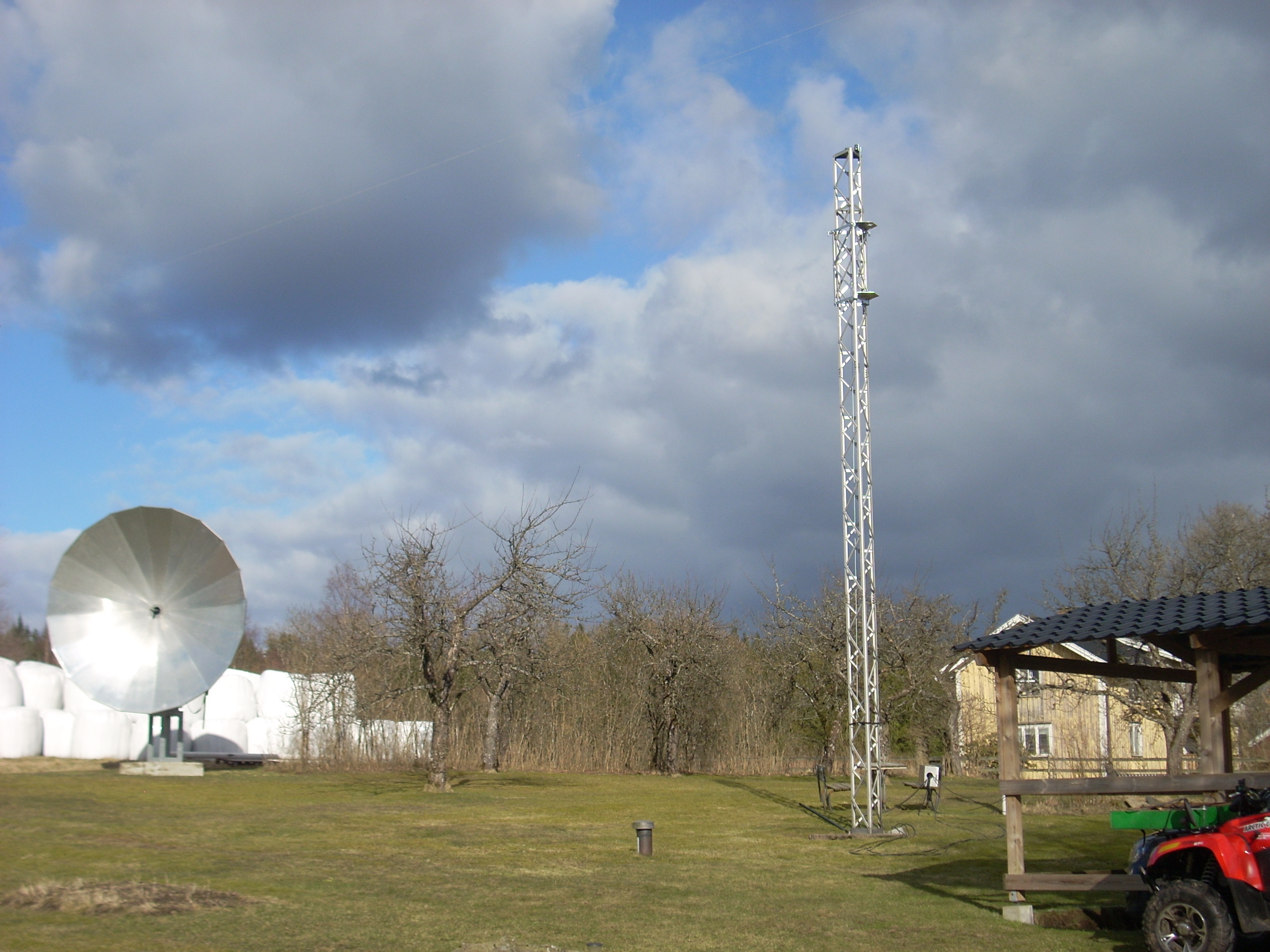
Slädmast

Nu när det börjar att bli lite ljusare tider är det perfekt för nya projekt.  Jag har under dagen montarat upp min slädmast och nu börjar jobbet med rotormontage mm.

Slädmast

En slädmast betyder nya möjligheter att snabbt sänka ned för att byta antenner för diverse olika experiment utan någon större tidsåtgång.  Som bonus kan man även känna sig lite lugnare när det blir lite hårdare vindstyrkor.

Nytt för mig blir även den extra höjden då jag tidigare har haft antennparken på en lägre höjd. Kommer att bli intressant att se om jag kan förbättra hörbarheten vid horisonten där man precis hör det sista av satelliterna innan dom försvinner.

Categories
Ham Satellite news

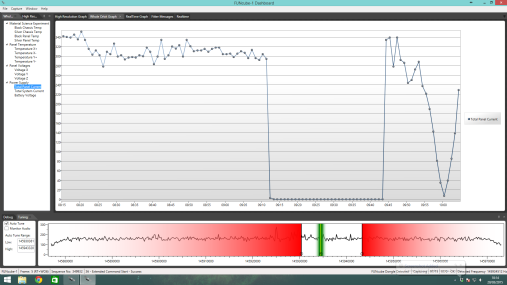
FUNcube Solar eclipse

eclpise-day-_solar-panel-current_20032015

Intressant info om när FUNcube-satelliten gick in i solförmörkelsen. Läs mer på:
http://funcube.org.uk/2015/03/20/solar-eclipse-update/