Categories
Ham Satellite news

Pratham IITB ny studentsatellit planerad till slutet september

pratham2

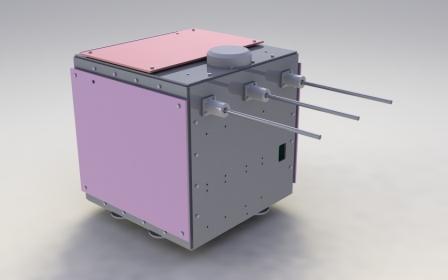
Ny satellit på gång! I slutet av september planeras Prathem IITB att komma upp med både 2m och 70cm sändare:

The satellite Pratham, built by students at the Indian Institute of Technology
Bombay, is expected to launch on the Indian PSLV-C35 mission currently planned
for September 26, 2016.

Pratham, a 300x300x300mm satellite with a mass of 10 kg, aims to measure total
electron count in a 800 km altitude Sun Synchronous Orbit (SSO).

Aayush Yadav of the Pratham team writes:

We, students of IIT Bombay, are glad to inform you that our project, Pratham,
is ready and expected to launch with PSLV-C35 in the last week of September. We
would be really happy if  you all joined us in receiving our satellite’s
beacon, details given below:

Beacon:
Mode: CW
wpm: 35 words
Frequency: 145.980 MHz
(The CW beacon will be on through out the orbit and can be received from
anywhere.)

Downlink:
Mode: FSK
Baudrate: 1200 bps
Frequency: 437.455 MHz
(To be switched on over France and India only)

We will update the information as soon as TLE’s will be available.

Further information at
http://www.aero.iitb.ac.in/pratham/

Facebook
https://www.facebook.com/iitb.student.satellite/

Källa: ANS

Categories
Ham Satellite news

RadFxSat-2 (Fox-1E) Launch December 2017

Meddelande från AMSAT-NA runt satelliten Fox-1E:

AMSAT has been informed that the launch for the NASA Educational Launch of
Nanosatellites (ELaNa) XX mission carrying RadFxSat-2 (Fox-1E) has been
scheduled for December 2017.

In addition to RadFxSat-2, the ELaNa XX mission will carry 12 CubeSats
constructed both by NASA and several universities around the United States. The
mission will be launched by Virgin Galactic on their LauncherOne air launch to
orbit system from Mojave, CA

RadFxSat-2, like RadFxSat (Fox-1B), is a partnership opportunity between the
Vanderbilt University Institute for Space and Defense Electronics and AMSAT and
will carry a similar radiation effects experiment, studying new FinFET
technology.

RadFxSat-2 will be the fifth Fox-1 satellite built by AMSAT. Fox-1A, now AMSAT-
OSCAR 85 (AO-85), was launched on October 8, 2015 and is fully operational,
providing science data from it’s onboard experiments and FM transponder service
for the amateur radio community. Fox-1Cliff and Fox-1D are scheduled for launch
this fall and RadFxSat is scheduled to launch in early 2017.

The RadFxSat-2 spacecraft bus will be built on the Fox-1 series but will
feature a linear transponder “upgrade” to replace the standard FM transponder
in Fox-1A through D. In addition, the uplink and downlink bands will be
reversed from the previous Fox satellites in a Mode V/u (J) configuration using
a 2 meter uplink and 70 cm downlink. The downlink will feature a 1200 bps BPSK
telemetry channel to carry the Vanderbilt science data in addition to a 30 kHz
wide transponder for amateur radio use.

[ANS thanks AMSAT-NA and Paul, N8HM for the above information]

Categories
Ham Satellite news

FO-29 20 år idag

FO-29

Vi säger grattis till FO-29 som fyller 20 år i rymden idag! Den går fortfarande mycket bra och är populär som SSB/CW-satellit. Lär mer här: http://www.amsat.org/?p=5417

Categories
Ham Satellite news

Live Streaming från AMSAT-UK International Space Colloquium

Just nu pågår AMSAT-UK årsmöte dvs. AMSAT-UK International Space Colloquium. Det går att kolla live via denna adress:

https://beta.batc.tv/live/amsatuk 

Categories
Ham Satellite news

Phase-4A telemetridemo

Det märks att det börjar närma sig för Es’Hail-2 (Phase-4A) då det kommer mer och mer information om arbetet runt satelliten. Här en intressant video om arbetet med telemetridelen från AMSAT-DL:

Categories
Ham Satellite news

FUNCube-2 aktiv transponder


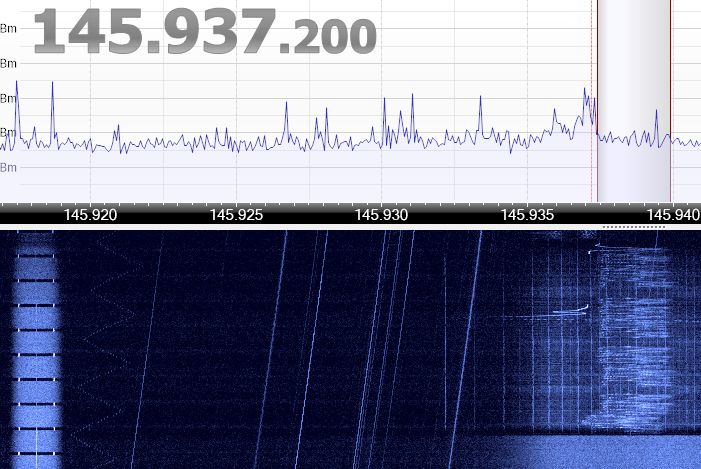
FUNCube-2 har sin linjära transponder på just nu. Fina signaler på nerlänken. Här mottagen med Airspy Mini och SDR-Console v2.3 och en 5 el vertikal Yagi. Telemetrisignalen längst ner i frekvens.

FUNCube-2 active 2016-06-19

Frekvenser:

– 435.080-435.060 MHz Uplink
– 145.930-145.950 MHz Downlink