Categories
Ham Satellite news Members news

Open letter from AMSAT-SM regarding development of a full duplex handheld

Update 2026-02-23:

AnyTone has release the D890UV HT full duplex radio that is reported to work fine with U/V V/U satellites.

Update 2025-11-08:

Unfortunately the manufacture I had a discussion with will not produce a full duplex HT with better filters.

Update 2025-08-30:

Three (3) out of 12 manufactures sent me an answer. One of these I will continue to work with. I can not give any more information at the moment, but stay tuned for updates.


Many of us in the AMSAT community is waiting for a new handheld radio with full duplex FM capability. AMSAT-SM group in Sweden has sent an open letter (e-mail) to the following amateur radio manufacturers:

  • Icom
  • Kenwood
  • Yaesu
  • Alinco
  • Baofeng
  • TYT
  • Wouxun
  • Retevis
  • AnyTone
  • QYT
  • Radtel (added 2025-08-17)
  • Verotelecom – (added 2025-08-18)

And the letter/e-mail:

Open Letter from the AMSAT-SM Group in Sweden to Amateur Radio Manufacturers Regarding the Development of a Full Duplex Handheld Amateur Radio

Dear Sir or Madam,

In recent years, we have seen the release of many new handheld amateur radios from both established manufacturers such as Icom, Kenwood, and Yaesu, as well as from newer, smaller manufacturers, often based in China. These radios frequently include advanced features such as VHF/UHF FM operation, APRS, TNC, USB-C charging, GPS, Bluetooth, and more.

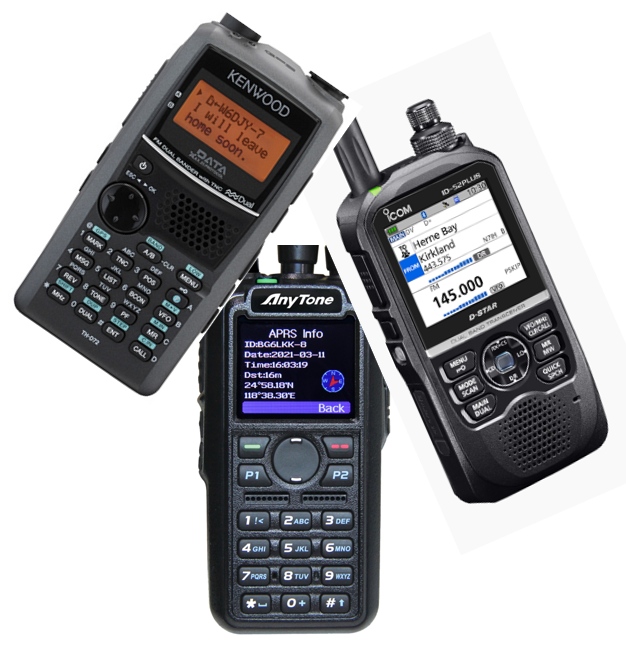
However, one key capability is consistently missing: true full duplex operation – the ability to transmit on one band while simultaneously receiving on another, without desense. For example, transmitting on VHF while receiving on UHF, or vice versa.

We at AMSAT-SM believe there is a significant and growing market for such a radio among amateur radio operators worldwide. A particularly important group consists of operators who use amateur radio satellites, for whom full duplex operation greatly enhances communication and usability. These operators are also prepared to pay a premium for a handheld with this functionality. At present, no current handheld model offers full duplex capability. Instead, many satellite operators rely on discontinued radios such as the Kenwood TH-D72.

We therefore respectfully request the development of a new handheld amateur radio with true full duplex capability between VHF and UHF (e.g., transmit on 145 MHz and receive on 435 MHz without desense, and vice versa).

Additional features to support satellite operation would also be very welcome. For example, the AnyTone AT-D878UVII includes satellite tracking functions, but unfortunately lacks full duplex capability.

We strongly believe that a handheld radio with these capabilities would be highly valued by the amateur radio community and represent a unique opportunity for any manufacturer willing to take the lead.

Sincerely,
AMSAT-SM Group in Sweden
via Lars Thunberg, SM0TGU
www.amsat.se
https://x.com/amsat_sm


If a company respond, these are the requirements that I will give them:

Most prioritized specifications – needed to make the radio possible to use:

  • Frequency bands involved for full duplex are VHF (144–146 MHz) and UHF (430–440 MHz). Both Analog FM
  • Extended filtering needed between VHF and UHF band with sharp and good filters (low-pass/high-pass or band-pass or a combination)
  • It should be possible to transmit on one band and at the same time receive on the other band without any desense (the transmitted signal cannot block the received signal).
    For example, transmit on VHF and at the same time listen on UHF. Or transmit on UHF and at the same time listen on VHF.
  • It should be possible to use both VFO and memory channels with full duplex. Or a combination between VFO and memory channel. For example, it should be possible to transmit on a VHF memory channel and receive with UHF VFO so the user is free to change the memory or VFO during a contact. In detail:
    • Possible to transmit on VHF memory channel and receive with UHF VFO
    • Possible to transmit on UHF memory channel and receive with VHF VFO
    • Possible to transmit with VHF VFO and receive on UHF memory channel
    • Possible to transmit with UHF VFO and receive on VHF memory channel
  • Possibility to transmit CTCSS (Subtone)
  • Connectors for Mic/Earphone so it should be possible to use a headset
  • Robust antenna connector. The handheld radio will probably be used in portable situations with an external handheld antenna (like the Arrow yagi) and will have a coaxial cable connected instead of the small supplied rubber antenna. So it is important that the antenna connector will not break easily.
  • USB-C charging with DC input for easy use of standard chargers for charging the battery or powering the handheld directly if the battery is drained
  • 5 watt max output with possibility to choose lower output
  • Implement energy saving functions so the battery will last longer. Or just make a good design for decent battery life.
  • All other standard features you already have implemented in your amateur radio handhelds, and make it easy to change the settings

Also wanted features – nice to have but not first priority:

  • APRS functions with GPS (look at the Kenwood handhelds)
  • Implement Bluetooth to be able to connect wireless headset
  • Implement computer connection via Bluetooth to be able to program the radio (memory channels etc.) via a computer or mobile phone app
  • Implement the CAT protocol via Bluetooth to simulate a COM port. If so, it would be possible to connect the handheld wirelessly to a computer, making it possible to adjust the frequency for the Doppler effect caused when the satellite is moving very fast in space. Many radio amateurs that are using satellites for communications use computer software for adjusting the VHF and UHF continuously during a contact. The CAT protocol is a standard and implemented in many amateur radio rigs, also by new manufacturers, and there is much software ready to use today.

What I know of today is that at least one manufacturer has implemented an app that can adjust frequency for Doppler correction, the VR-N76. Please see this link:
https://www.verotelecom.com/VR-N76-Dual-Band-Handheld-Radio-p2511333.html?parent_user_id=18403738&utm_source=sns_share&utm_medium=share_url

But this requires a lot of software development from you as manufacturer. A much better solution is to implement the CAT protocol so the user can choose software of their own.
Categories
Ham Satellite news Members news

AMSAT-SM comment on AST & Science Application to Use 430-440 MHz

The FCC is currently considering an application by AST & Science, LLC for authorization to operate a total of 248 satellites in low-earth orbit. As part of this application, AST seeks to utilize the 430-440 MHz band for telemetry, tracking, and telecommand (TT&C) operations.

As part of the consideration process, the FCC is accepting public comment through July 21st. Over 600 individuals, many of them amateur radio operators, have already filed comments opposing AST’s request, as has AMSAT-DL. AMSAT is also preparing comments to be filed in this proceeding. Anyone may file or review comments through the FCC’s Electronic Comment Filing System (ECFS) at https://www.fcc.gov/ecfs/search/search-filings/results?q=(proceedings.name:(%2225-201%22)). The proceeding number is 25-201.

AMSAT-SM via Lars Thunberg SM0TGU has comment this application on 21 July:

Dear Sirs,
The AMSAT-SM amateur radio satellite group in Sweden is reaching out to share our concerns about the AST proposal to utilize the 430–440 MHz frequency band for Telemetry, Tracking, and Command (TT&C) operations. This portion of the spectrum is already designated as a primary allocation in Region 1 and is actively utilized by a range of users, including amateur radio operators and amateur satellite services.

Amateur radio plays a key role in emergency communications and technical experimentation, while amateur satellites contribute significantly to educational and scientific pursuits. Approving AST’s application could interfere with these established uses and jeopardize their valuable contributions.

We respectfully urge the Commission to carefully evaluate the potential consequences of this proposal and to prioritize the protection of existing services. We also recommend considering alternative frequency bands better suited to AST’s operational needs.

Thank you for your time and consideration
Lars Thunberg – AMSAT-SM Sweden

Direct link to FCC:

https://www.fcc.gov/ecfs/search/search-filings/filing/10721288814550

Categories
Members news

AMSAT-SM på SSAs 100-årsjubileum 2025

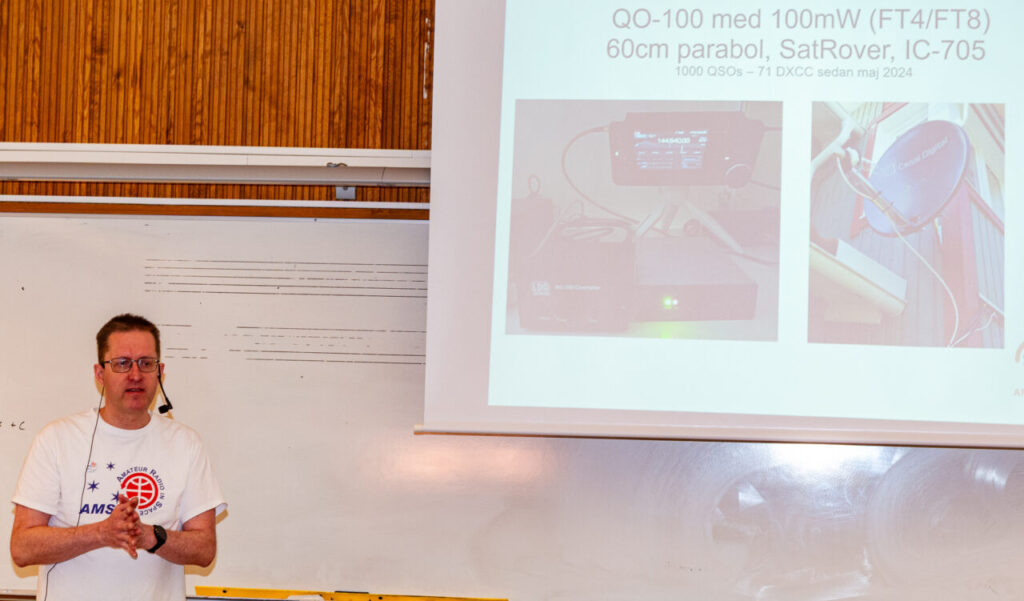
AMSAT-SM med Lars Thunberg SM0TGU hade förmånen att få hålla ett föredrag om amatörradio och satelliter under SSAs årsmöte och 100-årsjubileum. Det pågick under helgen 26-27 april 2025 i Västerås.

SM0TGU Lars håller föredrag

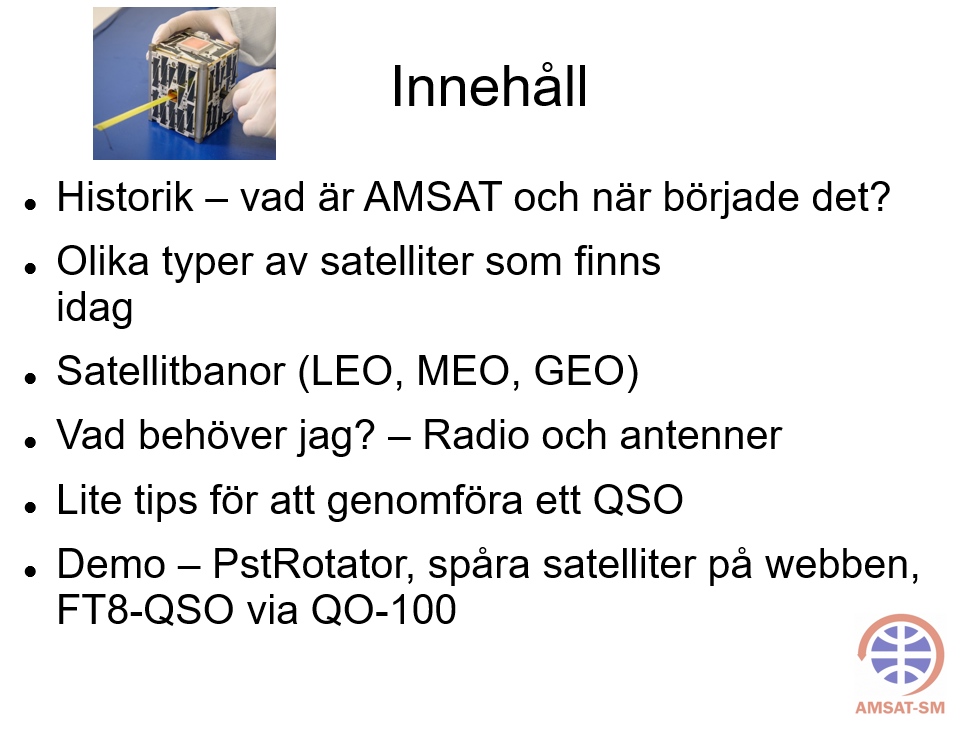
Innehållet ser ni på bilden nedan. SSA spelade även in hela föredraget. Den videon är just nu (juni 2025) endast tillgänglig för SSAs medlemmar men om den släpps fri senare kommer den att läggas ut på AMSAT-SMs Youtube-kanal.

Categories
Ham Satellite news Members news

AMSAT-SM Summary of year 2024

In 2024, we carried out two talks remotely – at the DL4 meeting in Mora and for the Gardermo group LA2G (Norway). We also had a few more requests that we unfortunately had to turn down as it didn’t fit in terms of dates.

In 2025, we are scheduled to give a talk at SSA’s (Swedish Amateur Radio society) annual meeting.

Membership status
At the end of the year, AMSAT-SM had 314 members, compared to 310 members for 2023.

X.com
Via X.com we have a continued increase in followers – right now (11 Jan 2025) 2271 ​followers compared to ​1977 ​followers at the end of 2023. This makes us one of the AMSAT groups with the most followers. X.com continues to be AMSAT-SM’s main information channel together with the website.

Bluesky – new account
At the end of 2024, we created an account on the new platform Bluesky, which is seen as an alternative to X.com. Posts from the website are automatically published to Bluesky, but otherwise no further activity takes place there. Our link on Bluesky is:
https://bsky.app/profile/amsat.se

The website
We continue to write mostly in English as we have a large number of followers outside of Sweden. The cost of the website continues to be sponsored by Lars SM0TGU.

Web statistics
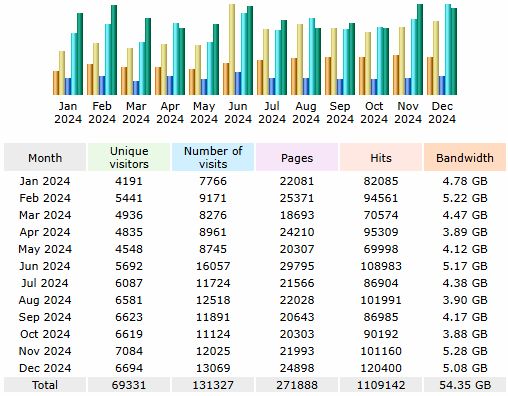
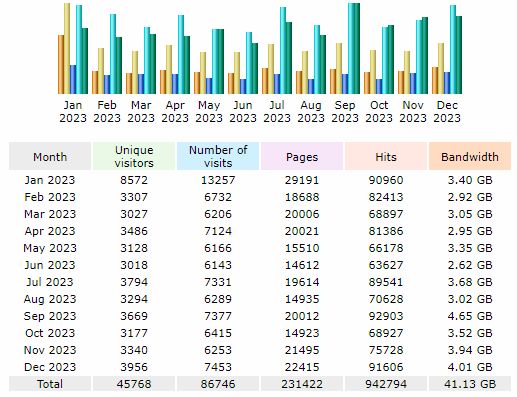
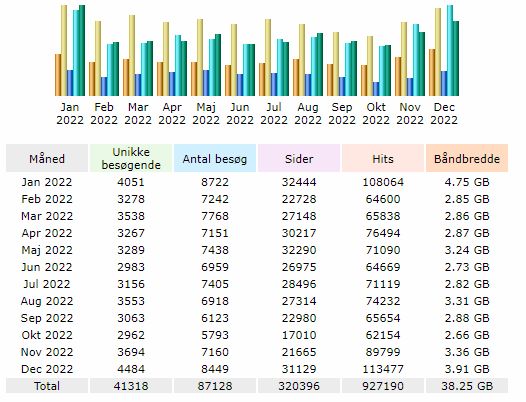
We again see a rising number of visitors compared to the year before. Scroll down to see more statistics compared for the last three years.

In Swedish

Dags att summera AMSAT-SM aktivitet för 2024:

Håkan SM7WSJ årsberättelse

Ytterligare ett år till ända. Det är hög aktivitet i antal nya cubesats som dyker upp. En del kommer upp i rymden men ibland misslyckas antingen uppskjutning eller senare aktivering av satelliten. Det är mycket som ska falla på plats innan en signal hörs från rymden. Det är fortfarande dom gamla trotjänarna som ger mest kontakter, AO-7  RS-44 mm. 

Den geostationära transpondern QO-100 är alltid igång, och det kan dyka upp rätt mycket intressanta stationer över den.

Trafiken från rymdstationen ISS genererar mycket information både runt skolkontakter samt annan aktivitet. Repeatern som är placerad ombord är väldigt populär.

Amsatnätet på 3740 kHz söndagar klockan 10.00 rullar på som vanligt. Dom stabila deltagarna är SM4EFW samt SM4JLX. Vi har även några inhoppare som dyker upp lite till och från (alla är välkomna).

Lars SM0TGU ser till att hemsidan samt sociala medier fungerar och uppdateras.

mvh Håkan SM7WSJ

Aktiviteter
2024 genomförde vi två föredrag på distans – på DL4-mötet i Mora och för Gardermogruppa LA2G (Norge). Vi hade även några fler förfrågningar som vi tyvärr fick tacka nej till då det inte passade rent datummässigt.

Under 2025 är vi planerade att hålla föredrag på SSAs årsmöte.

Medlemsstatus
AMSAT-SM hade vid årets slut​ 314​ medlemmar att jämföra med 310 medlemmar för 2023.

X.com
Via X.com har vi en fortsatt en ökning av följare – just nu (11 jan 2025) 2271 ​följare jämfört med ​1977 ​följare i slutet av 2023. Det gör oss till en av de AMSAT-grupper med flest följare. X.com fortsätter att vara AMSAT-SM huvudsakliga informationskanal tillsammans med hemsidan.

Bluesky – nytt konto
I slutet av 2024 skapade vi konto på nya plattformen Bluesky som ses som ett alternativ till X.com. Inlägg från hemsidan automatpubliceras till Bluesky men i övrigt sker ingen ytterligare aktivitet där. Vår länk på Bluesky är
https://bsky.app/profile/amsat.se

Hemsidan
Vi fortsätter att skriva det mesta på engelska då vi har ett stort antal följare utanför Sverige. Kostnaden för hemsidan fortsätter att sponsras av Lars SM0TGU.

Webbstatistik
Vi ser igen ett stigande besöksantal jämfört med året innan. Nedan är de tre senaste åren.

2024
2024
2023
2023
2022


Categories
Ham Satellite news Members news

AMSAT Presentation for Gardermogruppa LA2G

11:th December I had the honor to make an AMSAT presentation for the Gardermogruppa (LA2G) north of Oslo, Norway. The presentation was held remote with Teams.

The subjects was:

  • Short history of AMSAT and amateur radio satellites
  • Different types of satellites
  • Satellite orbits
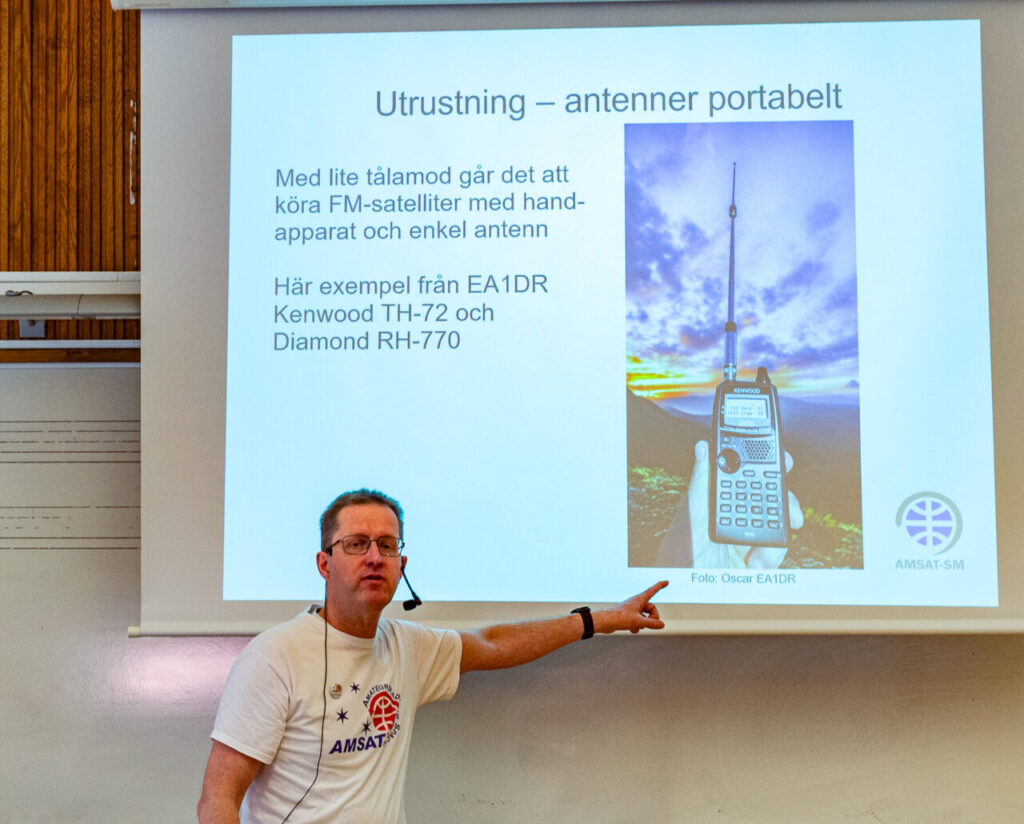
  • Equipment – radio and antennas
  • How to track and know the status of current satellites
  • QSO tips and tricks
  • Telemetry and the SatNOGS network
  • Live demo of PstRotator and QO-100 FT8 QSO

Thank you LA2G and Bjørn Otto Dønnum LB7EJ for setting up this meeting!

Categories
Ham Satellite news Members news

Föredrag DL4-möte 2024-10-05

Lördagen den 5:e oktober 2024 hade jag förmånen att hålla ett föredrag under DL4-mötet i Mora. Föredraget gick igenom följande:

  • Historik – vad är AMSAT och när började det?
  • Olika typer av satelliter som finns idag
  • Satellitbanor (LEO, MEO, GEO)
  • Vad behöver jag? – Radio och antenner
  • Lite tips för att genomföra ett QSO
  • Telemetri och SatNOGS – satellitnätverk
  • Demo – PstRotator satellitspårning och radiokontroll

Tack till alla som var med och lyssnade!
Föredraget finns att ladda ner som PDF här.

73 Lars SM0TGU