Categories
Ham Satellite news

DSLWP – amatörradio i bana runt månen

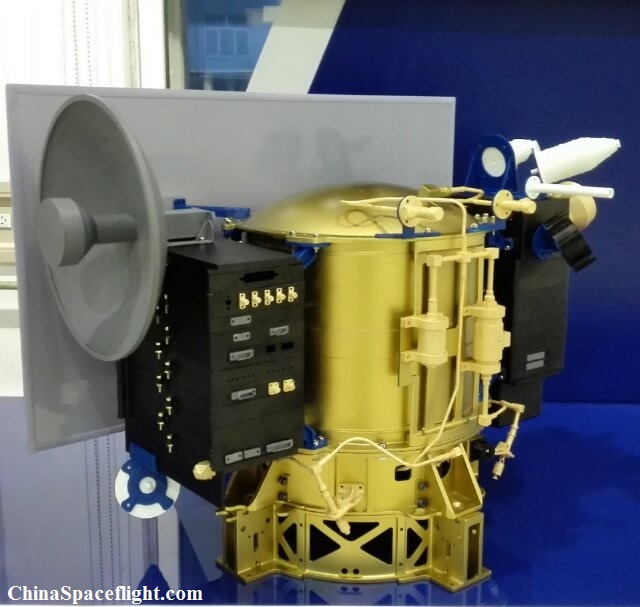
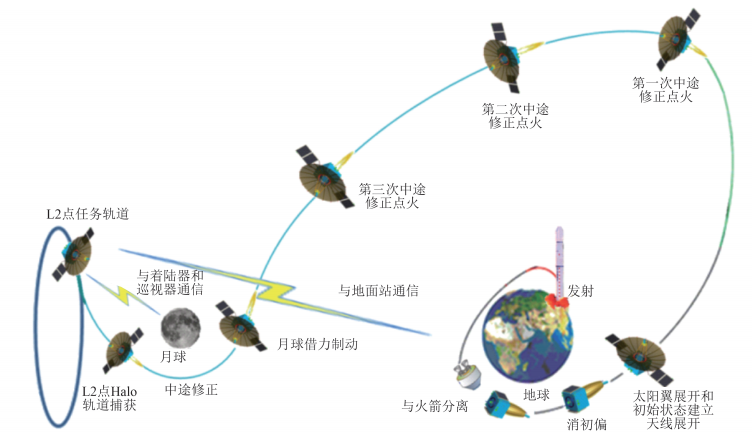
DSLWP-A och DSLWP-B är två microsatelliter från Kina som under maj/juni skickats upp i bana runt månen. Det är, vad jag förstår, de första satelliterna med amatörradio ombord som är i bana runt månen! Ett par radioamatörer har lyckats ta emot telemetri på 435 och 436 MHz. Det är dock inte enkelt, det kräver en del gain i antennerna och en ganska komplicerad uppsättning programvara för att avkoda telemetri.

Det finns mycket bra information på DK3WNs sida om DSLWP. Jag hänvisar det istället för att översätta allt till svenska.
Frekvensen som gäller för DSLWP-B är 435.400/436.400 MHz, modulation är 250/500 bps GMSK/JT4G.


First Amateur Radio Transmissions from Lunar Orbit and Subsequent
Test Plan

On 2 Jun and 3 Jun we had 2 successfully tests on the UHF downlink
of DSLWP-B after lunar orbit insertion. BY2HIT and PI9CAM team
successfully decoded 39 GMSK packets from the satellite. SP5ULN and
M0IEB also detected signals from the satellite with much smaller
antenna, but the decode was not fully successful.

Two weeks ago, when the satellites were launched on 20 May, UHF
signals from both satellites was received by PY2SDR, CD3NDC, PY4ZBZ
and N6RFM.

The subsequent tests are planned from 4 Jun 22:00 UTC to 5 Jun 00:00
UTC, and from 5 Jun 08:00 UTC to 5 Jun 10:00 UTC. The mode is 250 bps
GMSK for both 435.4 MHz and 436.4 MHz.

Tracking file updates can be found on:
https://github.com/bg2bhc/dslwp_dev or
http://lilacsat.hit.edu.cn/tle/program_tracking_dslwp-b.txt

[ANS thanks Wei BG2BHC for the above information]


Categories
Hamradio from ISS

Ham Video Transmitter Test

Friday June 1, 2018 the Ham Video system will be tested.

The transmitter will be down powered step by step. Next the antenna cable will be connected to the second S-band antenna. Finally, the transmitter will be powered on step by step. These operations, to be performed by crew, are scheduled 17.25 – 17.55 UTC. The ISS will pass over Europe 45 minutes later, at 18.40 UTC. Ground stations are invited to monitor the signal and report. Interested parties can monitor the test by connecting to: https://live.ariss.org/hamtv/ We are looking forward to this test, hoping that the transmitter will start working again.

73, Gaston Bertels ON4WF

Categories
Ham Satellite news

Nya Cubesats från ISS 2018-05-11

Den 11 maj 2018 släpptes tre nya Cubesats ut från ISS med amatörradio ombord. Alla dessa tre har rapporterats bla. via DK3WN. Frekvenser enligt följande:

1KUNS-PF (Kenya)- NORAD CAT ID 43466 (a 3U cubesat with a 1200 bps or 9600
bps telemetry beacon at 437.300 MHz)

UBAKUSAT (Turkey)- NORAD CAT ID 43467 (a 3U cubesat with a CW beacon at
437.225 MHz, a telemetry beacon at 435.325 MHZ, and a linear transponder
with a 435.200 – 435.250 MHz downlink / 145.940 – 145.990 MHz uplink)

Irazu (Costa Rica) – NORAD CAT ID 43468 (a 1U cubesat with a 9600 bps
telemetry beacon at 436.500 MHz)

Källa: ANS-147

Categories
Ham Satellite news

Äldre keplerelement

Behöver du äldre keplerelement? AMSAT-NA har ett arkiv för detta. Se nedan:

25 Year Archive of Keplerian Elements Now on AMSAT Web Site

AMSAT Orbital Elements Manager Ray Hoad, WA5QGD    has made his archive
of orbital elements for active amateur satellites back to October 1993.
Joe Fitzgerald, KM1P has posted this on the AMSAT web site at:
http://www.amsat.org/tle/historical/   Joe commented, “Thanks for all
those bulletins, Ray. That represents a lot of work over 25 years!”

[ANS thanks Ray Hoad, WA5QGD and Joe Fitzgerald, KM1P for the above
information]

Categories
Hamradio from ISS

ARISS-kontakt från Viktor Rydbergs gymnasieskola

Viktor Rydbergs gymnasieskola i Stockholm lyckades den 22:a maj (2018) kontakta ISS och astronauten Scott Tingle via telebridge från en station i USA. Givetvis ett stort grattis till alla elever för denna upplevelse! Kontakten kom något oväntat då det inte varit mycket information om aktiviteten innan.

Kontakten uppmärksammades i SVD och amatörradio nämns i den korta artikeln:

https://www.svd.se/gymnasieelever-i-kontakt-med-rymden

Categories
Hamradio from ISS

ARISS News Release no. 18-06

ARISS HamVideo Currently Not Transmitting

no. 18-06
May 10, 2018
David Jordan, AA4KN
ARISS PR
aa4kn@amsat.org

The HamVideo digital Amateur Television (DATV) transmitter aboard the International Space Station (ISS) Columbus module recently ceased transmitting. The unit’s indicators show it is functioning but its signal cannot be detected on the ground. The ARISS team’s efforts to get the transmitter working again have been unsuccessful, thus far.

A series of steps are currently being undertaken to try to diagnose the problem. However, if an actual failure occurred, only a ground-based evaluation will fully diagnose the problem. The ARISS International team is working diligently to bring HamVideo back to full operation as soon as practical. We have started coordination with our space agency partners and with our sponsors to expeditiously troubleshoot the issue on-board and, if necessary, troubleshoot and repair the device on the ground.

The HamVideo DATV transmitter has become a very valuable educational asset that astronauts enjoy employing as part of the ARISS connection. Astronauts Tim Peake, KG5BVI; Paolo Nespoli, IZ0JPA; and Thomas Pesquet, FX0ISS, regularly utilized HamTV to inspire students and educators during ARISS contacts scheduled as part of these astronauts’ ISS missions. Australian and European HamTV ground stations have been operational for receiving and distributing DATV signals from the ISS, and in the US, HamTV stations are under development. Several hams in Japan have set up ground stations that have received HamVideo.

As more information becomes available on the HamVideo status and on any potential repair plans, we will keep you informed through future news releases and via messages on the ARISS web site www.ariss.org.

ARISS relies on its sustaining sponsors, along with many devoted individual donors and ARISS volunteers, to support the day-to-day operations and to help with related expenses. These supporters are instrumental in developing and funding the build of our new radio systems. For everyone interested in helping ARISS inspire, engage and educate youth, hams and the public through amateur radio on the ISS, please donate to ARISS at www.amsat.org or www.ariss.org.

About ARISS

Amateur Radio on the International Space Station (ARISS) is a cooperative venture of international amateur radio societies and the space agencies that support the International Space Station (ISS). In the United States, sponsors are the Radio Amateur Satellite Corporation (AMSAT), the American Radio Relay League (ARRL), the Center for the Advancement of Science in Space (CASIS) and the National Aeronautics and Space Administration (NASA). The primary goal of ARISS is to promote exploration of science, technology, engineering, and mathematics (STEM) topics by organizing scheduled contacts via amateur radio between crew members aboard the ISS and students in classrooms or informal education venues. With the help of experienced amateur radio volunteers, ISS crews speak directly with large audiences in a variety of public forums. Before and during these radio contacts, students, teachers, parents, and communities learn about space, space technologies and amateur radio. For more information, see www.ariss.org, www.amsat.org, and www.arrl.org.