
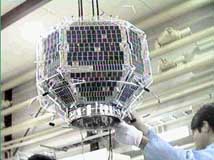
Operators interested in working one of amateur radio’s longest-lived linear satellites may have only a few more weeks before Fuji-OSCAR 29 (FO-29) returns to periods of eclipse.
FO-29’s batteries have deteriorated over the past 30 years, leaving the satellite dependent on solar power to stay active for more than a few minutes. When its orbit remains continuously illuminated by the Sun, the V/U linear transponder can operate without the scheduled command activations required during portions of the year when the satellite enters Earth’s shadow.
A long period of continuous solar illumination began around May 20 and was projected to continue until approximately mid-November 2026. AMSAT’s current linear-satellite listing still reports FO-29 as being in full sunlight.
FO-29 carries an inverting V/U analog transponder:
* Uplink: 145.900-146.000 MHz, LSB
* Downlink: 435.800-435.900 MHz, USB
* CW beacon: 435.795 MHz
The satellite was launched in 1996 and remains under the control of the Japan Amateur Radio League. Its continued operation three decades later makes it one of the veteran spacecraft of the amateur satellite fleet.
As eclipses begin returning to its orbit, operators should not assume that the transponder will remain available continuously. During eclipse seasons the JARL control team may activate the satellite according to announced schedules when sufficient power is available.
[ANS thanks the Japan Amateur Radio League for the above information.]